In the sunbaked village of Matmata, where homes are carved deep into the earth to escape the heat of the desert, there once lived a young woman named Yamina. She was known for her quiet nature and the gentle songs she sang while working clay pots beside her mother. Her voice was soft as the wind that swept through the sand dunes, and her heart was kind. Yet Yamina was shy and often hid her face when strangers came near.
When the time came for her to marry, the whole village rejoiced. Her groom, Karim, was a kind man from a neighbouring tribe, known for his laughter and his love of music. The wedding was to be held under the open desert sky, with dancing, drumming, and songs that would echo across the hills of Matmata.
Want to dive deeper? Read more North African folktales today
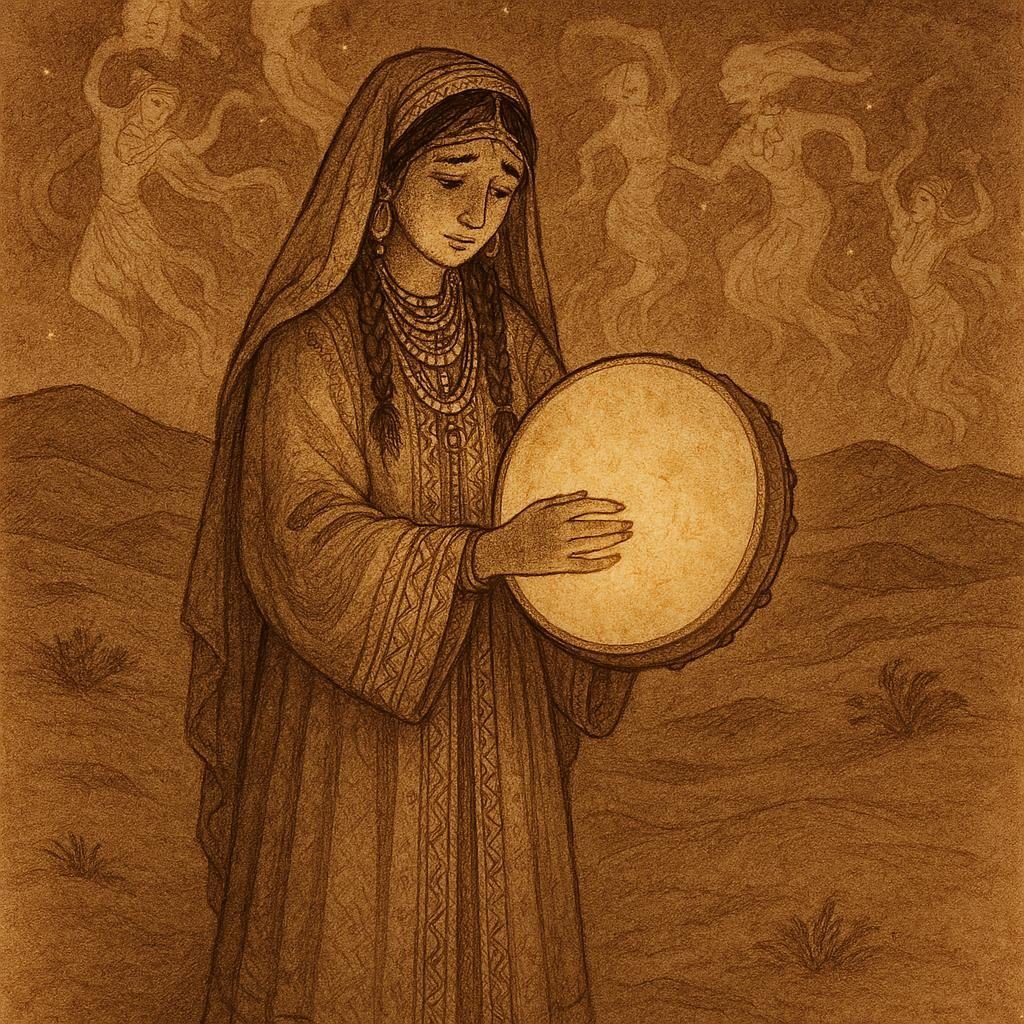
Before the celebration, Yamina’s grandmother placed a small drum in her hands. It was beautifully made, with stretched goatskin painted in red and gold designs. “This drum has been in our family for generations,” her grandmother said. “It carries the voices of our ancestors. When you play it, they will hear you and bless your new life.”
Yamina nodded, though her hands trembled. “But I am shy, Grandmother. I do not know how to play before others.”
Her grandmother smiled. “Then let your heart play through it. The ancestors will do the rest.”
That evening, the village gathered for the wedding. Torches flickered in the night, women wore silver jewellery that caught the firelight, and the sound of music filled the desert air. Karim stood proudly beside Yamina, whose face was hidden by a soft white veil.
When the moment came for her to join the dance, the musicians paused and called out, “Let the bride play her drum.” The crowd cheered, waiting eagerly. Yamina stepped forward slowly, clutching the small drum to her chest. Her fingers shook, and her voice faltered as she whispered, “I am afraid.”
Karim leaned close and said, “Do not fear. The desert listens to the brave.”
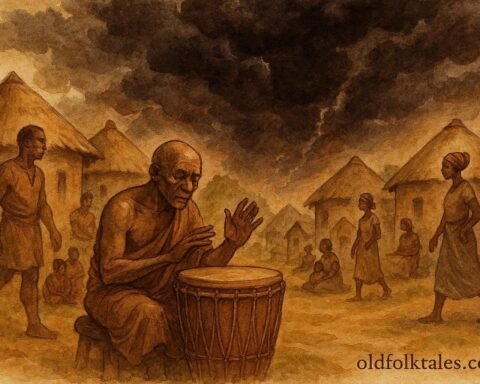
Yamina lifted the drum but could not strike it. The crowd grew quiet. Then, from the stillness, came a deep and gentle sound. The drum began to beat on its own. The rhythm was strong yet soft, rising and falling like a heartbeat. Gasps filled the air as the villagers looked on in wonder. Yamina’s hands were not moving, yet the drum sang.
The wind stirred the sand, swirling in circles around her feet. The torches flickered blue, and faint figures appeared in the air, shapes of women dressed in flowing Berber robes, their faces kind and glowing like the moon. The people bowed their heads in awe, for they knew the ancestors had come.
The spirits moved gracefully, circling Yamina and Karim. One of them spoke in a voice like the whisper of palm leaves. “Child of our blood, do not fear your gift. You carry our strength. You carry our song.”
Yamina felt warmth spread through her heart. The drumbeat matched the rhythm of her breath, and for the first time she smiled without fear. She lifted her veil, her eyes shining in the torchlight, and began to sing. Her voice blended with the beat of the drum, rising higher until the whole valley echoed with her song.
The villagers clapped and danced, their joy filling the night. The spirits of the ancestors danced with them, unseen by some but felt by all. The drum glowed faintly in Yamina’s hands, and when the final beat sounded, a soft breeze swept through the crowd, leaving behind the scent of wild desert flowers.
When the music ended, Yamina bowed her head and said, “Thank you, ancestors, for your blessing.” The wind carried her words into the desert, where they vanished like a secret prayer.
From that day forward, the drum never played on its own again, but whenever Yamina touched it, she could feel a gentle pulse beneath her fingers, as if the ancestors still whispered through the skin. She and Karim lived happily, sharing songs and laughter in their underground home. Every wedding after theirs began with the story of the drum that played itself, a tale that reminded all of Matmata that love and courage awaken blessings from those who came before.
As the years passed, Yamina grew older and taught her daughter how to listen to the silence before the drumbeat. “It is in that silence,” she said, “that the ancestors speak.” And sometimes, on cool nights when the moon was full, people claimed to hear faint drumming carried on the desert wind, echoing through the caves like a heartbeat of love that never faded.
Moral Lesson:
The Drum of the Desert Bride teaches that courage and love awaken the blessings of our ancestors. When we face fear with a pure heart, we honour those who came before us. The spirit of family, unity, and heritage lives on through the courage to embrace who we are.
Knowledge Check
Where does The Drum of the Desert Bride take place?
It takes place in Matmata, a desert village in southern Tunisia known for its underground homes.What special gift did Yamina receive from her grandmother?
She received a family drum said to carry the voices of their ancestors.What happened when Yamina tried to play the drum?
The drum began to play on its own, summoning the protective spirits of her ancestors.What message did the spirits give to Yamina?
They told her not to fear her gift and to remember that she carried their strength and song.How did the villagers react to the miracle?
They were amazed and celebrated joyfully, feeling blessed by the ancestors’ presence.What is the main message of this folktale?
The story teaches that love, courage, and respect for ancestral spirits bring harmony and blessings to life.
Source: Berber wedding folktale of Matmata, Tunisia. Compiled by Claire Maurel in Chants et Contes du Sud Tunisien (1942).