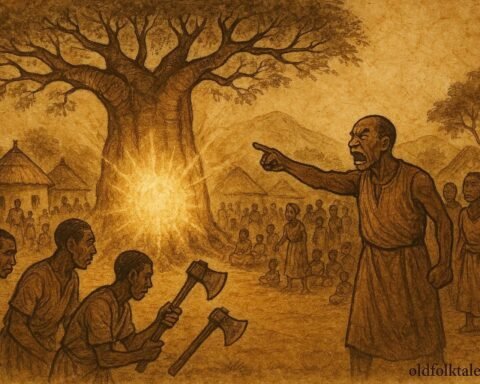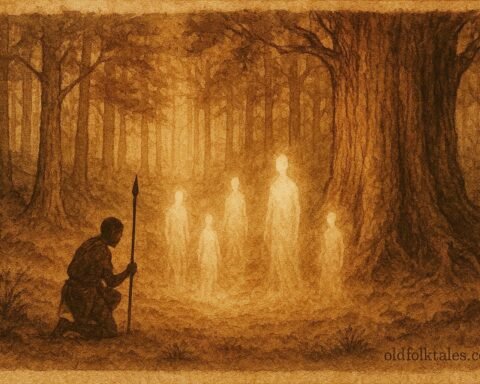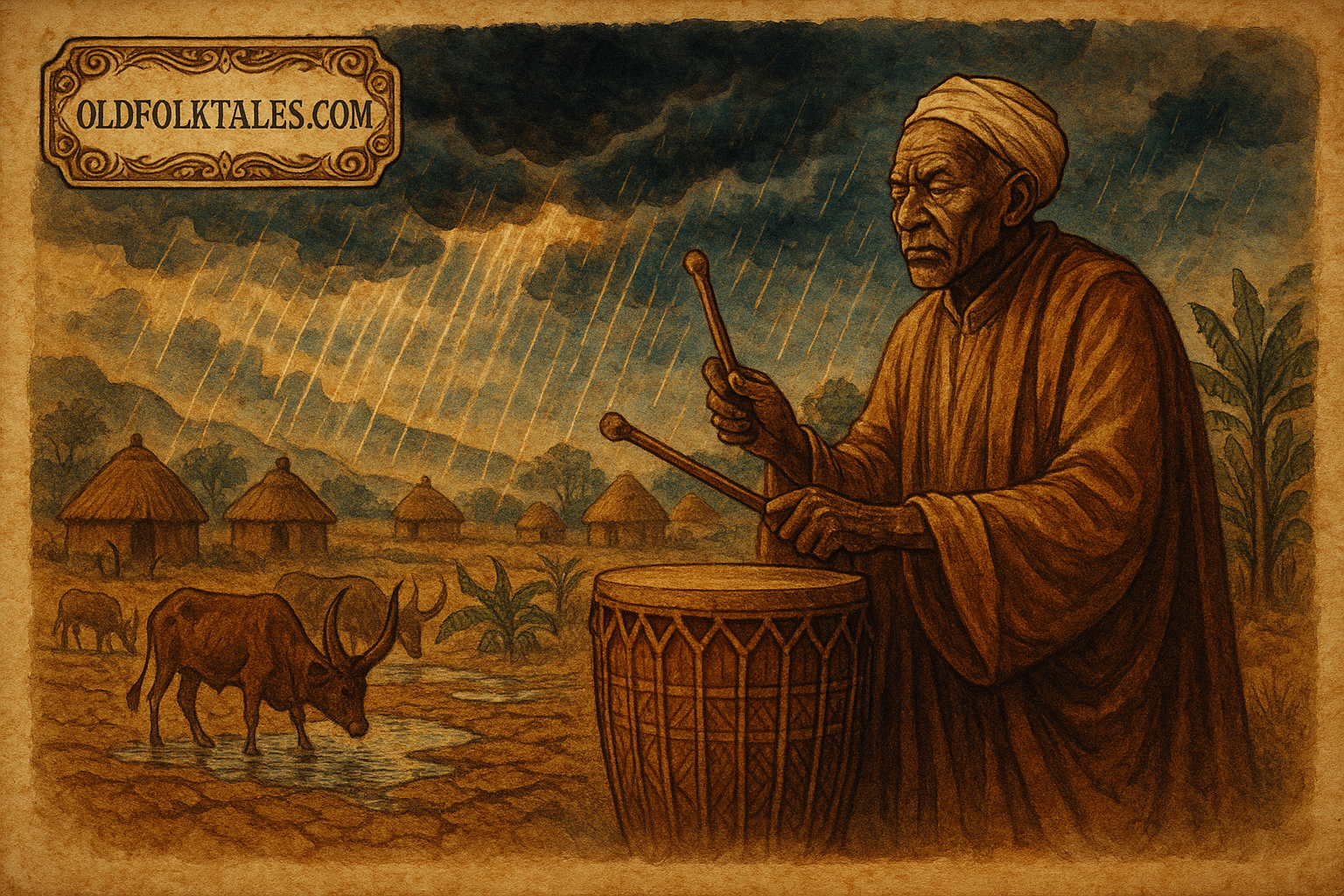
Long ago in the dry heart of the savannah, the people of Ndaleni faced the worst drought they had ever known. For moons, not a single drop of rain had fallen. The riverbeds cracked like old pottery, and the air shimmered with heat. The cattle grew thin, the crops wilted, and the children went to bed hungry.
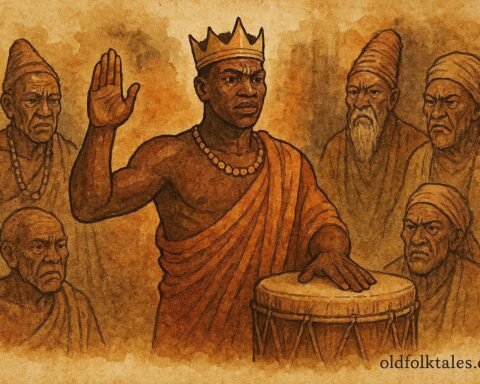
In the center of the village lived an old drum maker named Kofi. He was known for crafting drums that could stir even the most stubborn feet to dance. But in those hard days, no one had the strength for music. Still, Kofi worked quietly in his hut, shaping wood and stretching animal skin over a frame, for he believed that the world always needed song, even in sorrow.
One evening, a young girl named Amara came to Kofi’s hut. Her eyes were wide with both fear and determination. “Grandfather Kofi,” she said, “the elders say the rains will not return unless the Sky Spirits are pleased. They have tried offerings, prayers, and dances, but nothing has worked. Is there nothing more we can do?”
Kofi studied the child for a long moment. Then he reached under his workbench and pulled out a small drum unlike any Amara had ever seen. Its surface shimmered faintly, as though it had captured light within it. “This,” Kofi said, “is the Rain Drum. It was given to me by my father, who learned its secret from his father before him. When played with a pure heart, it can call clouds from across the horizon. But it will not work for someone who seeks glory. It will only answer the call of one who plays for the good of all.”
Amara’s heart raced. “Then we must play it!” she cried. But Kofi shook his head. “I am too old, and my hands are no longer quick. The drum must be played by someone whose spirit is as fresh as the morning dew. Someone like you.”
That night, under the watchful gaze of the moon, Amara stood in the middle of the village with the Rain Drum before her. The elders gathered, the people circled around, and even the wind seemed to pause to listen. Amara took a deep breath, closed her eyes, and began to play.
The sound that came forth was unlike any the villagers had ever heard. It was deep and rolling like distant thunder, yet sweet and bright like the laughter of water over stones. Her small hands struck the drum with both gentleness and power, weaving a rhythm that told a story of thirsty earth, withered leaves, and the longing of her people.
As she played, a strange thing happened. The air grew cooler. The smell of wet soil drifted in, faint at first, then stronger. From the far edge of the sky, dark clouds began to gather, moving swiftly toward the village as though drawn by the heartbeat of the drum.
The crowd gasped. Some wept. The wind picked up, whipping through the trees, and then the first drops fell—soft, fat, and heavy. The people lifted their faces to the sky as the heavens opened, pouring life onto the cracked earth. The children danced in the puddles, the elders raised their arms in thanks, and Amara kept playing, her rhythm blending with the drumming of the rain.
For three days and nights, the rains fell steadily, filling the rivers and soaking the fields. When the storm finally passed, the land was green again, and hope bloomed in the hearts of the people.
Kofi called Amara to his hut. “Child,” he said, “you have given our people the greatest gift. But remember, the Rain Drum is not just for times of drought. It is for moments when the hearts of our people grow dry and cracked. Then too, music can summon the rain we need.”
From that day on, the Rain Drum was kept in the center of the village. And whenever joy began to fade or unity began to weaken, Amara would play, and the sound would remind them of the day music brought rain to their land.
Moral Lesson
The Drum That Summoned Rain teaches that the most powerful gifts are those used for the good of all. True strength lies not in seeking personal glory, but in serving with a pure heart. Just as rain revives the land, acts of selflessness restore the spirit of a community.
Knowledge Check
1. What is the main lesson of The Drum That Summoned Rain?
The story shows that true strength comes from using your talents for the good of others rather than for personal gain.
2. Who was Kofi and what role did he play in the story?
Kofi was the wise village drum maker who entrusted the magical Rain Drum to Amara because of her pure heart.
3. How did Amara summon the rain in the story?
Amara played the Rain Drum with sincerity and love for her people, which pleased the Sky Spirits and brought rain.
4. What changes happened to the village when the rain came?
The rivers filled, the crops revived, the air cooled, and the people celebrated with dancing and gratitude.
5. What does the Rain Drum symbolize in the folktale?
The Rain Drum represents unity, hope, and the idea that music and selfless action can bring life to both land and spirit.
6. How does the story reflect African oral storytelling traditions?
The tale uses vivid imagery, moral teaching, and rhythmic repetition to carry forward community values, much like traditional African oral narratives.
Cultural Origin: Banyankole Folktales from Uganda