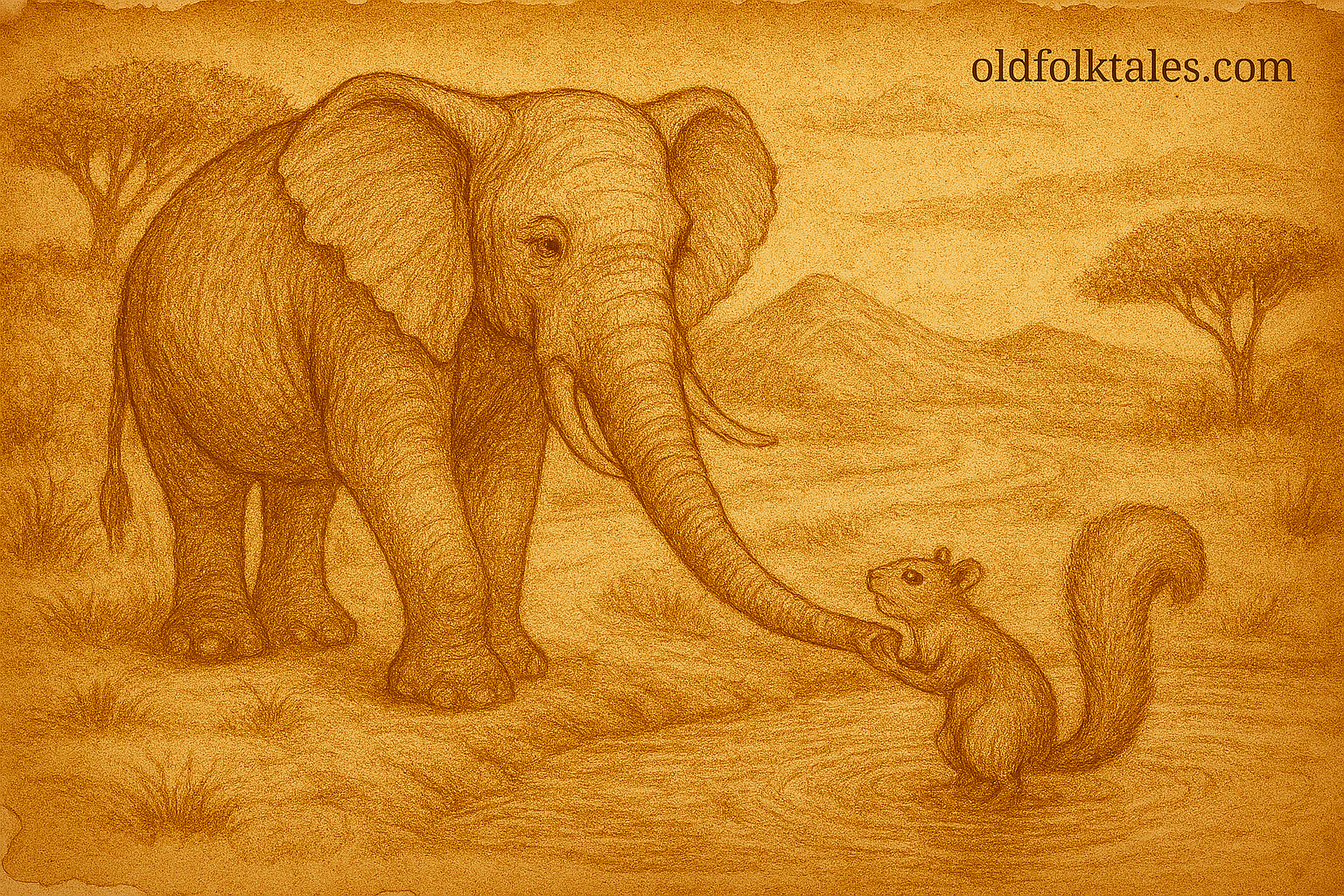
Long ago, in the vast landscapes of Somalia, where the earth stretches wide beneath endless skies and creatures of all sizes roam freely, an elephant and a squirrel formed an unlikely friendship. Despite the enormous difference in their sizes, the elephant, standing as tall as the acacia trees, and the squirrel, being small enough to fit in the palm of a human hand, these two animals enjoyed spending time together, playing and exploring the world around them.
The elephant, with his great strength and towering presence, was gentle by nature and truly valued the companionship of his tiny friend. The squirrel, quick and nimble, darted about with energy and enthusiasm, bringing liveliness to their friendship. Day after day, they would meet and play together, finding joy in each other’s company despite their obvious differences in size and ability.
Continue your journey: Read more East African folktales
A Day at the Water
One particularly hot day, when the sun blazed overhead and the heat shimmered in waves across the dry ground, the elephant had an idea that filled him with excitement. “Let us go swimming!” he suggested to the squirrel, his voice booming with enthusiasm. “The water will be cool and refreshing, and we can play together in the pond.”
The squirrel, not wanting to disappoint his friend and trusting in the elephant’s judgment, agreed to this plan. Together they made their way to a nearby water hole, a place where animals from all around came to drink and cool themselves during the hottest parts of the day.
When they arrived at the water’s edge, the elephant was overcome with eagerness to share this experience with his small friend. With his powerful trunk, he gently wrapped it around the squirrel’s tiny body and carefully lifted him high into the air. The squirrel felt himself rising up, up, up, until he was level with the elephant’s head, looking down at the sparkling surface of the water below.
Then, with what the elephant believed was playful gentleness, he placed the squirrel into the water and released him, expecting his friend to splash about joyfully as he himself did. “Enjoy the water, my friend!” the elephant called out happily before moving away to swim in the deeper parts of the pond, leaving the squirrel alone to experience the pleasure of swimming.
The Struggle
But what the elephant didn’t knoww, hat he had never thought to ask or consider, was that the squirrel could not swim. Unlike the elephant, who could wade through water with ease, his massive legs supporting him even in the deepest parts of the pond, the squirrel had no such ability.
The moment the squirrel hit the water, panic seized his small body. He flailed his tiny limbs desperately, struggling to keep his head above the surface. His mouth gasped for air as water splashed into his nose and eyes. His little heart pounded with terror as he fought against the weight of the water that threatened to pull him under.
The squirrel kicked and scratched at the water, trying desperately to reach the shore, but his small size and lack of swimming ability made every movement exhausting. He was sinking, drowning in what was meant to be a fun activity. In his desperate struggle, the squirrel found himself trapped in the thick mud at the bottom of the shallow edge of the pond, his tiny body stuck fast, his energy rapidly draining away.
By the time the elephant returned from his leisurely swim, feeling refreshed and happy, expecting to find his friend equally delighted, he was shocked by what he saw. The squirrel was exhausted, his small body trembling with fatigue, his eyes filled with sadness and lingering fear. Mud caked his fur, and his breathing came in shallow, weary gasps.
The elephant’s heart filled with concern and confusion. This was not the joyful scene he had imagined. Immediately, he rushed to help his friend, using his trunk to carefully lift the squirrel out of the mud and water. He carried the small creature gently on his trunk, trying his best to comfort him and make him happy again. The elephant played with the squirrel, attempting to restore the joy that had clearly been lost, though he didn’t yet understand what had gone wrong.
A Difficult Conversation
The next day, after the squirrel had rested and recovered his strength, he made his way to where the elephant lived. His steps were slow and deliberate, for he was carrying the weight of a difficult decision and words that needed to be spoken, no matter how much they might hurt.
When the elephant saw his friend approaching, he greeted him warmly, hoping that yesterday’s unfortunate incident had been forgotten. But the squirrel’s face was serious, his small features set with determination and sadness.
“I came here to tell you something, my friend,” the squirrel began, his voice quiet but firm. “The fun we had yesterday is killing me. The things that are fun for you are not good for me. I can’t stand this anymore.”
The elephant’s eyes widened in surprise and confusion. His large ears flapped with agitation as he tried to understand what his friend was saying. How could their playtime be harmful? He had only wanted to share something he enjoyed with someone he cared about.
“All I wanted was to play with you, and to be friends with you,” the elephant said, his voice filled with genuine bewilderment and hurt. “You say that I’m hurting you instead of playing with you. What did I do to you?”
The squirrel looked up at his massive friend, and though it pained him to say these words, he knew they were necessary. “What you like may not be what I like,” he explained gently but clearly. “So please, my friend, leave me alone.”
The elephant stood in stunned silence, finally beginning to understand that despite his good intentions, their differences in size and ability made their friendship dangerous. What was a simple, pleasant swim for him had been a life-threatening ordeal for his small friend. The reality of their incompatibility settled over both animals like a heavy shadow.
The Moral Lesson
This profound Somali folktale teaches us that everyone has different needs, abilities, and preferences, and what brings joy or ease to one person may bring harm or difficulty to another. True friendship requires not just good intentions, but understanding and consideration of each other’s differences. The story reminds us that we should never assume others will enjoy what we enjoy, or that they are capable of the same things we are. We must communicate openly about our limitations and respect when others tell us that our actions, however well-meaning, are causing them harm. Sometimes the kindest thing we can do is recognize when a relationship or situation is fundamentally mismatched, and have the wisdom to step back rather than persist in ways that could cause injury, no matter how much we wish things were different.
Knowledge Check
1. What was the relationship between the elephant and squirrel in this Somali folktale? A: The elephant and the squirrel were friends who enjoyed playing together despite their enormous difference in size. The elephant was as tall as trees while the squirrel was tiny, yet they had formed an unlikely friendship and spent time together regularly.
2. What activity did the elephant suggest that led to the conflict? A: The elephant suggested they go swimming together on a hot day. Excited to share this experience, he carried the squirrel on his trunk and placed him in the water, expecting his small friend to enjoy swimming as much as he did.
3.Why did the swimming experience become dangerous for the squirrel? A: The squirrel could not swim, a fact the elephant didn’t know or consider. When placed in the water, the squirrel struggled for air, fought desperately to stay afloat, and eventually got stuck in the mud, becoming exhausted and nearly drowning in what the elephant thought would be fun.
4. How did the elephant respond when he discovered the squirrel’s distress? A: The elephant was shocked and concerned when he returned to find the squirrel tired and sad. He immediately helped his friend, carrying him on his trunk and trying to play with him to restore his happiness, though he didn’t yet understand what had gone wrong.
5. What important message did the squirrel deliver to the elephant? A: The squirrel courageously told the elephant that “the fun we had yesterday is killing me” and explained that what the elephant likes may not be what he likes. He asked his friend to leave him alone, recognizing that their differences made their friendship potentially dangerous despite good intentions.
6. What does this Somali tale teach about friendship and differences? A: This folktale teaches that good intentions aren’t enough in friendship, we must understand and respect each other’s different abilities, needs, and limits. It shows that sometimes relationships are fundamentally mismatched due to inherent differences, and recognizing this reality with wisdom and honesty is better than persisting in ways that cause harm, no matter how much affection exists between individuals.
Source: Traditional Somali folktale