In the mists of time, when the world was young and the stories of beginnings were first spoken around evening fires, the people of Dahomey possessed their own sacred understanding of how humanity came to be. These ancient tales, passed down through countless generations, painted a picture of creation that was distinctly their own, rooted in their land, their gods, and their deep spiritual wisdom.
According to the revered oral traditions of the Dahomean people, there was a time in the distant past when all of Africa stretched endlessly as a vast desert, empty and waiting for life to take root. The landscape was harsh and unforgiving, with rolling dunes of sand extending beyond the horizon, punctuated only by the occasional oasis or rocky outcropping that broke the monotony of the barren expanse.
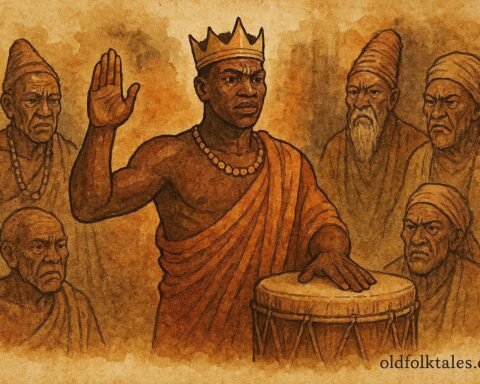
Into this desolate world came a man of great significance, a figure whose name would echo through the ages in Dahomean memory. His name was Zogbo, and he carried within himself the seeds of a new civilization. Zogbo was not merely a wanderer or refugee; he was a founder, a patriarch whose actions would shape the destiny of an entire people.
With determination born of divine purpose, Zogbo crossed the mighty Duwaya, the great river known to others as the Niger, whose waters carved a life-giving path through the harsh landscape. The crossing itself was no simple feat, for the river was wide and powerful, its currents carrying both promise and peril. But Zogbo was undaunted, driven by a vision of the fertile lands that lay beyond.
When Zogbo finally reached the far shore and established himself in this new territory, he was not alone. Two women accompanied him on this momentous journey, women who would become the mothers of the people to come. The first woman bore the name Heti, while the second was called Heto. These three individuals, Zogbo, Heti, and Heto formed the foundation upon which the future Dahomean civilization would be built.
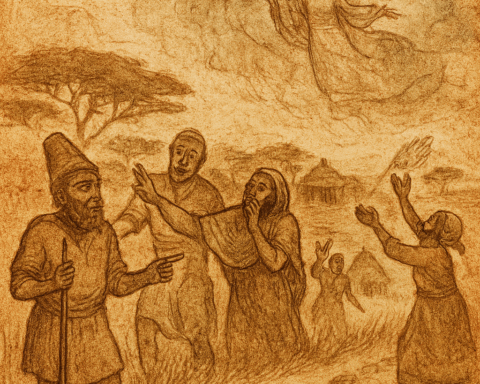
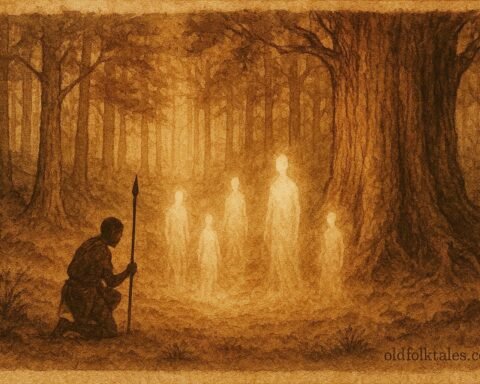
But the divine plan for this land involved more than just human settlement. After Zogbo and his family had established their new home, something extraordinary occurred that would forever change the spiritual landscape of the region. Five prophets, beings of celestial origin and divine wisdom, descended from the heavens themselves to walk among mortals. Their mission was sacred and profound: to explain the mysteries of Fa, the complex system of divination and spiritual guidance that would become central to Dahomean religious life.
The arrival of these five prophets marked a turning point in human history. Before their divine intervention, human life followed a different rhythm entirely. In those ancient days, men and women lived extraordinarily long lives that stretched far beyond what later generations would consider possible. Some reached the remarkable age of four hundred years, while others lived even longer, their lifespans extending to six hundred years or more.
During these extended lifetimes, people had the opportunity to bear many children, generation after generation growing under the guidance of their long-lived parents and grandparents. Yet despite these impressive lifespans and the natural increase in population they allowed, it was only after the five prophets shared their divine knowledge that the people truly began to multiply and flourish in great numbers.
The deeper creation story, however, reached even further back into the primordial past, to the very moment when humanity first drew breath. In the beginning of all beginnings, when the world was nothing but potential waiting to be realized, there existed first just a man and a woman. These two primordial beings, through their union and the divine will that guided their destiny, became the source from which all humanity would spring. They were the original parents, the first thread from which the great tapestry of human life would be woven.
The man bore the sacred name Adanhu, while the woman was called Yewa. These names carried profound significance in Dahomean tradition, representing not just individuals but archetypal figures who embodied the essential nature of masculine and feminine principles in creation.
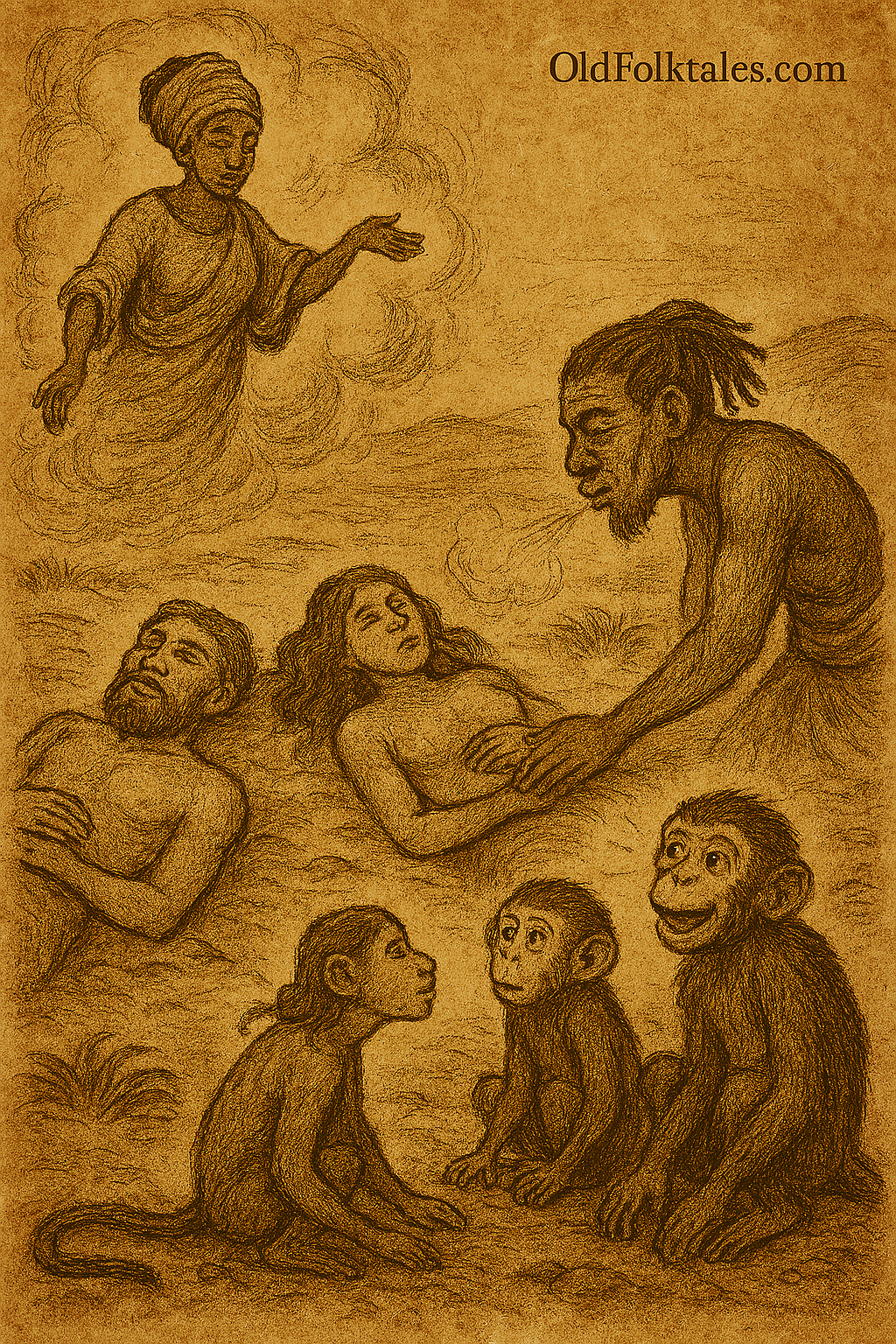
The Creator, in His infinite wisdom and power, chose to fashion human beings from the very earth itself. Using the rich, life-giving soil as His medium, He molded four human forms with His divine hands, two men and two women, each perfectly shaped and ready to receive the spark of life. These four figures lay in their earthly forms, complete in every physical detail yet waiting for the breath of life that would transform them from clay into living beings.
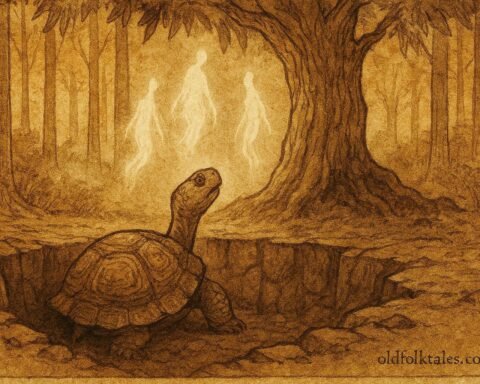
It was at this crucial moment that Legba, the divine trickster and messenger of the gods, chose to intervene in the creation process. Without seeking permission from Mawu, the supreme creator, and lacking the divine knowledge necessary for such sacred work, Legba attempted to breathe life into two of the four earthly forms. His unauthorized interference in the divine plan, though well-intentioned, was flawed from the beginning.
Because Legba did not possess the proper wisdom or authority to create human life, his efforts resulted in an unintended transformation. The two beings he attempted to animate did not become human as intended, but instead became the first monkeys. These creatures, while possessing intelligence and dexterity beyond other animals, remained forever separated from humanity by the circumstances of their flawed creation. All monkeys that have lived since that primordial moment trace their lineage back to these two beings, the inadvertent products of Legba’s misguided attempt at creation.
The remaining two earthly forms, untouched by Legba’s interference, were properly brought to life by the Creator Himself. These became Adanhu and Yewa, the true first humans and the parents of all humanity. Through divine wisdom and perfect execution, they received not just life but the full dignity and potential that was meant to distinguish humanity from all other creatures.
This authentic Dahomean creation story stood in stark contrast to the foreign tales that would later arrive with missionary visitors. When these well-meaning but misguided strangers came to Dahomean lands, they brought with them stories from distant cultures, tales of forbidden fruit and divine prohibition that held no resonance with local spiritual understanding.
The missionaries spoke of Legba offering fruit to the first humans, weaving their foreign narrative into what they mistakenly believed was a universal human story. But the Dahomean people, keepers of their own ancient wisdom, knew better. This tale of fruit and temptation was not part of their heritage. They had never heard such stories from their ancestors, and these foreign elements felt hollow and artificial when compared to their own rich creation traditions.
When the missionaries heard the sacred names Adanhu and Yewa, they made the assumption that all creation stories must be variations of their own. They declared that the Dahomean gods and their own divine figures were identical, merely different names for the same universal truths. With this flawed premise as their foundation, they attempted to teach the complete foreign version of human creation, including elements that had no basis in Dahomean tradition.
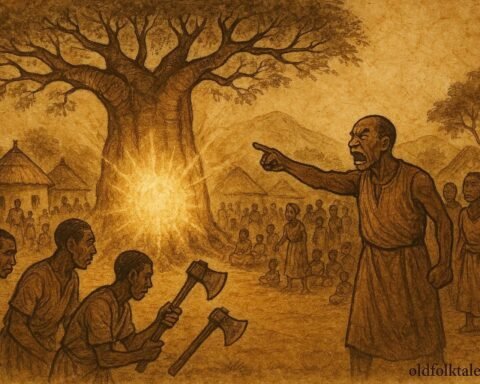
But the Dahomean people, proud guardians of their cultural heritage, firmly rejected these foreign additions to their sacred stories. They understood the difference between their authentic traditions and the imported tales that missionaries sought to impose upon them. “This is not our story,” they declared with the conviction of those who know their own hearts and history. “We know nothing about Legba trying to give fruit.”
The wisdom of the ancestors lived on in their traditional proverb, which honored the memory of their true founder: “When one says he is greater than the other, ask him, ‘Are you Zogbo?'” This saying served as a reminder that true greatness was measured against the standard set by their founding father, the one who had crossed the great river and established their people in their destined homeland.
Moral Lesson
This powerful narrative teaches us about the importance of cultural authenticity and the courage to preserve one’s own traditions in the face of external pressure. The Dahomean people’s rejection of foreign elements in their creation story demonstrates that true spiritual wisdom comes from honoring one’s ancestral heritage rather than accepting imposed interpretations. The story reminds us that while different cultures may share some common themes, each people’s sacred stories are unique and should be respected as such, not forced into foreign frameworks.
Knowledge Check
Q1: Who was Zogbo and what was his significance in Dahomean creation tradition? A: Zogbo was the founding patriarch who crossed the Niger River (Duwaya) and established the Dahomean people in their homeland, accompanied by two women named Heti and Heto. He represents the historical beginning of Dahomean civilization.
Q2: What role did the five prophets play in early human history according to this folktale? A: The five prophets descended from the sky to explain Fa (the divination system) to humans. Their arrival marked the point when people truly began to multiply, even though humans had lived much longer lifespans (400-600 years) before their coming.
Q3: How did Legba’s unauthorized interference affect the creation of humans? A: Legba attempted to give life to two of the four earthly forms created by Mawu, but because he lacked proper divine knowledge and authority, these two became monkeys instead of humans. All monkeys descend from these two beings.
Q4: Who were Adanhu and Yewa in Dahomean creation mythology? A: Adanhu and Yewa were the first true humans, properly created by the divine Creator from the two earthly forms that Legba did not interfere with. They became the parents of all humanity in Dahomean tradition.
Q5: Why did the Dahomean people reject the missionary version of their creation story? A: The Dahomeans rejected foreign elements like the story of forbidden fruit because these were not part of their authentic ancestral traditions. They insisted on preserving their own cultural heritage rather than accepting imposed interpretations from missionaries.
Q6: What does the proverb “Are you Zogbo?” signify in Dahomean culture? A: This proverb serves as a measure of true greatness, suggesting that when someone claims superiority, they should be compared to Zogbo, the founding father who established their civilization. It honors ancestral heritage and authentic leadership.