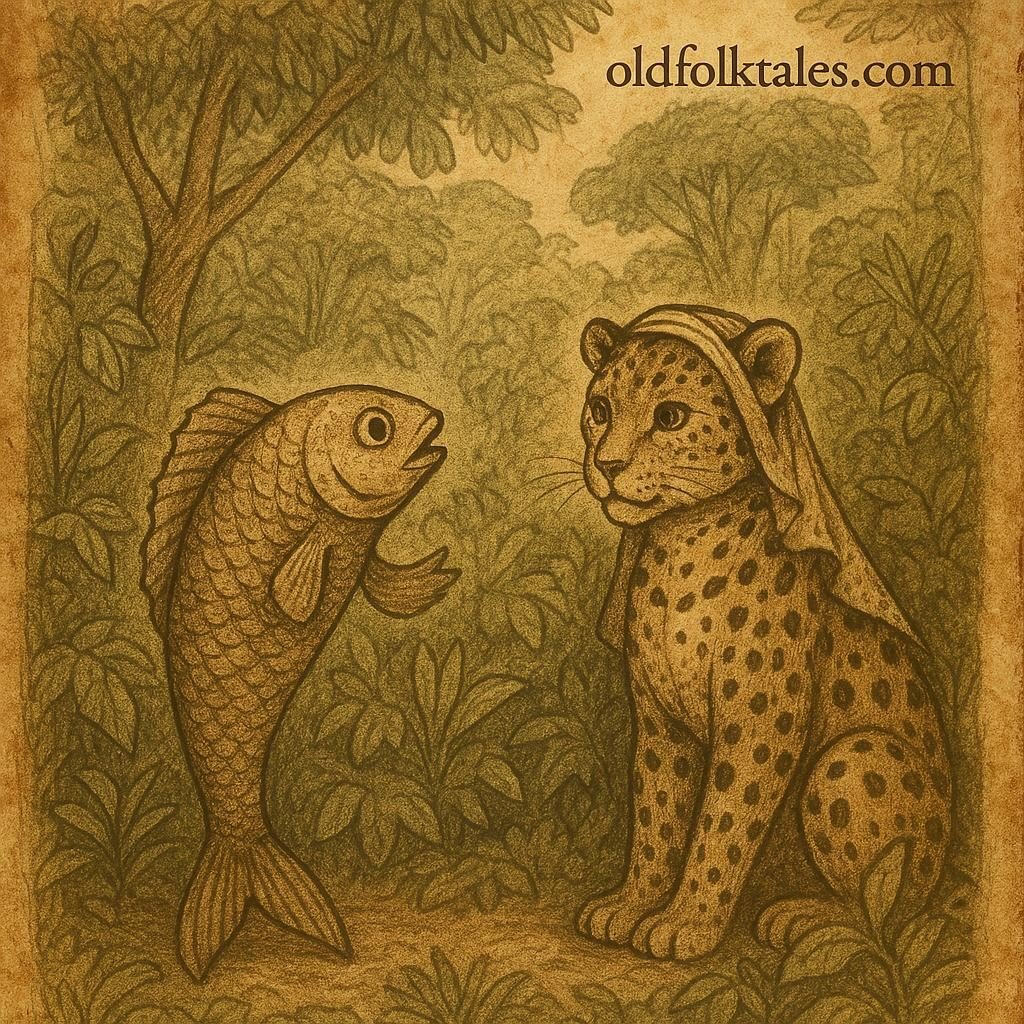
Long ago, in the lush forests of Calabar, the fish did not live in the rivers or streams as it does today. Instead, it roamed the land freely and was known for its friendship with the mighty leopard. The two often met in the thick bush where the leopard lived, sharing stories and enjoying each other’s company. The fish was clever and quick, while the leopard was strong and respected by all the creatures of the forest.
The leopard had a beautiful and elegant wife, whose presence added grace to his home. Over time, the fish became captivated by her beauty and charm. When the leopard was away hunting or attending to the affairs of the forest, the fish would visit the leopard’s house, and secretly spend time with his wife. These clandestine meetings continued for some time, unnoticed by the leopard himself.
However, one day, an elderly woman who lived nearby observed the fish entering the leopard’s home when the leopard was absent. She quickly reported the matter to the leopard, warning him of the fish’s disloyalty. At first, the leopard found it hard to believe. How could a friend who had shared so many meals, stories, and peaceful days betray him in such a way? The leopard’s heart was torn between anger and loyalty.
One fateful night, the leopard returned home unexpectedly while the fish was visiting. He caught the two together, and rage surged through him. His claws flexed, and his teeth gleamed under the moonlight. Yet, remembering their long friendship, the leopard chose not to strike the fish himself. Instead, he decided to take the matter to King Eyo, the ruler of Calabar, hoping that justice would be served through the law rather than through vengeance.
The next day, a grand palaver was held in the king’s court. The forest creatures and villagers gathered, murmuring in anticipation. The leopard stepped forward and presented his case, describing clearly and concisely the betrayal of trust. He spoke of the fish’s repeated visits to his home, of the dishonor brought upon him, and of the friendship that had been violated.
When the fish was called to defend itself, it had no words. It could not deny the evidence, nor could it explain away its actions. The court fell silent as King Eyo considered the matter. The king’s eyes moved slowly across the assembly, weighing the gravity of the betrayal.
“This is a very serious offense,” the king finally declared. “The fish has taken advantage of the absence of a trusted friend and has betrayed the loyalty that should have existed between them. Friendship and trust are sacred. Therefore, a punishment is required that will serve as a lesson for all creatures.”
King Eyo pronounced his sentence: from that day forward, the fish must live in the water. Should it ever appear on the land, it would face death. Additionally, all men and animals were permitted to kill and eat the fish whenever they could catch it, as a lasting punishment for its disloyalty.
The fish had no choice but to obey. Slowly, it moved from the land into the rivers, streams, and oceans, finding new homes in the waters where it could live safely away from predators and friends alike. Its once playful visits to the leopard’s home became a distant memory, replaced by the constant need to survive in the watery depths.
And so, this tale explains why the fish lives in water today and why it must remain there. It serves as a reminder of the consequences of betrayal and the importance of loyalty, even to those we consider friends.
Moral Lesson
This Calabar folktale teaches that trust and loyalty are among the highest virtues in any relationship. Betraying a friend, especially one who has been kind and faithful, leads to lasting consequences. Just as the fish was forced to abandon the land and live in water, those who break trust may lose not only friendship but also freedom and security. Respect, honesty, and loyalty ensure lasting relationships and harmony within communities.
Knowledge Check
Who were the main characters in the story of The Fish and the Leopard’s Wife?
A1: The fish, the leopard, the leopard’s wife, and King Eyo.What did the fish do that caused the conflict with the leopard?
A2: The fish secretly visited the leopard’s wife and betrayed the leopard’s trust.How did the leopard handle the discovery of the fish’s betrayal?
A3: He did not harm the fish himself but reported the matter to King Eyo.What punishment did King Eyo give the fish?
A4: The fish was forced to live in water, and if it appeared on land, it would face death.Why are people and animals allowed to catch and eat the fish according to the tale?
A5: It was a punishment for the fish’s betrayal and disloyalty.What is the moral lesson of The Fish and the Leopard’s Wife?
A6: Betraying a friend has serious consequences, and loyalty and trust are essential for lasting relationships.
Cultural Origin: Calabar folktale, Nigeria