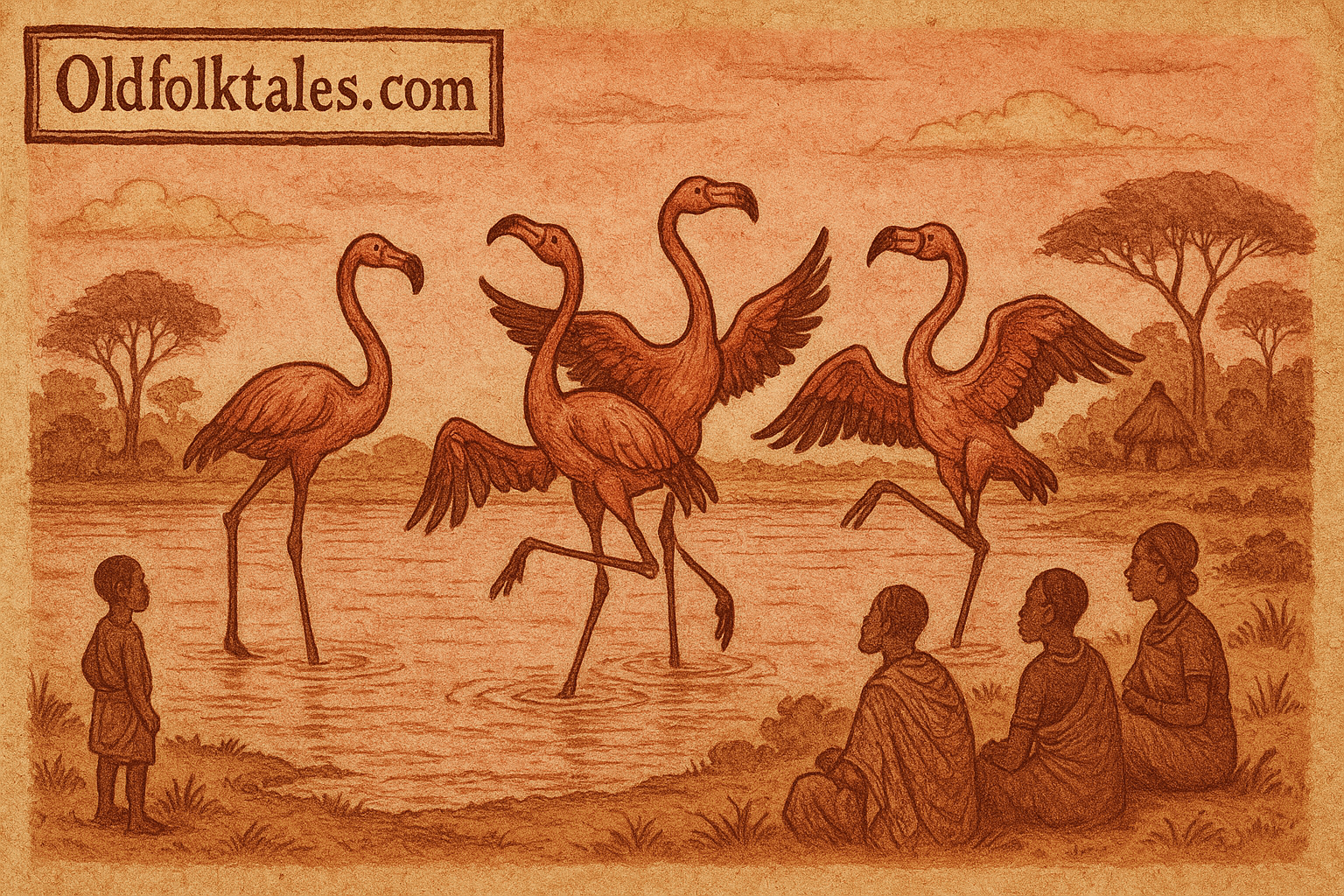
In the warm lands of East Africa, where the savannah meets the shimmering waters of great lakes, there lived a flamingo named Luma. Her feathers glowed like the dawn, and her long neck curved like the crescent moon. She was the pride of her flock, admired for her beauty and envied for the way she moved. When she danced by the water’s edge, even the wind seemed to pause to watch. But Luma was not content. She wished to be the most admired creature in all the land, not just among the flamingos.
One day, as Luma admired her reflection in the water, she noticed the ripples carrying the sound of music from across the lake. It was the Great Dance Festival, held once every five years. All the animals gathered there to show their skill in music, movement, and storytelling. The winner was crowned Spirit Dancer of the Land and forever remembered in song. Luma’s heart leaped. She imagined her name spoken by elephants, sung by nightingales, and whispered by the breeze. She would enter the contest and prove she was the most beautiful and talented of them all.
The journey to the festival was long.
Along the way, Luma met a tortoise carrying a bundle of drums on his back. “Slow and steady,” he said with a smile, “wins more than haste.” Luma barely listened. “You cannot understand,” she replied, “beauty is everything, and speed is my gift.” She hurried past him, eager to reach the festival before others could claim the attention she desired.
When she arrived, the festival ground was alive with color and sound. Giraffes twirled their long necks, zebras stamped their hooves in perfect rhythm, and monkeys leaped in acrobatic spins. Luma’s eyes narrowed. She saw the animals practicing, but none, she thought, could match her grace. She waited for her turn, certain she would dazzle them all.
As the sun dipped low, the competition began. Each animal performed with heart and skill. The tortoise Luma had met on the road played his drums with deep, steady beats that drew all the animals together in one rhythm. The crowd swayed, their spirits lifted by the unity of the sound. But Luma barely clapped. “Just wait until they see me,” she whispered to herself.
Finally, it was Luma’s turn. She stepped into the center, lifted her wings, and began her dance. She spun, bent, and swayed with unmatched elegance. Her pink feathers caught the golden light, and her slender legs moved with the grace of flowing water. At first, the crowd watched in awe. But as she danced, something was missing. There was no joy in her steps, only a hunger to be admired. The animals began to lose interest. A few drifted away to the food stalls. Others whispered to each other. The magic was fading.
Desperate, Luma tried to move faster, to spin higher, but her feet slipped on the grass. She stumbled and fell. The crowd gasped. Luma rose, her face burning, but the music had stopped. She had danced alone, without rhythm, without connection to the others. Her beauty had not been enough.
The tortoise came forward and offered his drum. “Dance with the beat,” he said kindly, “and you will dance with us all.” Luma hesitated. Pride kept her still for a moment, but then she saw the joy on the faces of the dancers around her. She touched the drum, felt the heartbeat of the rhythm, and began to move again. This time, she listened. She matched her steps to the tortoise’s steady beat and the claps of the other animals. Her wings opened wide, not to show herself off, but to share the beauty of the dance with everyone.
The festival ground came alive. The zebras stamped, the giraffes swayed, and the monkeys clapped and laughed. Luma’s movements flowed with theirs, and together they created a dance greater than any one performer. The crowd roared with joy. When the dance ended, the Spirit Dancer crown went not to Luma alone, but to the entire group who had danced in unity.
Luma learned that night that beauty is not in how much others admire you, but in how deeply you connect with them. From that day on, her dances were filled with laughter, rhythm, and shared joy. And though she was still the most graceful flamingo on the lake, she was remembered more for the warmth she brought to the hearts of those who danced with her.
Moral Lesson
The story of The Flamingo’s Dance teaches that beauty alone is not enough to win the hearts of others. True greatness comes from connection, humility, and the ability to share your gifts in a way that uplifts everyone. Pride isolates, but unity creates lasting joy and harmony.
Knowledge Check
1. What is the main theme of The Flamingo’s Dance in African folklore?
The main theme is that true beauty and success come from unity, humility, and sharing talents with others rather than seeking admiration for oneself.
2. How does Luma the flamingo change during the story of The Flamingo’s Dance?
She begins as a proud and self-centered dancer but learns the value of dancing in harmony with others, finding deeper joy in connection rather than personal glory.
3. Why does Luma fail during her first performance in The Flamingo’s Dance?
She fails because she focuses solely on showing off her beauty instead of connecting to the rhythm, the audience, and her fellow dancers.
4. What lesson does the tortoise teach Luma in The Flamingo’s Dance?
The tortoise teaches her that dancing with the beat and in harmony with others brings true success and joy.
5. How does The Flamingo’s Dance reflect African cultural values?
It reflects the values of community, togetherness, and collective celebration, which are central to many African traditions and festivals.
6. What is the symbolic meaning of the festival in The Flamingo’s Dance?
The festival symbolizes the coming together of different members of the community to celebrate unity, talent, and shared joy.
Cultural Origin: Sukuma Folktales from Tanzania