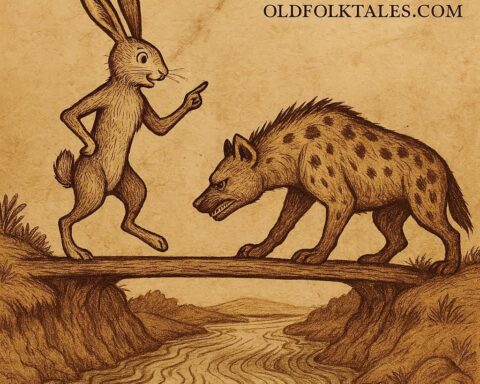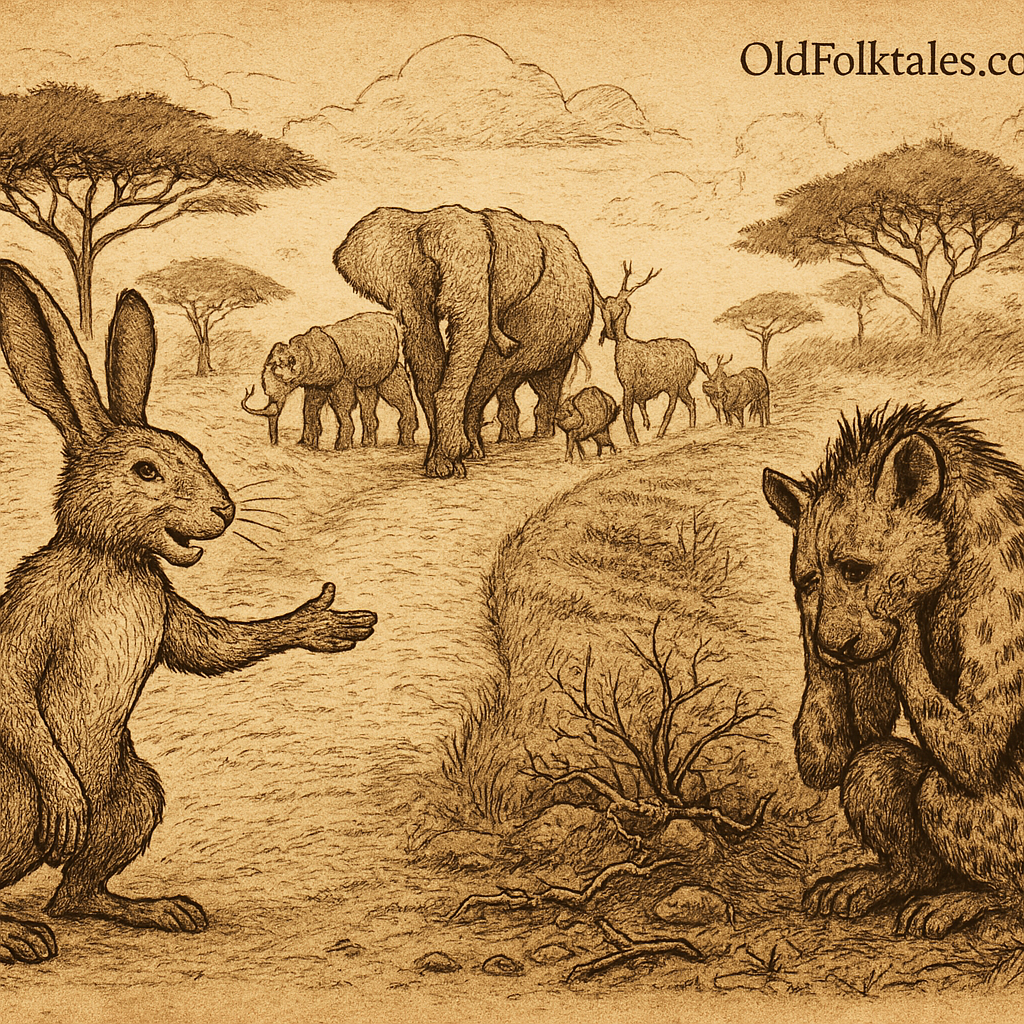
In the sprawling African wilderness, where ancient trade routes connected distant villages and weary travelers journeyed for days through challenging terrain, there lived two neighbors whose approaches to community service would become the subject of countless evening stories around village fires. The thoughtful hare, small in size but large in generosity, and the powerful hyena, strong and capable but often thinking only of herself, both lived near a crucial crossroads where many paths converged.
This intersection had become increasingly important as trade between villages flourished. Merchants carrying precious goods, families visiting distant relatives, messengers bearing important news, and pilgrims seeking sacred places all passed through this vital junction. However, the terrain beyond the crossroads had become increasingly difficult to navigate. Years of seasonal rains had washed out sections of the old paths, thorny bushes had grown across former routes, and fallen trees blocked what had once been clear passages.
Travelers frequently arrived at the crossroads exhausted and frustrated, unsure which way to proceed and discouraged by the poor condition of the available routes. Many would rest at the junction for hours, sharing stories of treacherous paths filled with obstacles that tore their clothes and slowed their progress to a painful crawl.
The wise hare, who had observed this situation with growing concern, felt moved by the struggles of these weary travelers. His compassionate heart was touched by their difficulties, and he began to envision how he might help ease their journey. “These good people have traveled so far and faced so many challenges,” he reflected as he watched a family with young children struggling to decide which rough path to take. “Surely there must be something I can do to make their way easier.”
The hyena, who also witnessed the daily parade of tired travelers, saw the situation quite differently. Her calculating mind immediately recognized an opportunity for personal gain. “Look at all these people passing through our territory,” she mused, her eyes gleaming with possibility. “If I created a path, I could charge tolls or demand payment for passage. This could be quite profitable.”
Both animals decided to create new paths that would provide alternatives to the existing rough routes, but their motivations and methods could not have been more different.
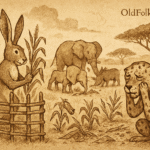
The generous hare began his work with careful planning and genuine dedication to serving others. He studied the terrain thoroughly, identifying the smoothest, most level route possible that would minimize difficulty for travelers of all ages and abilities. He considered the needs of elderly people with walking sticks, families with heavy loads, and merchants with pack animals, designing his path to accommodate everyone who might need to use it.
Day after day, the hare worked tirelessly on his path. With his sharp teeth, he carefully cut away thorny bushes and removed every bramble that might catch on travelers’ clothing or scratch their skin. He used his strong hind legs to kick aside rocks and stones that could trip unwary walkers. He filled in holes and depressions that might collect water during the rainy season, creating a smooth, even surface that would remain passable in all weather.
The hare made his path wide enough for two people to walk comfortably side by side, allowing families to stay together and enabling faster travelers to pass those moving more slowly. He even cleared overhanging branches that might strike tall people in the face and removed fallen logs that could become obstacles during future storms.
Meanwhile, the hyena approached her path-building project with characteristic selfishness and minimal effort. Her primary concern was completing the work as quickly as possible so she could begin collecting payment from travelers. She cleared only a narrow track, barely wide enough for a single person, thinking that this would force travelers to use her path one at a time, making it easier to demand tolls.
Rather than removing the thorny bushes completely, she simply pushed them aside, leaving sharp branches protruding into the pathway where they would snag clothing and scratch anyone who passed. She left rocks and roots in place, creating a treacherous route filled with tripping hazards. The hyena’s path wound unnecessarily through the densest, most uncomfortable parts of the terrain, as she had chosen the route that required the least initial work for her rather than considering the experience of those who would use it.
When both paths were completed, word quickly spread among the traveling community about the new routes available at the crossroads. The first travelers to discover the hare’s path were amazed by its quality and thoughtful construction. They found themselves able to walk quickly and comfortably, without fear of injury or delay. Parents could let their children run ahead safely, merchants could move their goods efficiently, and elderly travelers could navigate the route without assistance.
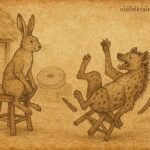
These grateful travelers began bringing gifts to the hare to express their appreciation for his kindness. Some offered food from their own supplies, others brought small crafts or tools from their home villages, and many simply shared news and stories from distant places. The hare’s home became a welcoming gathering place where travelers would stop to rest, share meals, and exchange information with others heading in different directions.
Word of the hare’s excellent path and generous hospitality spread from village to village. Soon, travelers would specifically plan their routes to pass through his area, knowing they could count on safe passage and warm welcome. The constant stream of grateful visitors brought the hare not only material gifts but also rich friendships and fascinating stories from across the region.
The hyena’s narrow, thorn-filled path, however, attracted very different attention. The first few travelers who attempted to use it quickly discovered its hazards and discomforts. They emerged from the passage with torn clothes, scratched skin, and bitter complaints about the poor construction. Word spread just as quickly about the hyena’s inadequate path, and travelers began actively avoiding it.
Soon, no one used the hyena’s path at all. Travelers would arrive at the crossroads, hear warnings from others about the dangerous route, and gratefully choose the hare’s welcoming alternative instead. The hyena found herself completely alone, with no visitors, no gifts, and no company to break the monotony of her solitary existence.
As days turned into weeks, the hyena watched enviously as streams of happy travelers continued to use the hare’s path, bringing him gifts and friendship while completely ignoring her own route. Her selfish approach had backfired completely, leaving her isolated and empty-handed while the generous hare prospered through his service to others.
The Moral Lesson
This timeless African folktale teaches us that genuine service to others, motivated by compassion and generosity, brings rewards that selfishness can never achieve. The hare’s success came not from seeking personal gain, but from thoughtfully considering the needs of others and working diligently to meet them. The story shows us that when we create value for others through our genuine care and effort, we naturally receive appreciation, friendship, and support in return. In contrast, selfish motives and poor effort lead to isolation and failure, as people naturally choose to associate with those who truly serve their interests with skill and kindness.
Knowledge Check
Q1: What is the main difference between how the hare and hyena built their paths in this African folktale? A1: The hare cleared a wide, smooth path free of obstacles, considering travelers’ needs and comfort, while the hyena left her path narrow and full of thorns, focusing only on minimal effort and personal profit rather than user experience.
Q2: What do the two different paths symbolize in this traditional African story? A2: The paths symbolize different approaches to serving others, the hare’s wide, smooth path represents genuine hospitality and selfless service, while the hyena’s narrow, thorny path represents selfish motives and poor effort that ultimately fails to attract support.
Q3: What cultural lesson about community service does this African folktale teach? A3: The story teaches that true community service requires genuine care for others’ needs and quality effort, reflecting African cultural values about hospitality, generosity, and the importance of contributing positively to the community’s welfare.
Q4: Why did travelers choose the hare’s path and bring him gifts while avoiding the hyena’s route? A4: Travelers chose the hare’s path because it was well-constructed, safe, and comfortable to use, and they brought gifts to show appreciation for his thoughtful service, while they avoided the hyena’s dangerous, uncomfortable path that showed no consideration for their needs.
Q5: How does the hyena’s loneliness at the end reflect the consequences of selfish service? A5: The hyena’s isolation demonstrates that selfish motives and poor-quality work in serving others leads to rejection and loneliness, showing how people naturally avoid those who don’t genuinely care about their welfare or put proper effort into helping them.
Q6: What does this folktale teach about the relationship between giving and receiving in African cultural wisdom? A6: The story embodies African cultural values showing that genuine, quality service to others naturally brings rewards in the form of gratitude, gifts, and friendship, while selfish or inadequate service leads to isolation and failure, teaching that we receive in proportion to how well we truly give to others.