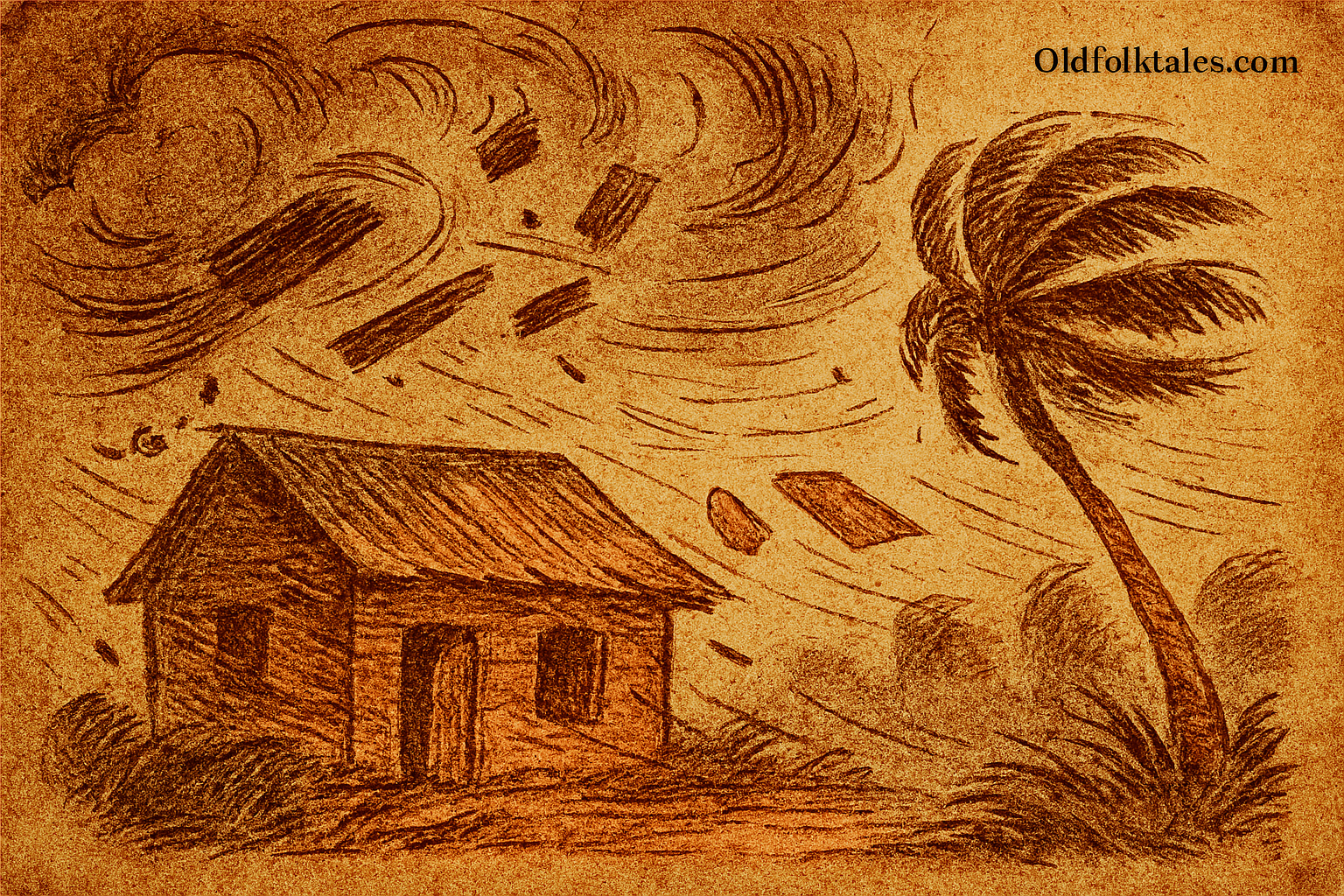
The great storm struck the island like the fist of an angry god, its howling winds reaching speeds that defied human comprehension. Coconut palms that had stood sentinel for decades bent like grass before snapping in half with sounds like gunshots. Corrugated iron roofs were peeled away from houses as easily as pages torn from a book, spinning through the air like deadly butterflies before crashing into whatever lay in their path.
The rivers, normally gentle ribbons of fresh water meandering toward the sea, transformed into raging monsters that devoured bridges, roads, and anything foolish enough to stand in their way. The Indian Ocean itself seemed to rise in fury, hurling massive waves against the coral reefs with such violence that the very foundations of the island trembled. When the eye of the storm passed overhead, an eerie silence fell like a blanket over the devastation, broken only by the distant crash of debris settling and the soft weeping of survivors emerging from their hiding places.
Entire villages that had bustled with life just hours before now stood in ghostly silence, their inhabitants huddled in the ruins of what had once been their homes. Families who had lost everything clung to each other in the darkness, lighting precious candles that flickered like prayers against the overwhelming night. The smell of salt spray mixed with the acrid scent of destruction lingered in the humid air, while broken power lines dangled like dead snakes from tilted poles.
Also read: The Sacred Road Protectors
In this atmosphere of devastation and grief, when the boundary between the world of the living and the realm of spirits seemed as fragile as spider silk, people began to whisper of a new presence stalking the darkness, a figure they came to call Touni Minwi, which meant “Naked at Midnight.”
The first sighting occurred in Mahébourg, a coastal village that had borne the full brunt of the cyclone’s fury. A woman named Devi, whose fisherman husband had been swept away by the storm surge while trying to secure their boat, found herself alone in what remained of their small house. The walls still stood, but the roof had been partially torn away, leaving jagged holes through which moonlight streamed like silver fingers reaching into her grief-stricken world.
On the third night after the cyclone, as Devi lay on her thin mattress surrounded by the belongings she had managed to salvage, she felt a chill creep through her bones despite the tropical warmth. Though she had carefully barricaded the broken windows with pieces of wood and cloth, an inexplicable coldness seemed to seep through the very walls themselves. Her breath began to mist in the suddenly frigid air, and goosebumps rose on her arms like tiny mountains of fear.
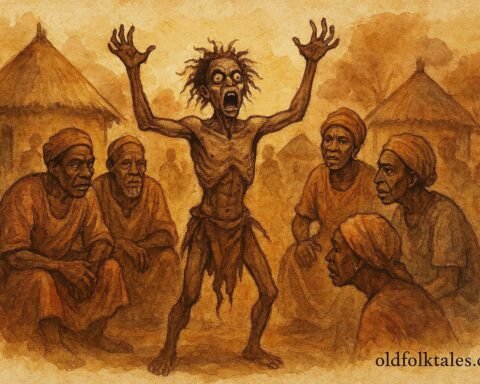
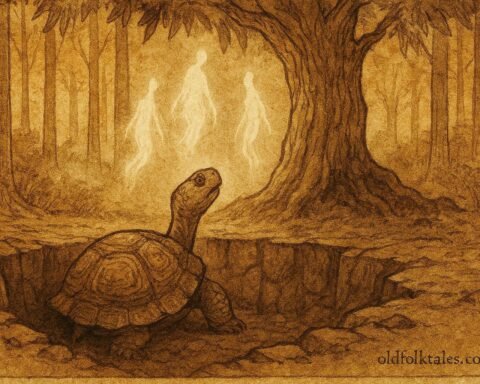
When she opened her dark eyes, adjusting them to the pale moonlight filtering through the damaged roof, Devi saw something that would haunt her for the rest of her days. Standing in the far corner of her bedroom, barely visible yet unmistakably present, was the faint outline of a man,completely unclothed, his pale skin glowing with an otherworldly luminescence like wet sand catching moonbeams on a midnight shore.
His body seemed to flicker between solid flesh and ethereal shadow, as if he could not quite decide which world he belonged to. But it was his eyes that filled Devi with a terror so complete she could not even scream, dark, hollow sockets that stared at her with an hunger that had nothing to do with earthly desire and everything to do with a desperate need that transcended death itself. Those empty orbs held depths of loneliness and desperation that seemed to pull at her very soul.
Before Devi could find her voice to cry out, the ghostly figure began to fade like morning mist touched by the sun’s first rays. But as he vanished, she caught the sharp, unmistakable smell of seawater mixed with something else, the metallic scent of fear and the musty odor of things long dead. In the silence that followed, she heard the soft echo of bare footsteps retreating into the midnight darkness, growing fainter until they merged with the whisper of wind through broken buildings.
Word of Devi’s encounter spread through the devastated communities like wildfire in dry grass. Soon, other women, particularly those who had lost husbands, fathers, or sons to the cyclone’s wrath began sharing similar tales of midnight visitations. The stories followed a disturbing pattern: Touni Minwi appeared only during the darkest hours, always between the stroke of midnight and the first crow of the rooster, when the boundary between night and day was thinnest.
Each sighting occurred when the wind rose suddenly and unexpectedly, carrying with it an echo of the cyclone’s howl that made survivors’ hearts race with remembered terror. The spirit never spoke his mouth remained forever silent yet his presence carried an almost tangible weight of mourning, fear, and grief so profound it seemed to press against the walls of the houses he visited. Some women reported that he would scratch at their doors with what sounded like fingernails worn down to bone, desperately trying to enter homes where women slept alone and vulnerable.
Those unfortunate enough to encounter Touni Minwi rarely escaped unscathed. They would wake the following morning feeling drained and weak, as if something vital had been drawn from their very essence during the night. Fever would grip them for days, accompanied by nightmares so vivid and terrifying that many refused to sleep alone ever again. In their dreams, they would see the storm returning, feel the wind tearing at their clothes and hair, and always, always, they would glimpse that pale, naked figure standing in the eye of the hurricane, reaching toward them with desperate hands.
The island’s elders, those repositories of ancient wisdom who had weathered many storms both literal and metaphorical, offered their interpretation of this supernatural phenomenon. They explained that Touni Minwi was a spirit born directly from the cyclone’s devastation the restless soul of a man who had perished during the storm, caught unprepared and unclothed when the hurricane’s fury swept through the coastal areas.
Perhaps he had been sleeping when the storm surge crashed through his home, or maybe he had been caught bathing when the winds reached their deadly crescendo. Whatever the circumstances of his death, the elders agreed that he had died without the proper rituals, without the prayers and ceremonies that would have helped his spirit find peace in the afterlife. Now he wandered the island in eternal confusion and loneliness, seeking warmth and comfort among the living, drawn especially to women who, like him, had been left alone by the storm’s cruelty.
The grandmothers and wise women of the villages, drawing upon generations of knowledge about protecting homes from unwelcome spirits, shared their time-tested remedies. They advised leaving small bowls of salt water at doorways and windowsills, explaining that spirits born of the sea could not cross such barriers, the salt would burn them like acid, while the blessed water would repel their negative energy.
Many women began tying bright red cloths to their windows and door frames, believing that this vibrant color, associated with life and vitality, would frighten away the pale specter who represented death and loss. The crimson fabric would flutter in the night breezes like small flags of defiance against the supernatural threat that stalked their dreams.
The island’s priests and spiritual leaders emphasized the power of prayer and faith as the strongest protection against Touni Minwi’s haunting presence. They taught that each whispered psalm, each heartfelt appeal to divine protection, created an invisible barrier around the faithful, a shield of light that no creature of darkness could penetrate. Churches began holding special evening services for the cyclone survivors, their voices joining in hymns that rose like incense into the star-filled sky.
As years passed and the immediate trauma of the great cyclone began to fade from daily memory, many islanders came to believe that Touni Minwi was more symbol than actual specter, a manifestation of the collective fear, grief, and vulnerability that had gripped Mauritius in the storm’s aftermath. The legend became a way for the island’s psyche to process the trauma of natural disaster, transforming abstract fears into a concrete form that could be understood, discussed, and ultimately confronted.
Yet the power of the legend endures to this day. Even now, decades after the great cyclone, when the trade winds suddenly pick up speed at midnight and whistle through the palm fronds with unusual intensity, some islanders still pull their blankets a little tighter around their shoulders. In the darkness of their bedrooms, they whisper the protective phrase their grandmothers taught them: “Touni Minwi is walking tonight.”
These words serve as both warning and comfort, a recognition that the forces of nature and the supernatural world demand respect, but also an affirmation that the community’s shared knowledge and traditions provide protection against even the most frightening manifestations of the unknown.
The Moral Lesson
The legend of Touni Minwi teaches us that natural disasters leave scars not only on the physical landscape but also on the collective psyche of survivors. This Mauritian ghost story shows how communities process trauma through folklore, transforming abstract fears into manageable narratives. The tale emphasizes the importance of proper death rituals and community support, while demonstrating how traditional protective practices help people feel empowered against forces beyond their control. Most importantly, it reveals how legends themselves serve as vessels for healing, helping societies transform grief into wisdom that can be shared across generations.
Knowledge Check
Q1: What natural disaster led to the creation of the Touni Minwi legend in Mauritius? A1: A devastating cyclone struck Mauritius in 1994, destroying villages and leaving many people dead or missing, which created the conditions for the Touni Minwi ghost legend to emerge.
Q2: Who was Devi and what role did she play in the Touni Minwi folktale? A2: Devi was a widow from Mahébourg who lost her fisherman husband to the cyclone. She was the first person to report seeing Touni Minwi, the naked ghostly figure that appeared in her damaged home at midnight.
Q3: According to Mauritian folklore, what characteristics defined the ghost Touni Minwi’s appearance and behavior? A3: Touni Minwi appeared as a naked, pale man glowing like wet sand in moonlight, with dark hollow eyes. He never spoke, appeared between midnight and dawn, scratched at doors, and left behind the smell of seawater.
Q4: What did Mauritian elders believe was the origin of Touni Minwi’s restless spirit? A4: Elders explained that Touni Minwi was the spirit of a man who died unprepared and unclothed during the cyclone, without proper burial rituals or prayers, leaving his soul unable to find peace.
Q5: What traditional protective measures did Mauritian women use to guard against Touni Minwi according to the legend? A5: Women used bowls of salt water at doorways (spirits couldn’t cross them), tied red cloths to windows to frighten the ghost away, and relied on prayers and psalms as spiritual barriers.
Q6: How do modern interpretations view the Touni Minwi legend in Mauritian cultural context? A6: Many believe Touni Minwi represents the collective trauma and vulnerability after the cyclone, serving as a symbolic way for the community to process grief and fear through folklore rather than being an actual supernatural entity.
Source: Contemporary Mauritian folklore