In a sun-drenched village on the edge of a winding river lived a girl named Halima. Her voice was soft, but her heart was bold. She was the daughter of a fisherman, and each morning before the sun crested the hills, she would help her father push his canoe into the gentle current. Together they worked the waters, reading the ripples like language.
The river was everything to the village—it gave water, fish, and life. But it was also mysterious. The elders spoke of a spirit who dwelled in its deepest bend, where the current whispered like breath and the trees leaned in to listen.
“Respect the river,” Halima’s grandmother would say. “It watches.”
Halima had heard the legends. They told of Ayandu, the Spirit of the River—a guardian said to appear only in times of great need or deep disrespect. Some said Ayandu took the shape of a beautiful woman, others swore she was made of water and light.
One year, the rains failed. The river shrank, fish disappeared, and the villagers grew desperate. Wells dried, crops shriveled, and arguments filled the air.
Halima’s father, once strong and proud, fell silent. Every day he cast his net into dry shallows and came back empty.
One night, as the moon hung low and golden, Halima crept to the riverbank. She sat where the current still flowed faintly, dipping her fingers into the coolness.
“Please,” she whispered, “we don’t know what we did wrong. But we need you. Help us.”
The wind stirred. The water shimmered. A soft voice—clear, yet echoing—rose from the current.
“Child of the river, why do you speak with truth when others speak with blame?”
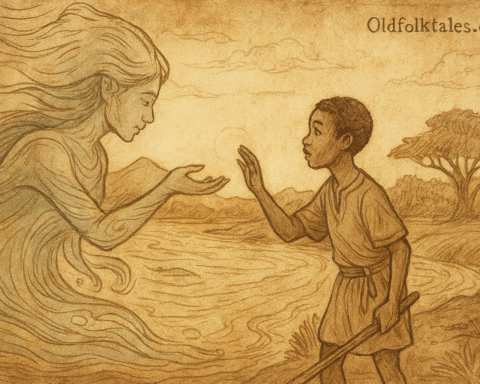
Halima froze. The water before her began to glow. From its depths rose a woman—tall, graceful, her skin like liquid bronze, hair trailing like reeds in the current. Her eyes were pools within pools.
“Are you… Ayandu?” Halima asked.
The spirit nodded. “I hear the river’s pain, and I hear your heart. But your people have forgotten their pact with the water.”
“What pact?”
“They once took only what was needed. They thanked the river. Now they waste, pollute, argue. They ignore the fish who breed too young, the banks that erode. The river remembers.”
Halima’s eyes filled with tears. “We can do better. I promise. Tell me what to do.”
Ayandu stepped closer, her feet skimming the water. *“You, small as you are, can become the voice of change. But it must be done in humility. If the village listens, the water will return.”*
The next morning, Halima gathered the villagers. She told them everything: the voice, the spirit, the warning.
Some laughed. “A child’s dream!”
But the elders went silent. Her grandmother stood. “I believe her.”
Others joined. Slowly, the village began to change. They cleaned the riverbanks, dug smaller wells, stopped waste. Fishermen agreed on new rules to protect young fish. Songs of gratitude were sung before fishing.
Weeks passed. The rains came—soft, steady, full. The river swelled. Fish returned.
And one evening, Halima saw Ayandu again—only for a moment—smiling beneath the surface.
✧ Commentary
This story reflects a deep cultural truth from many West African communities: rivers are not just sources of water—they are living spirits that must be respected. The tale emphasizes balance between humans and nature, and how young voices—like Halima’s—can lead change when rooted in sincerity. Ayandu represents both nature’s memory and forgiveness, while the village’s renewal shows the power of collective action.
✧ Moral
Nature remembers kindness and disrespect alike. When we care for the world, it cares for us. Even the smallest voice can spark transformation.
✧ Questions & Answers
1. Q: Who is Ayandu? A: The Spirit of the River, a guardian who appears when nature is disrespected.
2. Q: Why did the river stop providing? A: Because the villagers had forgotten their responsibility to protect and respect it.
3. Q: How did Halima help save the river? A: She spoke to the spirit with honesty, then led her village to change their ways.
4.Q: What actions did the villagers take to restore balance? A: They cleaned the river, fished responsibly, stopped waste, and honored the river again.
5. Q: What lesson does the story teach? A: That nature responds to how we treat it, and even a child’s truth can lead to healing.