Long ago, when rivers still whispered to the mountains and the winds carried the voices of spirits, there was a village that had forgotten the sound of rain. The land cracked beneath the sun’s relentless fire, and even the oldest baobab stood silent with thirst.
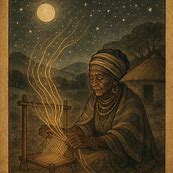
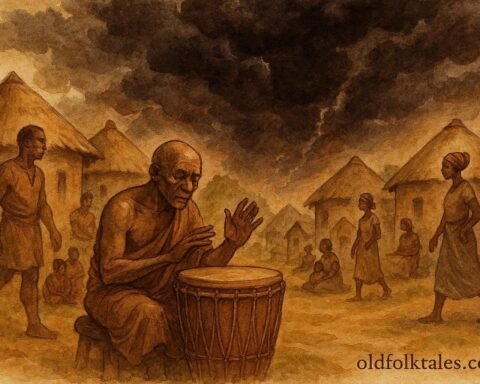
In that dry land lived a young girl named Nomvula, whose name meant “born of rain.” She was small and quiet, yet her eyes carried the reflection of distant storms. Her grandmother, Gogo Nandi, was once the greatest rainmaker the Zulu lands had known. When she sang to the sky, the clouds gathered like cattle returning home. But now she was old and frail, her drum silent, her powers fading with the drought.
Love this story? Discover our full Southern African folktales collection
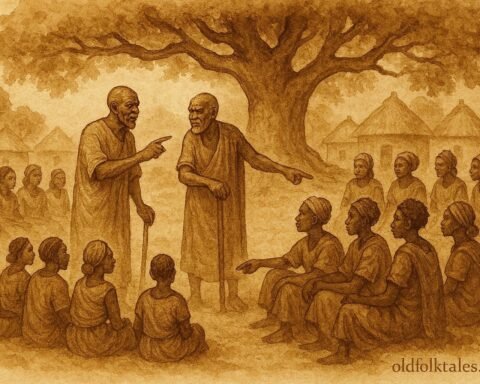
Every morning, Nomvula walked to the riverbed that had turned to dust. She placed her palms on the cracked earth and whispered, “Please, come back to us.” The people of the village grew restless. Crops died, cattle wandered away, and even the drums that once echoed with songs of harvest now lay forgotten.
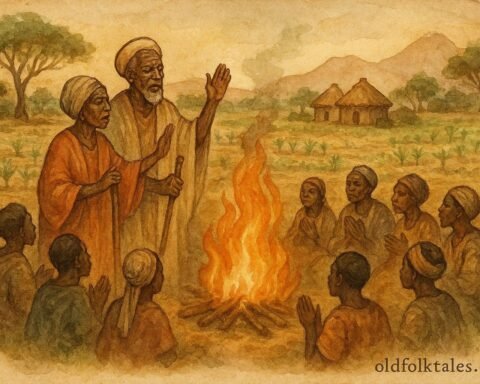
One evening, as the sun melted behind the hills, Nomvula sat beside her grandmother’s fire. Gogo Nandi gazed into the smoke and said softly, “My child, the rain listens only to hearts that remember. The sky has not forgotten us, but we have forgotten how to ask.”
Nomvula frowned. “Then I will learn, Gogo. Teach me how to call the rain again.”
The old woman smiled faintly. “It is not a song you learn. It is a sacrifice you make. Rain falls only where hearts are willing to give.”
That night, Nomvula dreamed of a great river in the sky. Silver fish swam through clouds, and a deep voice called her name. “Nomvula,” it said, “the water of life flows where compassion begins. Go to the Hill of Silence when the moon is full, and bring an offering of truth.”
When morning came, she told her grandmother about the dream. Gogo Nandi nodded. “The spirits have spoken. Go, but remember—no offering is greater than the one that comes from the heart.”
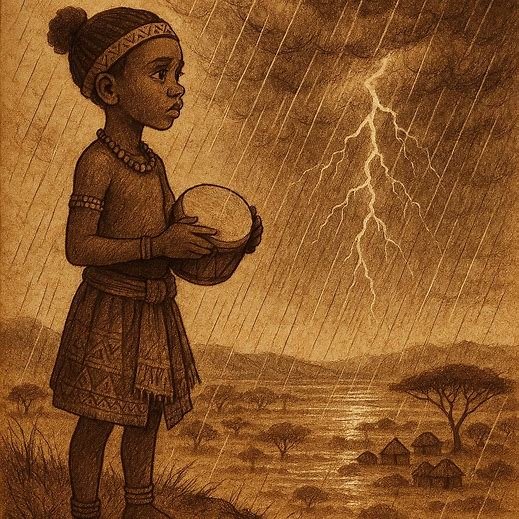
Nomvula prepared for her journey. She took a small drum that once belonged to her grandmother and a calabash filled with the last water from their village well. The people watched her leave, whispering prayers, though few believed a child could bring back the rain.
The Hill of Silence rose beyond the savannah like a giant’s shoulder. Nomvula walked for three days beneath a burning sun. Her throat ached with thirst, but she refused to drink from the calabash, saving it for the spirits.
At sunset on the third day, she reached the top of the hill. The air was still, and the sky glowed red like fire. Nomvula knelt and placed the calabash before her. Then she began to drum softly, singing the song her grandmother once sang:
“Clouds of mercy, rise again,
Carry the tears of those who remember,
Let the rivers dance once more.”
At first, nothing happened. The sky remained dry, the air still. Then a faint breeze lifted her hair. The wind began to hum, low and deep. A single drop of water touched her cheek, warm like a tear.
The voice returned, echoing from the heavens. “Nomvula, what do you offer for your people?”
Nomvula hesitated. She looked at her drum, her water, her weary hands. “I have nothing but my heart,” she said softly. “If my life can bring back the rain, let it be so.”
The wind roared. Lightning split the horizon. The calabash broke open, and from it poured not the small water she carried, but a river that surged across the hill and into the plains below. Nomvula’s song rose with the storm, and the heavens answered with thunder.
Rain fell for seven days and seven nights. Rivers filled, fields turned green, and life returned to the land. The villagers danced beneath the storm, laughing and crying as the earth drank deeply once again.
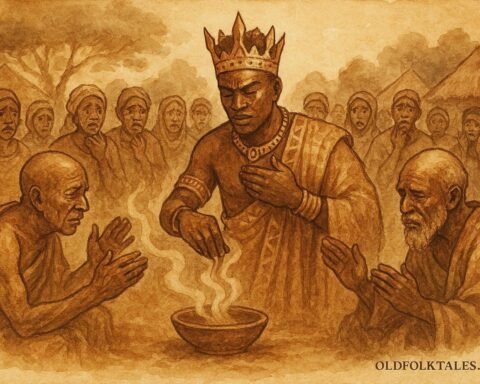
When the rain finally stopped, the people climbed the Hill of Silence to thank Nomvula. But she was gone. In her place stood a single white lily, blooming through the wet soil. Gogo Nandi wept with both sorrow and pride. “She has become one with the rain,” she said.
From that day forward, whenever the first drops of rain fell, the people would lift their faces to the sky and whisper, “Nomvula.” And they would remember that even the smallest heart, when filled with love, can awaken the heavens.
Generations later, when storytellers spoke her name, they would tell children, “Do not forget that the rain listens to those who give.”
And when the thunder rolled over the hills, the elders would smile and say, “The Rainmaker’s Daughter is singing again.”
Moral Lesson
True power comes from selflessness. The rain returned not because of magic, but because one pure heart gave without expecting anything in return. Nature responds to compassion and remembrance.
Knowledge Check
Who is the main character in The Rainmaker’s Daughter?
Nomvula, a young Zulu girl with a pure heart who restores rain to her village.What causes the drought in Nomvula’s village?
The people forgot how to show gratitude and respect for nature’s balance.What does Nomvula bring on her journey?
Her grandmother’s drum and a calabash filled with the last water from the village well.What does Nomvula offer to the spirits on the Hill of Silence?
She offers her own heart and selflessness, proving her purity of spirit.How is Nomvula remembered after she sacrifices herself?
As the Rainmaker’s Daughter, symbolised by a white lily that blooms whenever the rains return.What is the main lesson of the story?
That selflessness and compassion can restore balance between humanity and nature.
Source
Zulu folktale, South Africa. Collected by Credo Mutwa in Indaba, My Children (1964).