Long ago, in a small village along the winding banks of the Congo River, there lived a girl named Mbali. She was not like other children. While others ran and played, Mbali would sit quietly by the water’s edge, listening to the river’s murmurs as if it whispered in a language only she could understand. Her mother often warned her, “Mbali, rivers are not toys. Respect their spirits, or they will take more than they give.” But Mbali could not resist the call of the flowing waters.
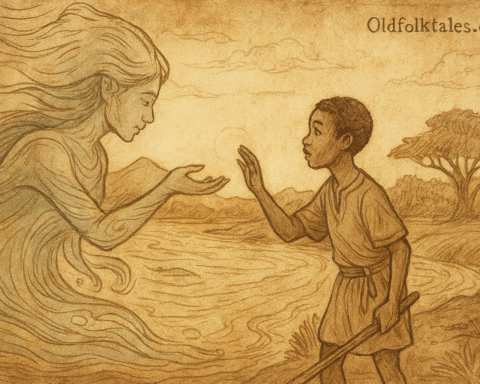
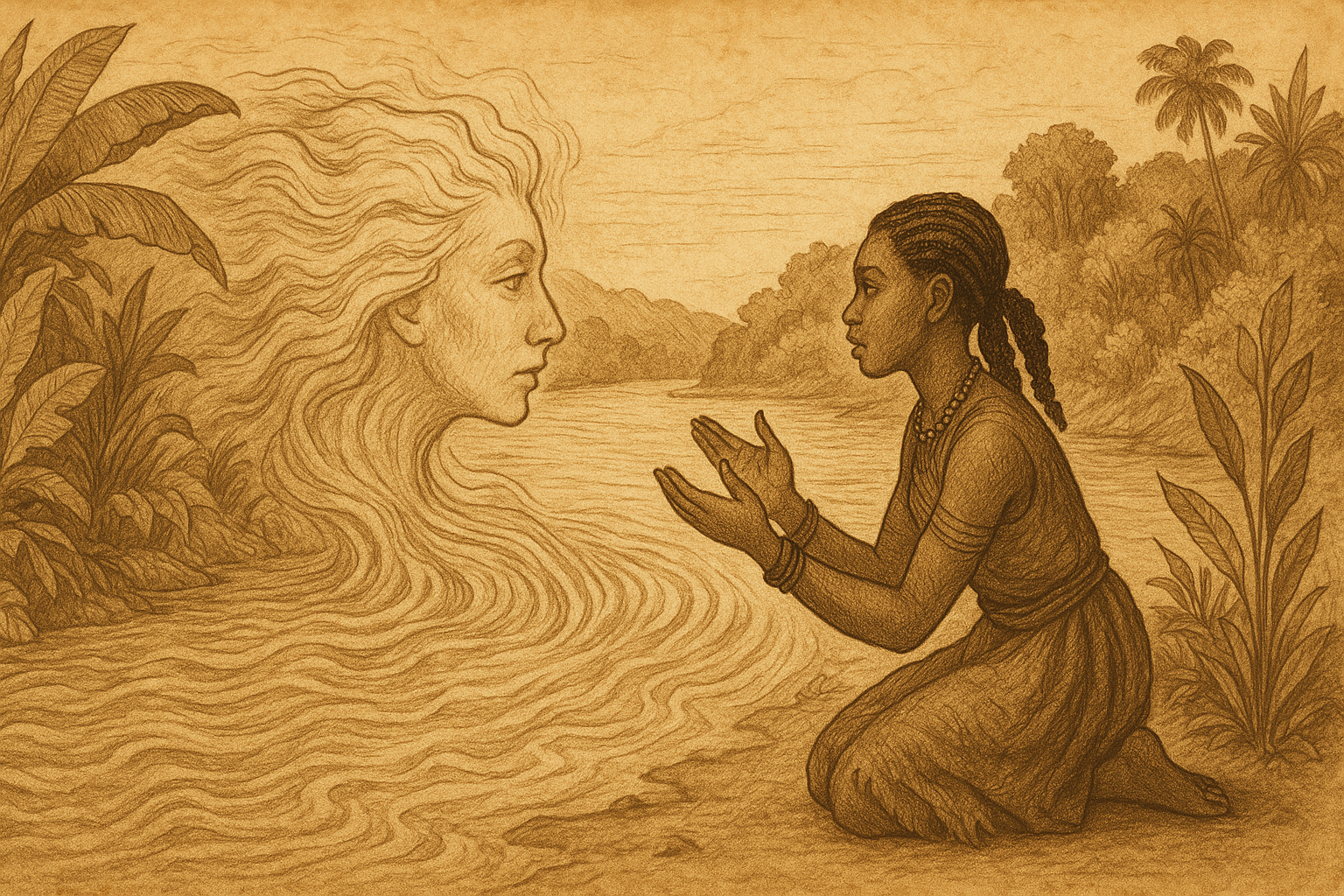
One day, when the sun hung low and the sky blazed gold, Mbali approached the river with a small gourd filled with sweet palm wine. She bowed her head, as her ancestors had taught her, and whispered, “Great river, give me your story.” To her astonishment, the river answered, its voice a soft, bubbling hum. It told her of its journey from the distant mountains, of the fish that danced beneath its surface, and of the spirits that guarded its banks. Mbali’s heart swelled with wonder. She understood that the river was alive, full of knowledge, and it chose to speak only to those who listened with respect.
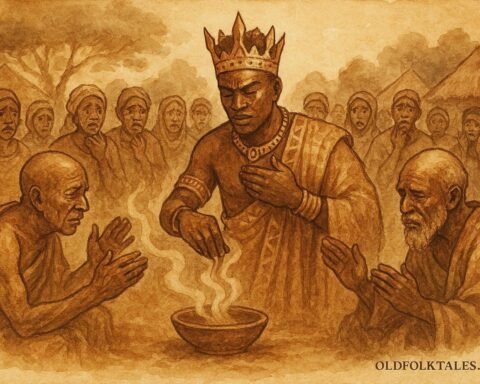
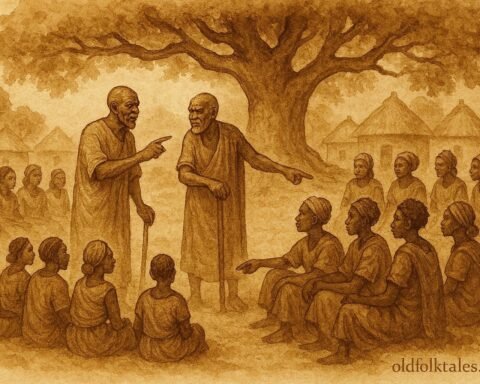
Word of Mbali’s gift spread quickly. Villagers came to see the girl who spoke to rivers. Some were curious, others afraid. They watched as she conversed with the water, nodding and laughing at secrets the river shared. The village elders, however, were wary. They feared that the spirits of the rivers might grow angry if a human claimed to understand them. They gathered in the center of the village under the ancient fig tree. “Mbali must be tested,” the elders decided. “If she truly honors the rivers, she will pass the trial. If not, we must ask the spirits to forgive her audacity.”
The trial was simple in words but difficult in deed. Mbali was to travel alone to the source of the Blue River, deep within the thick forests where sunlight barely touched the ground. She was to bring back a gift that would prove her respect and wisdom. With only her courage and a small satchel of food, Mbali set off at dawn, guided by the whispers of the river that had become her friend.
Days turned into nights, and nights into days. Mbali crossed over mossy stones, waded through streams, and climbed hills where the air smelled of wet earth and growing things. At the heart of the forest, she found the source of the river: a hidden spring where water emerged clear and bright, singing as it began its long journey. Mbali knelt and offered a humble song of thanks. She listened closely, and the spring spoke. It asked her, “Why do you honor me, child, when others do not?” Mbali bowed and answered, “I honor you because you carry life, because you teach, and because you remind us that all things are connected. I listen because without listening, we forget our place in the world.”
The river’s spirit shimmered in the sunlight, and in a ripple of sparkling water, it gifted her a single pearl. Not just any pearl, but one that carried the memory of every river it had touched. “Take this,” the spirit said, “and share its knowledge wisely. Teach your people to honor water, for life flows through it.”
Mbali returned to the village with the pearl. The elders examined it and felt its warmth. They listened as Mbali recounted her journey and what the river had taught her: the importance of listening, of respect, and of living in harmony with the earth. The villagers, young and old, were amazed. From that day forward, Mbali became the keeper of river stories. She guided fishermen on when to cast nets, helped farmers know when to plant, and reminded all that the rivers were alive and sacred.
Years later, when Mbali had grown into a wise woman, the villagers noticed that the rivers seemed fuller, the rains more gentle, and the fish more abundant. They realized that by listening to Mbali, they were listening to the rivers themselves. Children sat by her side, learning to whisper to the water, carrying on her gift and understanding that the world’s secrets often spoke through the simplest of voices.
Moral Lesson
The story of The Girl Who Spoke to Rivers teaches us that listening and respect hold powerful magic. True wisdom does not come from forcing nature to serve us but from observing, understanding, and honoring the life around us. The rivers in our lives, whether they are bodies of water, family bonds, or the flow of knowledge carry lessons if we are willing to listen. By connecting with these lessons, we find balance, growth, and harmony within ourselves and the world.
Knowledge Check: The Girl Who Spoke to Rivers
- Who is Mbali in the folktale The Girl Who Spoke to Rivers? Mbali is a young girl from a village along the Congo River who has the rare gift of understanding and speaking to rivers.
- What was the trial given to Mbali by the village elders? She was asked to travel alone to the source of the Blue River and bring back a gift that would prove her respect and understanding of the river spirits.
- How did the river respond to Mbali’s respect and humility? The river spoke to her, shared its wisdom, and eventually gifted her a pearl carrying the memory of every river it had touched.
- What lessons did Mbali share with her village after returning from the river source? She taught the villagers the importance of listening, respecting nature, and living in harmony with the rivers that sustain life.
- Why is The Girl Who Spoke to Rivers considered a Mongo folktale from DR Congo? It reflects Mongo cultural values of respecting natural spirits, honoring the interconnectedness of life, and the oral storytelling traditions passed down through generations.
- What is the moral of The Girl Who Spoke to Rivers? The folktale teaches that wisdom comes through listening, respect, and harmony with the natural world, and that life’s lessons often speak through subtle voices if we pay attention.
Cultural Origin: Mongo Folktales, DR Congo