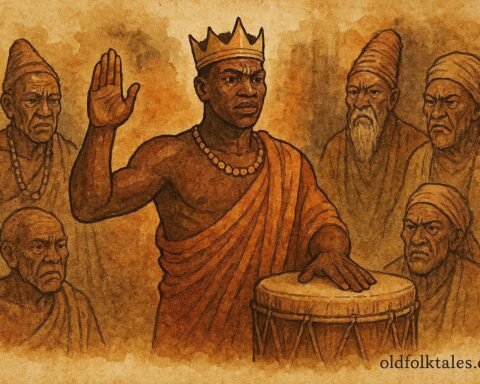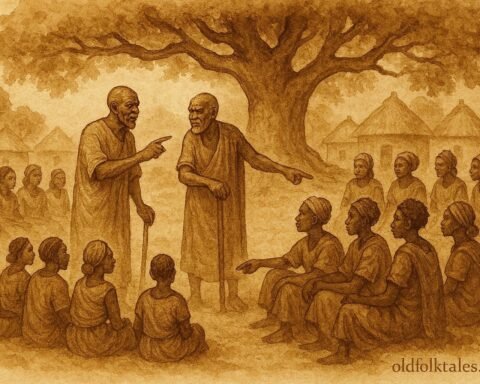
Long ago, in the villages of Equatorial Guinea, the animals lived not only by their strength but also by their pride. Among them, none carried more dignity than the Leopard, fierce hunter of the forest, and none appeared more humble than the Goat, the gentle grazer of the fields. Yet it is told that the Leopard’s wandering anger and his habit of attacking beasts, even those not his prey, began because of a single event, a wrestling tournament that brought pride to the Goats and shame to the Leopards.
The story begins when the Goat Tribe sent a message to the Leopard Tribe: “Let us hold a wrestling match to prove once and for all who among us is stronger.” The Leopards, confident in their power, laughed at the thought. “This tribe of Goats,” they said to one another, “what strength do they have? Let us agree to the contest. They cannot defeat us.”
So it was decided. The day of the tournament came, and both tribes gathered in a wide street of the town. Drums sounded, dancers leaped into the air, and singers filled the air with chants of courage and rivalry. The excitement swelled as the thirty pairs of wrestlers prepared to face each other, one Goat against one Leopard in each contest.
READ THIS: The Race of the Clever Tortoise and the Proud Antelope: Equatorial Guinean Folktale
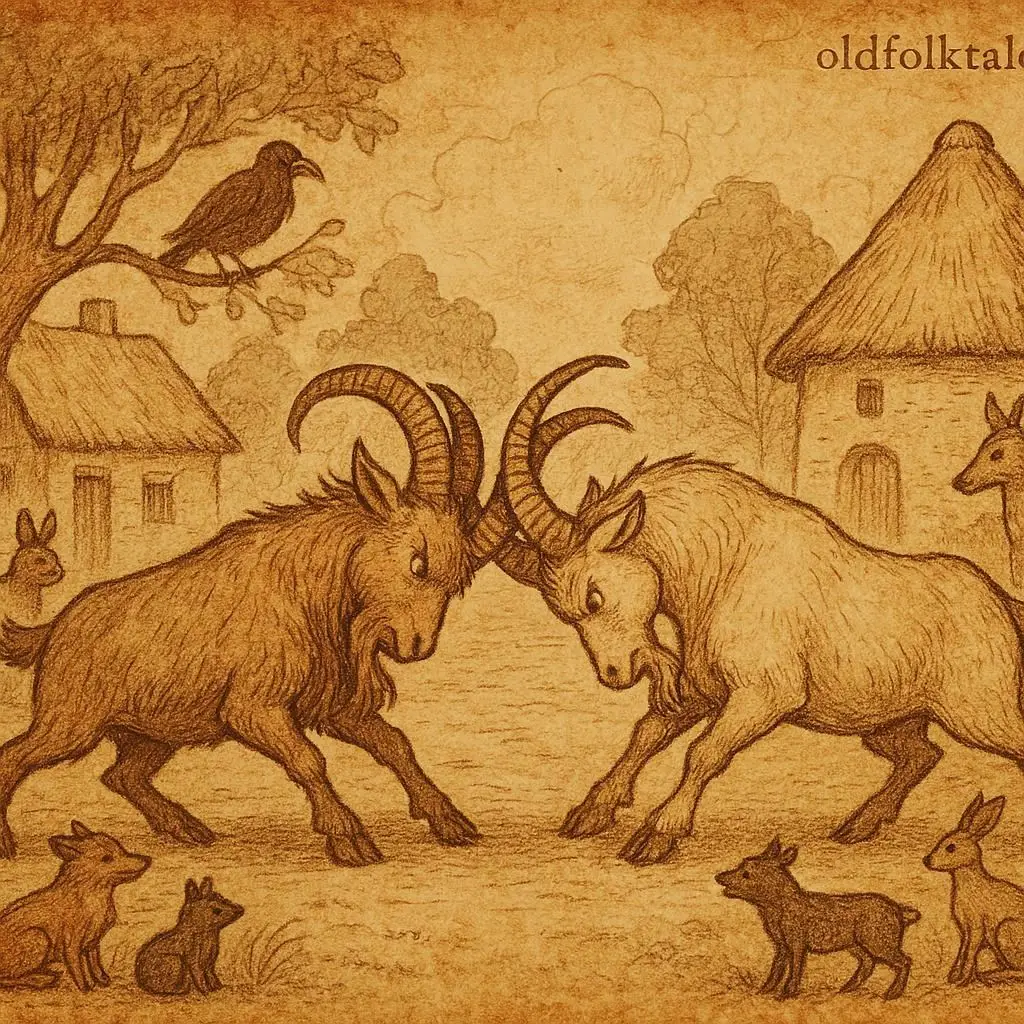
The first pair stepped forward. With shouts and encouragement from both tribes, the wrestlers locked horns and claws. To the astonishment of the crowd, the Goat twisted and threw the Leopard to the ground. A cry of victory rose from the Goat Tribe, while the Leopards beat their drums harder, trying to restore their honor.
A second pair entered the ring. Once again, the Leopard fell. The third pair followed, wrestling with fierce energy. Sweat poured, dust rose, and the crowd roared, but still the Leopard was defeated. Shame burned in the eyes of the Leopard Tribe while the Goats leapt and danced in joy.
By the fourth match, however, the Leopards struck back. Their champion, with a mighty effort, pinned his rival. The Leopard drums thundered, lifting their spirits. In the fifth match, another Leopard found victory, clawing back pride for his people. The sixth pair joined, and the Leopard fighters shouted, “Today, we wrestle to prove once and for all who is truly strongest!”
The contests continued, one pair after another, until all thirty had fought. When the dust settled, the result was clear: the Leopard Tribe had won ten matches, but the Goat Tribe had triumphed twenty times.
Defeat struck the Leopards with deep humiliation. Their voices fell silent, and their leaders spoke in bitterness: “It is a disgrace that the world should know we won only ten times, while the Tomba, the Goats, won twenty. We cannot remain here with their village so near. Each time we see the Goats, we shall remember this shame.”
And so the Leopards withdrew into the forests, far from their rivals. But their anger did not fade. Instead, it grew into a habit of vengeance. From that day on, whenever a Leopard meets a Goat alone, or even another animal allied to the Goat, such as Oxen or Antelopes, he attacks, not for hunger, but to cover the shame of his ancestors.
Moral of the Story
This tale teaches us that pride can be both a shield and a trap. The Goats, though underestimated, proved their strength through unity, determination, and courage. The Leopards, though strong, allowed their pride to become a burden that turned to bitterness. True strength lies not only in muscle but also in the humility to accept defeat with grace. Those who let pride rule them may find themselves forever haunted by the memory of a single loss.
Knowledge Check
1. Why did the Leopard Tribe accept the wrestling challenge from the Goats?
They believed the Goats were weak and could not defeat them.
2. How many wrestling pairs fought in the tournament?
Thirty pairs, one Goat against one Leopard in each.
3. What was the final result of the wrestling contest?
The Goats won twenty matches, while the Leopards won only ten.
4. Why did the Leopards leave their village near the Goats?
They were ashamed of their defeat and did not want to live near their rivals.
5. What behavior of Leopards does this folktale explain?
It explains why Leopards attack Goats and other animals linked to them out of anger and shame.
6. What key lesson does this tale highlight about strength and pride?
That true strength is not only physical but also the ability to handle defeat without bitterness.
Source: Equatorial Guinean folktale