In the old days of the Wolof people of Senegal, when the sun dipped low and the earth cooled, animals gathered to share warmth and wisdom. Among them lived the clever hare, admired for his quick mind, and the greedy hyena, often mocked for her foolish pride. Their rivalry was known across the land, for wherever one went, the other followed, each seeking to prove superiority.
One cold evening, the villagers called out to the animals. “Come, let us sit by the fire. Whoever can bring us the brightest flame will be honored.” The challenge filled the air with excitement. The hare’s eyes sparkled with cunning, while the hyena licked her lips in pride.
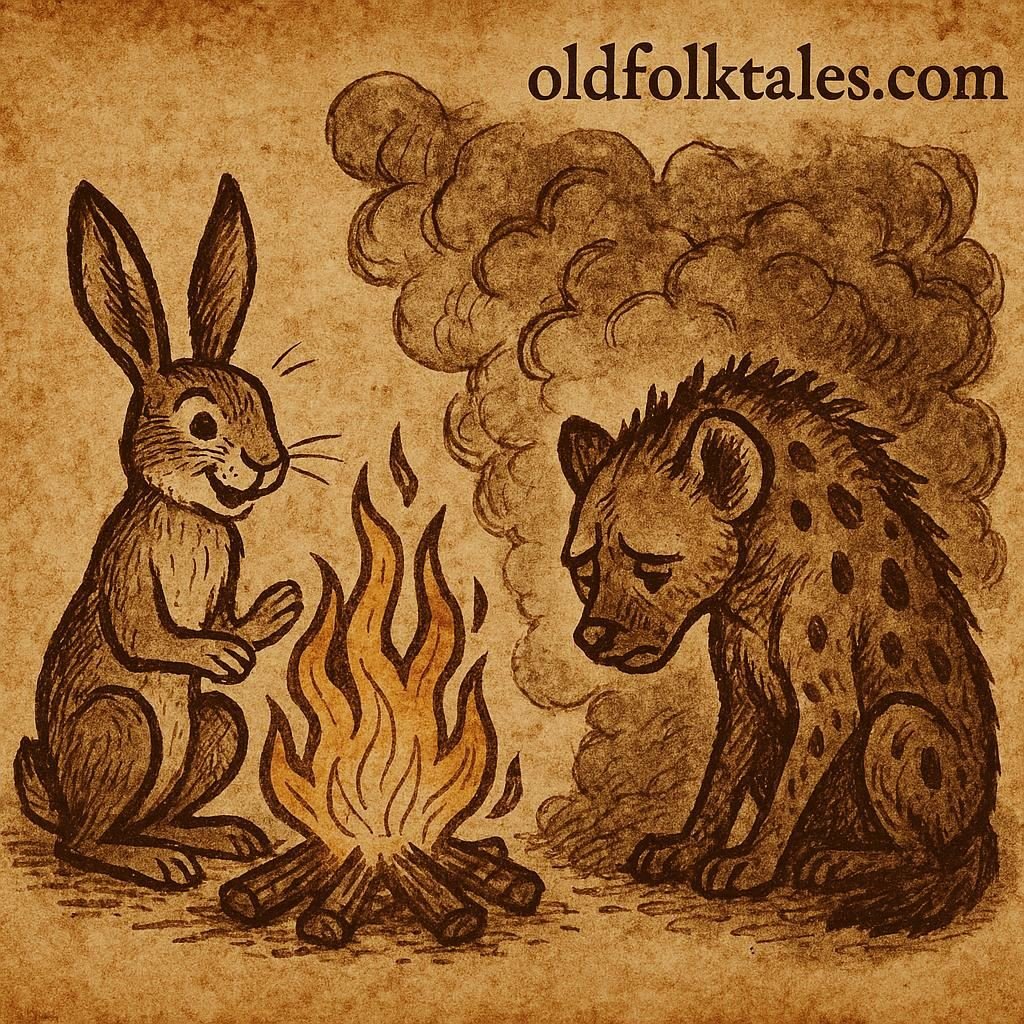
“I will show them,” the hare whispered to himself. He darted into the forest, searching for the driest sticks and twigs. He gathered brittle branches, light as straw, that snapped cleanly when bent. He rubbed them together with skill, his paws moving swiftly. Soon a spark leapt, then another, until flames danced upward, golden and alive.
Meanwhile, the hyena stumbled about. She scoffed at the hare’s careful ways. “Why waste time hunting for dry wood? A fire is a fire,” she muttered. She tore down damp branches heavy with moisture, their bark slick with dew. She piled them high, believing the bigger the heap, the greater the fire. She struck stones together, and after much effort, smoke began to rise. But instead of a steady flame, it was a choking gray cloud.
The villagers gathered. They saw the hare’s fire, bright and steady, warming those who sat near it. Laughter, songs, and the beating of drums soon surrounded the glowing flame. Mothers warmed their children’s hands. Elders stretched their weary legs. All praised the hare’s wisdom.
The hyena’s fire told another story. Her pile of wet wood sputtered and hissed. Thick smoke curled and spread, stinging eyes and throats. Villagers coughed and waved their arms. Children cried. No warmth came from her heap, only misery.
“Come away,” the people said. “Let us sit with the hare.” One by one they abandoned the hyena’s smoky mess, gathering instead by the hare’s light.
The hyena looked around and found herself alone. Her ears drooped, her eyes stung with tears, and shame filled her heart. “Why did I not listen? Why did I not choose carefully?” she whispered. The smoke clung to her fur, making her smell of failure. Unable to bear the laughter of the hare and the joy of the villagers, she fled into the night, her pride shattered.
From that day, the people told this tale: it is not the size of the effort that matters, but the wisdom behind it. The hare, with patience and foresight, earned respect. The hyena, careless and proud, earned only shame.
Moral Lesson of The Hyena and the Hare with the Fire
This Wolof folktale teaches that wisdom and careful choices bring success, while pride and laziness lead to disgrace. The hare’s bright fire shows the reward of patience and skill, while the hyena’s smoke reminds us that shortcuts and carelessness only bring shame. In life, it is not enough to work hard; one must also work wisely.
Knowledge Check: The Hyena and the Hare with the Fire
What lesson does the Wolof folktale The Hyena and the Hare with the Fire teach?
It teaches that wisdom and careful choices bring success, while pride and carelessness lead to shame.Why did the hare succeed in making a strong fire in the story?
The hare gathered dry wood and worked patiently until he created a bright, steady flame.What mistake did the hyena make in the Wolof tale The Hyena and the Hare with the Fire?
The hyena gathered wet branches, which only produced smoke instead of fire.How did the villagers react to the hare’s fire in the story?
They gathered around it, enjoying its warmth, laughter, and light.Why did the villagers leave the hyena’s fire in the tale?
Her fire only produced thick smoke that stung their eyes and gave them no warmth.What cultural value of the Wolof people is reflected in this folktale?
The value of wisdom, patience, and skill over laziness and pride is strongly reflected.Cultural Origin
This story comes from the Wolof people of Senegal. The Wolof are known for their rich oral traditions, where tales of animals often carry lessons about wisdom, community, and the consequences of pride.
source:René Guillot, Contes d’Afrique, 1933, р. 86.