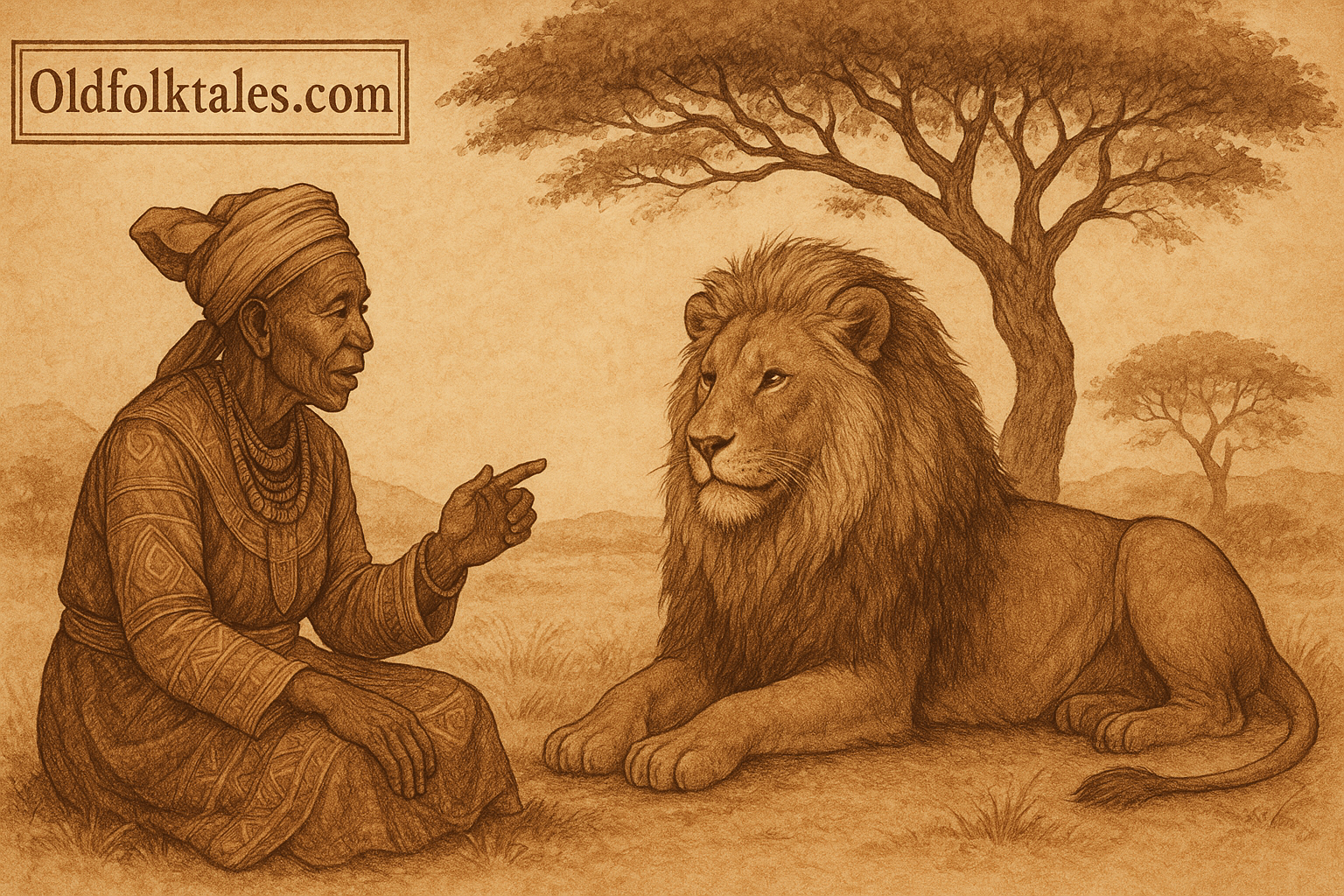
In the days when the sun’s warmth still lingered in the cool of night and animals spoke the tongue of men, the lion was not just the king of the savannah, he was also the keeper of wisdom. It was said that every creature, from the smallest beetle to the tallest giraffe, came to him when troubled. His mane carried the dust of many journeys, and his eyes had looked upon more seasons than the acacia trees that shaded the plains.
One season, the rains failed. The rivers shrank to thin streams, and the grasses became brittle underfoot. Hunger drove animals to quarrel. The zebra accused the wildebeest of stealing his grazing ground, and the hyena laughed cruelly at their misery. The bush echoed with disputes.
A young jackal, clever but impatient, decided he would no longer wait for the lion’s guidance. “Why should the lion keep all the wisdom for himself?” the jackal muttered. “If I had it, I could rule the plains and end this foolish fighting.” His plan grew bolder with each passing day.
One moonless night, the jackal crept through the tall grass until he reached the lion’s den. There, hanging from the branches of a thorn tree, was the great gourd in which the lion kept his wisdom. The lion had sealed it with beeswax so no wind or rain could harm it.
The jackal leapt and caught the gourd in his teeth, dragging it into the shadows. He ran far into the dry hills before stopping to open it. But the gourd was heavy, and its neck was too narrow for his paw. He gnawed and shook it, growing more frustrated.
Just then, the old tortoise, slow and quiet, emerged from the shade of a rock. “What troubles you, young jackal?” he asked.
“I have the lion’s wisdom, but I cannot reach it,” the jackal snapped.
The tortoise chuckled. “Wisdom is not taken by force. It is learned by patience. Give the gourd to the lion, and he may share with you.”
But the jackal only scoffed. He clambered onto a boulder, thinking that if he smashed the gourd, the wisdom would spill out. Yet when he lifted it high, it slipped from his paws and rolled down into a deep ravine.
The sound of footsteps came from behind. The lion emerged, his mane catching the first gold of dawn. “You have run far, little one,” he rumbled.
The jackal’s ears flattened. “I only wanted to help the animals. I thought if I had your wisdom, I could fix the quarrels.”
The lion gazed into the ravine where the gourd had fallen. “You thought wisdom was something to steal, as if it were meat or water. But wisdom lives in the mind, not in a gourd. It grows when you listen, when you wait, when you see beyond yourself.”
The jackal’s tail drooped. He had no reply.
The lion climbed down into the ravine, retrieved the gourd, and carried it back to the thorn tree. But before sealing it again, he turned to the jackal. “Since you came so far, I will give you this piece of wisdom: If you want peace, speak to all sides before you judge. Let each tell their story, and you will see the truth more clearly.”
Ashamed but grateful, the jackal returned to the other animals. He listened to the zebra’s worries, to the wildebeest’s defence, and to the hyena’s laughter. He found a place where grass still grew and led them all there. The quarrels faded, and the savannah grew quiet once more.
From that day, the jackal often sat at the edge of the lion’s den, listening to the old king speak. And though he never again touched the gourd, his own wisdom began to grow, drop by drop, like rain returning to the earth.
Moral of the Story
True wisdom cannot be stolen or forced into the mind—it is learned through patience, humility, and the willingness to listen. Those who rush to grasp it without understanding will find only emptiness. Like the jackal, we learn that respect for the guidance of the wise brings not only answers but also the peace needed to use them well.
Knowledge Check
1. What is the moral lesson of “The Lion’s Wisdom” Bushman folktale?
The moral teaches that wisdom is earned through patience, listening, and humility, not by stealing or taking it by force.
2. How does the jackal try to take the lion’s wisdom in the story?
The jackal steals the lion’s gourd of wisdom and attempts to open it, only to drop it into a ravine before learning its true meaning.
3. Why does the lion keep his wisdom in a gourd according to the tale?
In Bushman tradition, the gourd symbolizes the safekeeping of sacred or valuable things, representing the protection and preservation of knowledge.
4. What role does the tortoise play in “The Lion’s Wisdom” folktale?
The tortoise serves as a voice of patience and reason, warning the jackal that wisdom must be learned rather than taken.
5. What conflict in the savannah prompts the events of the story?
A drought causes food scarcity, leading to quarrels among the animals and the jackal’s desire to take wisdom to solve the disputes himself.
6. How is “The Lion’s Wisdom” an example of an African animal fable?
It features talking animals with human traits, delivers a moral lesson, and reflects Bushman oral storytelling traditions where nature and morality are closely linked.