Long ago, in the dry lands of Tigray where trees stretch toward the sun and rivers run low in summer, there lived a little bird who had just built her nest. She had worked patiently, weaving twigs and leaves into a safe home high on a branch. At last, her eggs hatched, and her heart was filled with joy as she cared for her tiny chicks.
Every morning the bird left to gather food. She flew lightly across the fields, catching insects and searching for seeds. She always hurried back, eager to feed her young ones. One day, however, when she returned from her flight, her world shattered.
The nest was broken. Her chicks lay dead beneath the tree. Shocked, the mother bird looked around for answers. On the ground, she noticed a heavy round footprint pressed deep into the earth. She knew instantly whose foot had caused such a mark. It was the elephant.
READ THIS: The Monks’ Blessing
The elephant was huge and strong, and every day he walked to the river beneath her tree to drink. That day, as he brushed against the trunk, her helpless chicks had tumbled down. Without a thought, he had stepped on them, crushing them beneath his massive feet.
The mother bird flew to confront him. With trembling wings but a fierce voice, she cried, “Elephant, why did you kill my chicks?”
The elephant looked down at her with small careless eyes and said, “So what?”
The bird’s heart burned with grief. “You should apologise for the lives you destroyed,” she told him.
But the elephant only laughed. “Why should I care for the sorrow of such a tiny creature as you?”
The bird’s pain turned into anger. “You will see. You may be large, but I will not forgive this insult.”
The elephant laughed again, a heavy sound that shook the ground. “Ha, ha, ha! What can a small bird do to me?”
The little bird flew away, but she did not give up. She went to her friends, other small birds who lived in the trees nearby. She told them the sad story of her lost chicks and how the elephant mocked her instead of showing regret. Her friends listened with sympathy.
“How can we help you?” they asked.
The bird said, “You can help me by hurting his eyes. If he cannot see, he will no longer walk proudly and carelessly. Then we can find a way to stop him.”
The other birds agreed.
The next day, when the elephant walked again to the river to drink, the birds were ready. They flew at him in a great flock, pecking and scratching at his eyes. The elephant roared in pain, swinging his trunk wildly, but the birds were quick and clever. Soon the mighty elephant stumbled and groaned. He could no longer see.
Blind and confused, the elephant struggled toward the water. But the little bird had another plan. She went to the frogs who lived near the ditches. “Please help me,” she begged. “Croak away from the water so that the elephant will follow your sound. He will believe there is water, but instead, he will fall into the ditch.”
The frogs agreed, and together they made their voices echo loudly across the dry land. Croak, croak, croak! The elephant, thirsty and blind, followed the sound. Step by step he moved closer, thinking he was nearing the river. But instead of water, there was only an empty ditch.
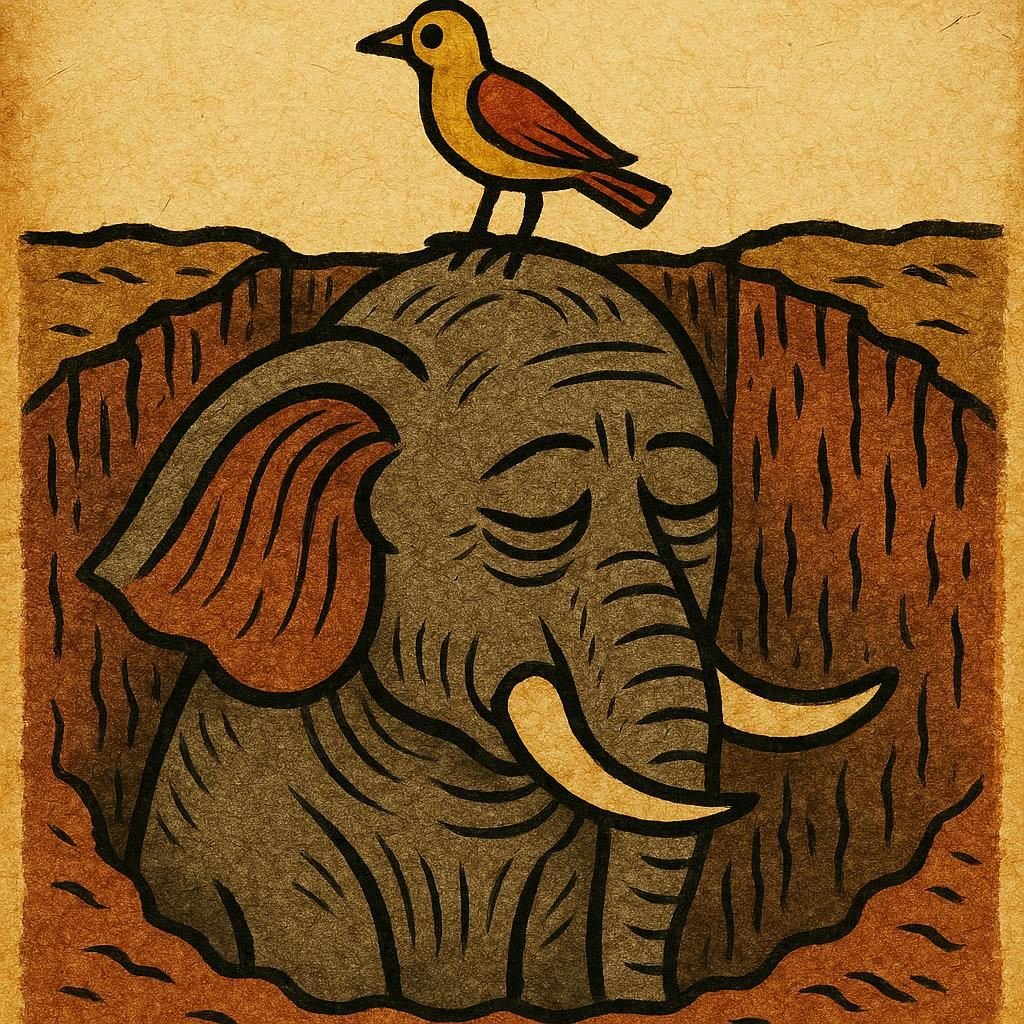
With a great crash, the elephant fell in. He groaned, unable to climb out. His strength meant nothing in his helplessness.
The little bird flew down and landed on his great head. With sharp words, she declared, “You killed my chicks, and you refused to show remorse. Now you have fallen because of your pride. I am small, but justice has been served.”
And so the mighty elephant, who once thought himself untouchable, learned the price of arrogance.
Moral Lesson :
The story of the little bird and the elephant teaches that pride and cruelty bring destruction, no matter how strong one may be. Even the weakest can bring down the mighty when injustice is ignored. Respect for others, big or small, is the true strength of community life.
Knowledge Check
What happened to the little bird’s chicks in The Little Bird and the Elephant?
They were killed when the elephant brushed the tree and stepped on them by accident.How did the elephant respond when the little bird asked him to apologise?
He laughed at her and refused to show any regret.What did the bird ask her friends to do in this Tigray folktale?
She asked other birds to peck at the elephant’s eyes to make him blind.How did the frogs help the little bird in the story?
They croaked away from the water so the blind elephant would follow the sound and fall into a ditch.What was the final fate of the elephant in The Little Bird and the Elephant?
The elephant fell into a ditch and could not escape, while the bird declared her revenge complete.What is the main lesson taught by The Little Bird and the Elephant?
It shows that arrogance and disregard for others lead to downfall, while respect and fairness prevent conflict.
Source: Tigray Folktale, Ethiopia