In the vast, sun-scorched expanse of the Sahara, where golden dunes stretched endlessly to meet the horizon, there once traveled a man known simply as Ramadan. He was a quiet, unassuming traveler, wandering across the desert in search of sustenance and shelter. His journey carried him through isolated stretches of sand, past sparse oases where palms whispered in the evening wind and the distant call of camels echoed across the dunes.
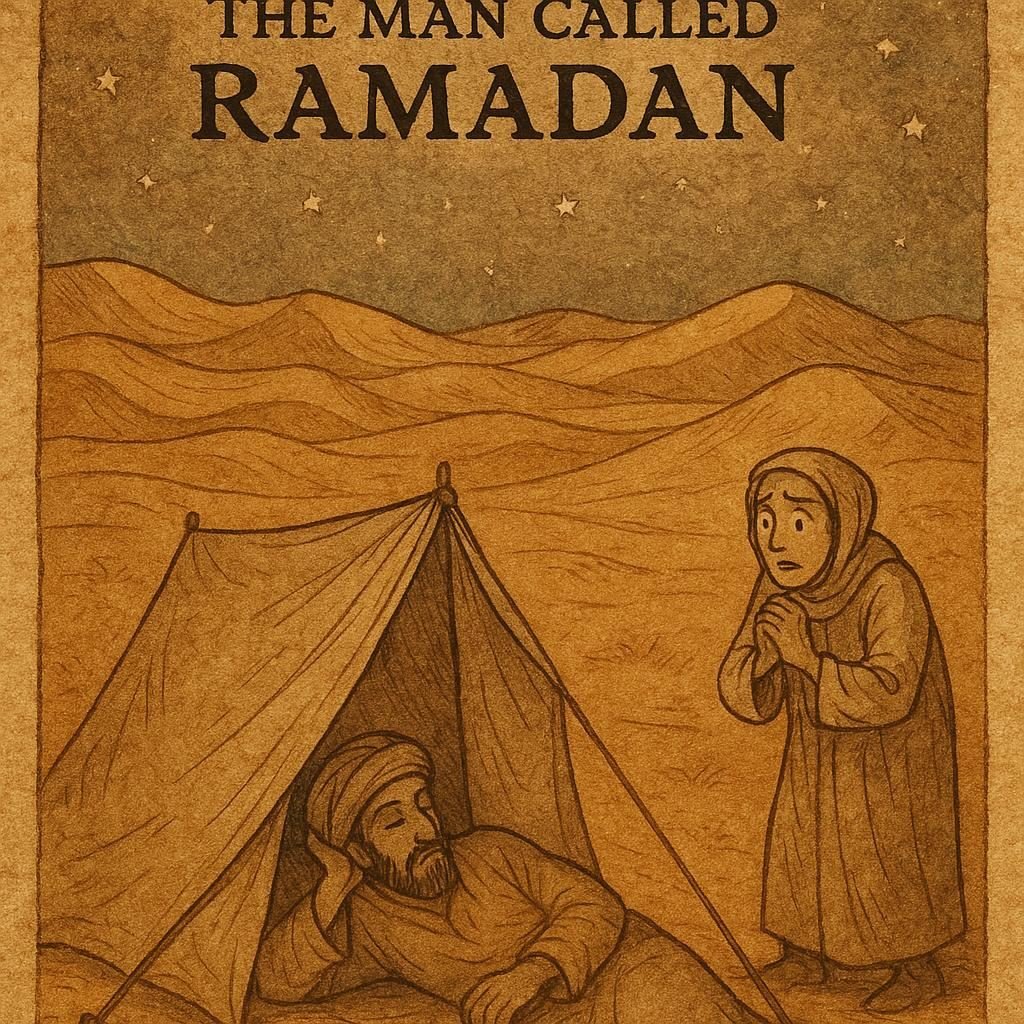
As night fell on one particularly starlit evening, Ramadan arrived at a solitary tent perched beside a modest well. The fire of the setting sun had cooled, and the desert night carried its familiar chill. Hoping for a warm meal and rest, he approached the tent and politely requested hospitality from its owner.
The tent’s occupant was a man of humble means, living in isolation and unacquainted with travelers of far-off lands. He welcomed Ramadan with a small offering of bread, dates, and water, curious about the stranger who had ventured so far into the Sahara. “What is your name, stranger?” he asked kindly, as they shared the modest meal under the glow of an oil lamp.
“I am called Ramadan,” the traveler replied simply, his voice calm and serene, unaware that his name would soon spark a grave misunderstanding.
The man, naive and uninformed, had never heard of anyone by that name. Instead, he associated the word “Ramadan” with the holy month of fasting observed across the Arab lands each year. Confused and fearful, he misinterpreted the traveler’s name as some ominous omen. That night, while Ramadan slept under the faint glow of the tent lamp, the host, gripped by superstition and fear, committed a terrible act: he killed his guest.
Months passed. The desert sun rose and fell, marking the passage of time over the endless dunes, and the story of that fateful night became known only in whispers among nearby travelers. Then, one day, a pious sheikh visited the man who had taken Ramadan’s life.
“Do not forget,” the sheikh said earnestly, “that next month is Ramadan. You must fast and observe the holy month as commanded.”
The man’s face darkened. Guilt mixed with stubbornness, and he replied bitterly, “No, I shall not fast any longer. I had a guest a short while ago named Ramadan… and I killed him. Therefore, there is no more Ramadan for me.”
The sheikh’s eyes widened with shock, and the weight of the man’s misunderstanding settled over him like the Sahara night. In his mind, the tragedy was not only the loss of a life but also the consequence of ignorance and fear.
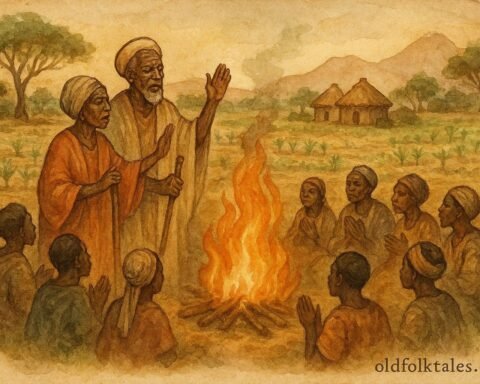
In this way, the tale of the man called Ramadan became a cautionary story told across the desert. Travelers would recount it beside fires under the stars, warning that misunderstanding and ignorance, when paired with fear, could destroy what is most sacred. The story echoed across Algeria, reminding all who heard it of the fragile balance between knowledge, hospitality, and superstition.
Moral Lesson
This folktale teaches that ignorance and fear can lead to devastating consequences. Hospitality, understanding, and knowledge are essential virtues; assuming or misinterpreting without inquiry can destroy lives and harm traditions.
Knowledge Check
Who was the main character in the Algerian folktale?
– Ramadan, a traveler wandering through the Sahara.
Why did the tent owner kill Ramadan?
– He misunderstood Ramadan’s name, associating it with the holy month, and acted out of fear.
What lesson did the sheikh try to convey to the man?
– That he should still observe Ramadan by fasting, despite his misunderstanding.
What does the story emphasize about hospitality?
– That offering or refusing hospitality based on ignorance can have serious consequences.
Where is this folktale set?
– In the Sahara Desert, Algeria.
What is the overarching moral of the story?
– Ignorance and fear can lead to tragedy; understanding and knowledge are vital.
Source: Algerian Folktale