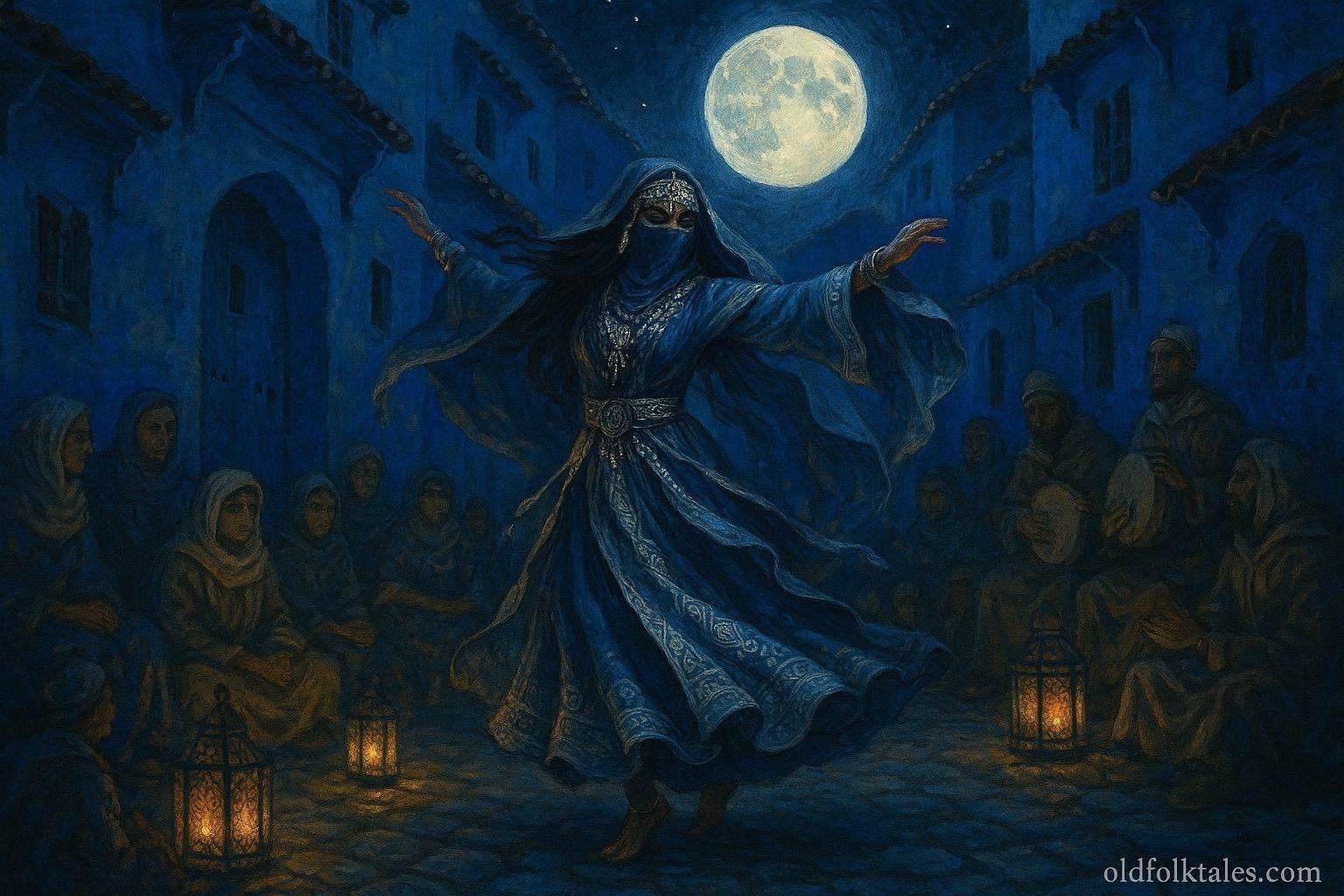
Hidden within the Rif Mountains of northern Morocco stood the beautiful town of Chefchaouen, a place known for its blue painted streets, mountain air, and quiet spiritual atmosphere. Travelers arriving from distant regions often described the town as dreamlike, especially at night when moonlight reflected across its blue walls and narrow stone pathways.
For centuries, Chefchaouen had been a meeting place of culture, faith, and oral tradition. Merchants, musicians, spiritual teachers, and mountain villagers all passed through its winding streets carrying stories that blended history with mystery.
Among the Rif Amazigh communities surrounding the town, many believed certain nights carried unusual spiritual power.
Particularly during the full moon.
According to old traditions, the mountains became closer to the unseen world during those nights. Music, prayer, and celebration were believed capable of attracting blessings from forces hidden beyond ordinary human understanding.
One of the oldest legends preserved among the people of Chefchaouen was the story of the Moon Dancer, a mysterious woman said to appear during moonlit festivals before vanishing again with the arrival of dawn.
Some believed she was a wandering spirit.
Others claimed she was the protector of the mountain town itself.
Click here to discover more legendary tales from West Africa
And some whispered that she was once human long ago but had become tied forever to the moonlit nights of Chefchaouen.
The story began many generations earlier during a time when the town suffered from hardship and uncertainty.
Severe winters damaged farms throughout the Rif Mountains.
Trade routes became dangerous because of bandits crossing the hills.
And fear slowly spread among the people as poverty deepened across nearby villages.
During that difficult period lived a young musician named Yassin, the son of a respected drum maker known throughout the region. Yassin loved music more than anything else and spent much of his time learning ceremonial rhythms performed during village celebrations and religious gatherings.
Unlike many young men his age, Yassin was quiet and thoughtful.
He often wandered alone through the narrow streets at night listening to the sounds of the town beneath the mountain winds.
One autumn evening, during preparations for a large harvest festival, elders organized a moonlit gathering in the main square of Chefchaouen hoping music and celebration would restore hope to the struggling community.
Lanterns were hung across rooftops.
Musicians prepared drums and flutes.
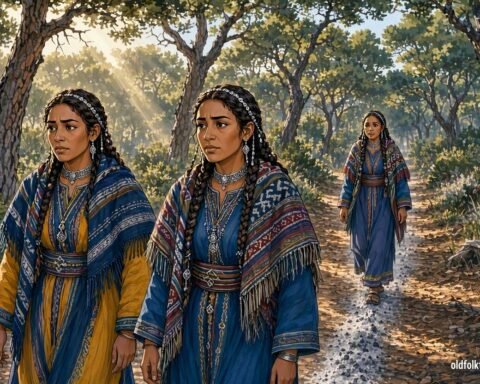
Families gathered wearing traditional clothing embroidered with Amazigh designs.
As the full moon rose above the mountains, the celebration began.
At first, the festival felt ordinary.
Children danced through the streets.
Vendors served warm bread and mint tea.
Musicians filled the square with rhythm and song.
Then something unexpected happened.
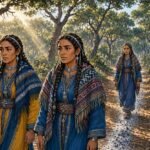
As the drums echoed across the square, a woman dressed in flowing silver and blue garments appeared silently among the crowd.
No one saw where she came from.
One moment the square was full of dancers and musicians.
The next moment she stood at the center beneath the moonlight.
Her face remained partly hidden beneath a delicate veil decorated with silver thread. Around her wrists and ankles hung small ornaments that shimmered softly whenever she moved.
Without speaking a single word, the woman began to dance.
The entire square fell silent.
Her movements were unlike anything the villagers had ever seen.
Graceful.
Slow.
Almost weightless.
As though the music itself carried her across the stone ground.
The drums seemed to follow her rhythm naturally, even though no musician understood how the timing changed so perfectly around her movements.
People watched in complete fascination.
Even the mountain wind seemed to quiet while she danced beneath the moonlight.
Yassin felt something unusual immediately.
The dancer’s presence filled him with both peace and sadness at the same time, as though her dance carried memories older than the town itself.
For nearly an hour she danced without interruption while the crowd stood mesmerized.
Then, just as suddenly as she appeared, she vanished.
No one saw her leave the square.
The music stopped.
The moonlight remained.
But the mysterious dancer was gone.
For days afterward, people throughout Chefchaouen spoke of nothing else.
Some claimed she was a holy spirit sent to bless the town.
Others insisted she must have been a wandering performer from distant lands.
Yet no traveler matching her description was ever found.
Then strange changes began appearing across the region.
Rain arrived after months of dryness.
Trade caravans safely returned through the mountains.
Families who had suffered poor harvests unexpectedly experienced successful farming seasons.
Gradually, people began believing the appearance of the Moon Dancer had restored balance and blessing to the town.
From that year onward, the moonlit festival became an annual tradition.
Every full moon during the harvest season, musicians and villagers gathered once more in the square hoping the mysterious dancer would return.
For several years, nothing unusual happened.
Then during another festival, she appeared again.
Older now.
Or perhaps unchanged.
No one could tell.
Once more she danced silently beneath the moonlight while the town watched in wonder.
Again she vanished before dawn.
And again, periods of peace and prosperity followed her appearance.
As years passed, the legend spread throughout northern Morocco.
Travelers journeyed to Chefchaouen hoping to witness the Moon Dancer for themselves. Some came seeking blessings.
Others came out of curiosity.
But the dancer never appeared predictably.
Sometimes many years passed without any sign of her.
Then suddenly she would emerge during a festival beneath the full moon as though no time had passed at all.
Yassin, who eventually became one of the town’s most respected musicians, spent much of his life trying to understand the mystery behind the dancer.
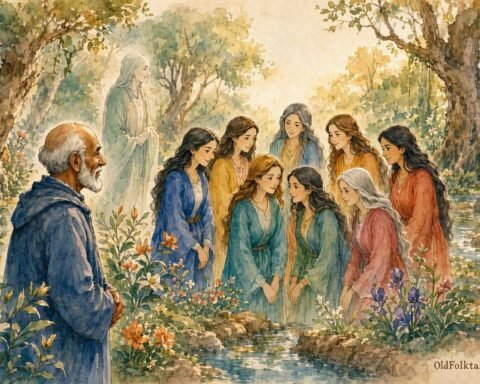
One winter evening late in his life, he encountered an elderly woman living alone near the mountains outside Chefchaouen. She listened quietly as he described the legend of the Moon Dancer and his many years searching for answers.
After a long silence, the old woman spoke softly.
She explained that long ago, before hardship struck the town, there lived a young dancer from the mountains who devoted her life to bringing joy and peace through music during times of suffering.
According to the story, she died unexpectedly during a season of famine while helping isolated villages survive the winter.
But because her spirit carried extraordinary compassion and love for the people of Chefchaouen, the moon itself allowed her to return whenever the town needed hope most.
Before Yassin could ask further questions, the old woman disappeared into the mountain fog.
He never saw her again.
As he walked back toward the town beneath the moonlight, Yassin began wondering whether he had spoken to an ordinary woman at all.
That same night, the Moon Dancer appeared once more in the festival square.
Older villagers wept openly as she moved gracefully beneath the silver moon while drums echoed through the blue streets of Chefchaouen.
By dawn, she vanished again.
Generations later, the story of the Moon Dancer remains one of the most beloved legends of northern Morocco.
Some believe she is only a myth created through centuries of storytelling.
Others insist the dancer still appears during rare moonlit festivals when the people of Chefchaouen need spiritual comfort and blessing.
Even today, elders say that if the drums of the mountain town play with perfect harmony beneath a full moon, it means the Moon Dancer is listening somewhere nearby.
Waiting for the right moment to return once again.
Explore the wisdom and wonder of North African folktales
Moral Lesson
Beauty, kindness, and spiritual hope can bring peace and unity during difficult times.
Knowledge Check
- Where is the story set?
It is set in the blue mountain town of Chefchaouen in Morocco. - Who was Yassin?
He was a young musician who witnessed the mysterious Moon Dancer. - When did the Moon Dancer appear?
She appeared during moonlit festivals beneath the full moon. - What happened after the dancer appeared?
Peace, rain, and prosperity returned to the region. - Why did people believe the dancer was special?
They believed she brought spiritual blessings and protection to the town. - What lesson does the story teach?
Hope, beauty, and kindness can restore peace during hardship.
Source
North African folklore. Adapted from Rif Amazigh ceremonial traditions preserved in northern Moroccan oral narratives and folklore studies.