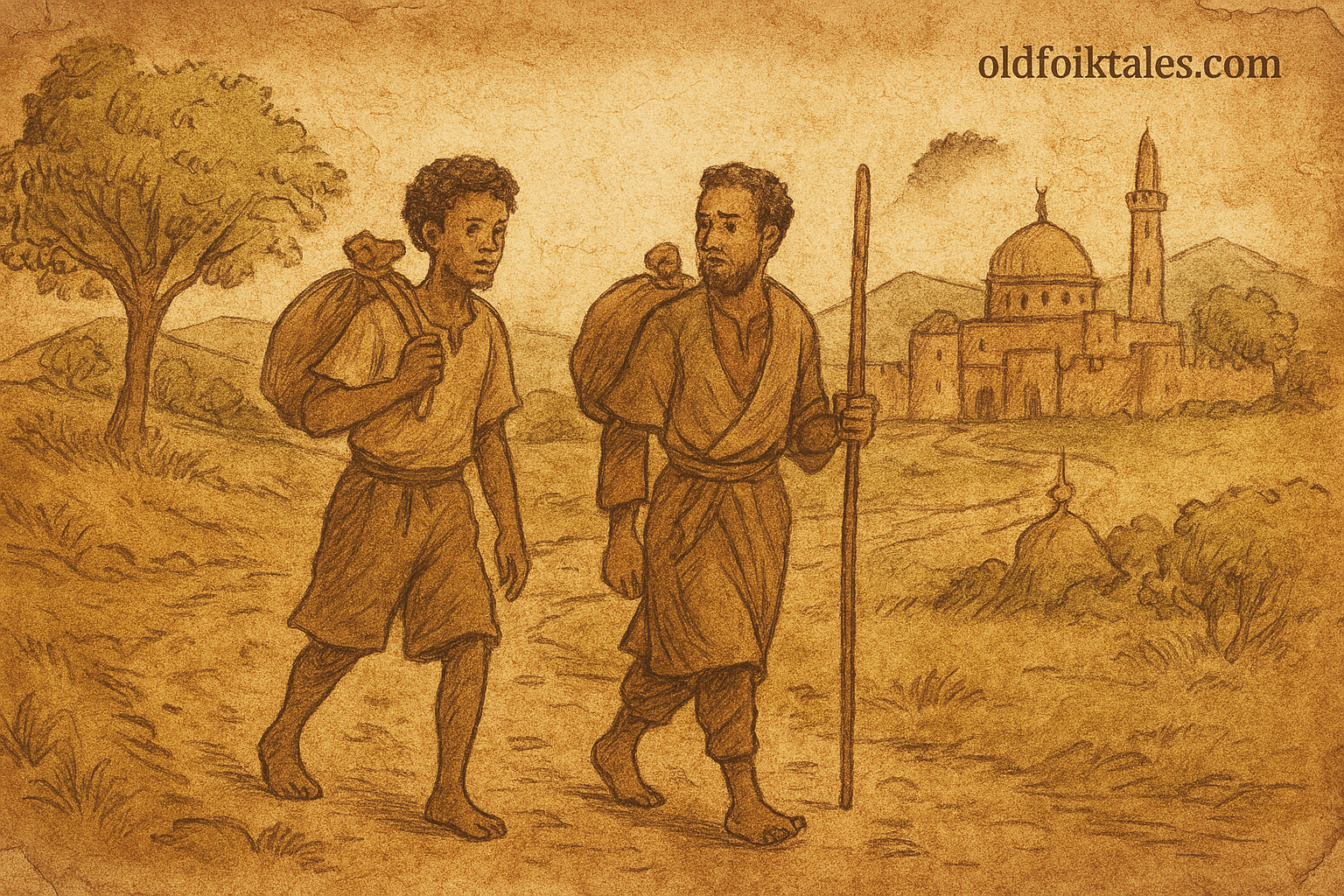
Once upon a time, in a land where knowledge was treasured more than gold, two young men embarked on a journey that would change their lives forever. These travelers were not merely companions on the road, they were cousins, bound by blood and united by a shared dream of gaining wisdom and education that would elevate them above their humble circumstances.
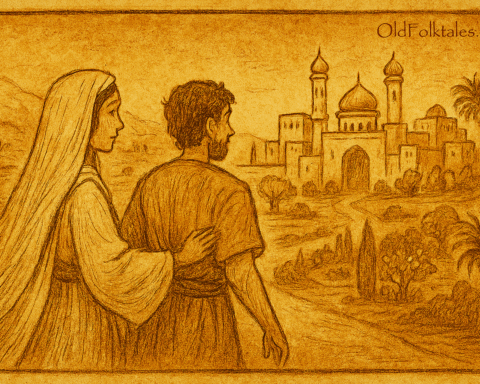
The two cousins set out together on a long and arduous journey toward a distant and renowned special school that taught the sacred teachings of the Islamic religion. Their path wound through dusty roads, across sun-baked plains, and through numerous settlements where travelers could find rest and sustenance. As they made their way toward their destination, their travels brought them to a particular town that stood out in their memories for one peculiar reason, it was ruled by a king who possessed wealth and power, but who had never received any formal education.
Since their arrival in this town happened to fall on a blessed Friday, the holy day of communal prayer for Muslims, the two cousins naturally made their way to the local mosque to fulfill their religious obligations. There, standing before the gathered congregation, was the uneducated king himself, attempting to lead the Friday sermon and prayers. The cousins listened with growing discomfort as the king spoke complete nonsense, mangling religious teachings and making statements that contradicted everything they knew about their faith. Yet they noticed that no one in the congregation dared to challenge or correct him such was the power and fear he commanded over his subjects.
Don’t stop yet! See our complete East African folktales collection
After the peculiar prayer service concluded, the weary travelers found lodging in the town and spent the night there, resting their tired bodies and troubled minds. In the cool light of morning, they gathered their belongings and continued their journey with renewed determination, eager to reach their destination and begin their formal studies.
Finally, after many more days of difficult travel, the two cousins arrived at the prestigious school they had been seeking. With grateful hearts and eager minds, they immersed themselves completely in their religious studies, spending long hours learning about Islamic theology, memorizing sacred texts, studying the proper ways of prayer and worship, and understanding the deep wisdom contained in their faith’s teachings.
The Parting of Ways
After they had completed their comprehensive religious education and received recognition of their accomplishments from their teachers, one of the young men turned to his cousin with satisfaction evident in his voice. “Our studies are complete,” he declared with confidence. “Let us return home and share the knowledge we have gained with our families and communities.”
However, his cousin shook his head thoughtfully, his eyes burning with an hunger for even more knowledge. “I will not return home just yet,” he replied with quiet determination. “Religious knowledge alone is not sufficient for navigating this complex world. I must also learn about politics, about governance, about how power works and how to influence those who wield it. Only then will my education be complete.”
The first cousin considered this for a moment, then nodded his understanding and acceptance of his companion’s decision. “I respect your choice,” he said. “I will journey home alone and await your eventual return.” And so the two young men, who had traveled so far together, parted ways at this crucial crossroads in their lives.
The first cousin, now armed with his newfound religious knowledge and confident in his understanding of Islamic teachings, began the long journey back to his homeland. His route inevitably brought him once again through the town ruled by the uneducated king, and as fate would have it, he arrived on another Friday when the weekly prayers were being held.
The Foolish Confrontation
The young man, filled with righteous conviction and the certainty that his education gave him, entered the familiar mosque and joined the congregation for prayers. Once again, he witnessed the uneducated king standing before the people, attempting to lead them in worship and delivering yet another sermon filled with obvious errors, misinterpretations, and pure fabrications about religious matters.
This time, however, the educated young man could not remain silent. His new knowledge burned within him like an unquenchable fire, demanding to be shared and used to correct the king’s dangerous ignorance. When the king had finished his flawed sermon, the young man boldly stood up before the entire congregation. With passionate eloquence and undeniable authority, he proceeded to systematically take apart everything the king had just said, correcting each error, clarifying each misunderstanding, and essentially making the powerful ruler appear completely foolish and ignorant in front of all his subjects.
A heavy silence fell over the mosque as the congregation absorbed what had just happened. The king’s face burned with humiliation and rage. His authority had been publicly challenged and his ignorance exposed for all to see. No one had ever dared to contradict him so openly and completely before this moment.
The king’s voice shook with barely contained fury as he pointed an accusing finger at the young scholar. “Seize this insolent man!” he commanded his loyal soldiers who stood guard nearby. “How dare he make a fool of his king! Take him away and throw him into the deepest, darkest dungeon in my prison!”
The soldiers moved swiftly, grabbing the shocked young man roughly by his arms and dragging him away from the mosque even as he tried to protest his innocence and the truth of his corrections. They hauled him to the royal prison and threw him into a cold, miserable dungeon cell, where the heavy iron door slammed shut behind him with a sound of terrible finality.
The Return of the Second Cousin
Two long years passed slowly by, marked by the changing of seasons and the endless cycle of days and nights. During this time, the imprisoned young man suffered in his dark cell, his hair growing long and tangled, his spirit tested by isolation and despair, while his cousin completed his advanced studies in political science and the subtle arts of governance and diplomacy.
Finally, the second cousin’s political education reached its completion, and he too began the journey home, his mind now equipped not only with religious knowledge but also with a deep understanding of human nature, power dynamics, and the delicate art of influencing others without creating enemies. He had learned that wisdom was not just about knowing the truth, but also about knowing when and how to speak it effectively.
His travels naturally brought him to the same town ruled by the same uneducated king, and purely by coincidence, he arrived on yet another Friday. He had no knowledge whatsoever that his beloved cousin lay imprisoned in the king’s dungeon, suffering for his honest but politically unwise confrontation.
The educated young man entered the mosque and participated in the Friday prayers alongside the townspeople. Once again, the uneducated king stood before his subjects and delivered his customary sermon filled with the same old errors and nonsensical statements he had always made. The congregation listened in passive silence, as they always did, too afraid to challenge their ruler’s words.
The Wisdom of Politics
When the king concluded his flawed sermon and asked if anyone had anything to add, the second cousin calmly raised his hand with appropriate deference and respect. The king, curious about this stranger, granted him permission to speak before the assembly.
The politically educated young man rose gracefully to his feet, and what followed was a masterpiece of diplomatic manipulation. “Oh wise and noble king,” he began, his voice dripping with carefully calculated praise, “truly your majesty possesses extraordinary intelligence that sets you apart from ordinary men! Your words carry such profound wisdom that we are all blessed beyond measure to hear them!”
He continued in this vein, heaping elaborate compliments upon the increasingly pleased king, building him up higher and higher with each carefully chosen phrase. The king’s chest swelled with pride, and smiles spread across the faces of his courtiers.
Then, at precisely the right moment, the young man delivered his masterstroke. “In fact,” he proclaimed with apparent sincerity, “the luckiest person in all the world would be someone fortunate enough to pray behind this magnificent king for four consecutive Fridays! But even greater fortune would befall the person who could possess just a single hair from his blessed head, for surely such a relic would bring endless prosperity and divine favor!”
The effect of these words was immediate and catastrophic. The entire congregation, driven by sudden desperate greed and the promise of supernatural blessing, erupted into chaos. People surged forward in a mad stampede, all frantically trying to reach the king and pluck a hair from his head. Men climbed over each other, pushing and shoving, creating a crushing mob that surrounded the helpless ruler.
The king disappeared beneath the violent throng of his own subjects, all clawing and grabbing at him. In the terrible chaos that followed, in the suffocating press of desperate bodies, the king was trampled and crushed. When the frenzied crowd finally pulled back, the king lay dead upon the mosque floor, killed by the very people he had ruled.
A New King Rises
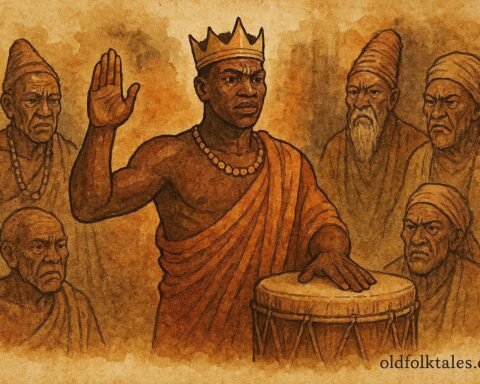
In the shocked aftermath of this tragedy, the town’s elders and leading citizens gathered to decide who should assume leadership. The choice seemed obvious to everyone present. The stranger who had spoken so wisely, who clearly understood both religious matters and the ways of governance, was unanimously selected to become their new king.
One of the first acts of the newly crowned ruler was to order a thorough review of all prisoners held in the royal dungeons. It was then, to his great shock and sorrow, that he discovered his dear cousin, barely recognizable after two years of imprisonment. The young man’s hair had grown terribly long, tangled, and matted, his body was thin and weak, but his spirit remained unbroken.
The new king immediately ordered his cousin’s release, embracing him with tears of joy mixed with regret for not knowing of his suffering sooner. The freed prisoner was given fine clothes, good food, and a place of honor in the new court, while his cousin ruled the town with both wisdom and compassion, applying all the lessons he had learned about the careful application of knowledge and the importance of understanding human nature.
The Moral Lesson
This timeless tale teaches us that knowledge alone is not enough, we must also possess the wisdom to apply it appropriately. The first cousin had religious knowledge but lacked the political understanding to know when speaking truth might be dangerous. The second cousin understood that changing minds and systems requires not just truth, but also strategy, timing, and an understanding of human psychology. True education encompasses not only what we know, but also how we use that knowledge to navigate the complex world of human relationships and power structures.
Knowledge Check
Q1: Who were the main characters in this Somali education folktale? A: The main characters were two cousins who traveled together to seek religious education, and the uneducated king who ruled the town they passed through. The first cousin learned only religious studies, while the second cousin pursued both religious and political education, leading to very different outcomes for each of them.
Q2: What mistake did the first cousin make that led to his imprisonment? A: The first cousin, armed with religious knowledge but lacking political wisdom, publicly corrected the uneducated king’s errors during a Friday sermon in the mosque. Though he spoke the truth, he humiliated the king in front of his subjects, which resulted in the king ordering him thrown into prison for two years.
Q3: How did the second cousin use his political education differently? A: Instead of directly challenging the king’s ignorance, the second cousin used flattery and psychological manipulation. He praised the king excessively, then cleverly suggested that possessing the king’s hair would bring good fortune, which caused the congregation to mob the king, leading to his death without the cousin directly opposing him.
Q4: What does the mosque setting symbolize in this East African tale? A: The mosque represents both spiritual authority and community gathering space in Islamic culture. It serves as the stage where power, knowledge, and religious authority intersect, highlighting how education (or lack thereof) affects leadership in communities where religious and political power are closely connected.
Q5: What cultural values does this Somali folktale emphasize? A: This tale emphasizes the Islamic and Somali cultural values of seeking education, the importance of Friday prayers and community worship, respect for religious knowledge, and the understanding that wisdom requires both theoretical knowledge and practical understanding of human nature and social dynamics.
Q6: What is the deeper lesson about the two types of education in this story? A: The story teaches that religious or theoretical knowledge alone can be dangerous without practical wisdom about human behavior and politics. The first cousin’s pure religious knowledge led to imprisonment, while the second cousin’s combination of religious and political education allowed him to achieve positive change without directly confronting power, ultimately freeing his cousin and becoming a wise ruler.
Source: Traditional Somali folktale, East Africa