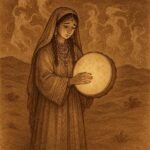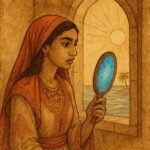
In the heart of the Douz desert, where the sands burn crimson beneath the evening sun, there once lived a princess named Amira. She was known across the southern dunes for her beauty and pride. Her garments shimmered like sunrise, her jewellery sparkled like stars, and her every word carried the weight of command. Her people admired her but also feared her temper, for she was proud and often dismissed the humble voices around her. Her father, the old king, ruled with kindness and patience, yet even he could not soften her heart.
One summer, a great drought swept across the Red Dunes. The wells dried up, the palms withered, and the herds began to die. Every morning, the villagers came to the palace gates begging for water. Amira would look down from her high balcony and say, “The desert tests us all. Endure it as I endure it.” But her chambers were cool, and her jars were full. What she did not know was that the drought had been born from her own pride.
Far beyond the dunes lived the Spirit of the Desert, an ancient being who watched over all who lived beneath the sun. It had once blessed the kingdom with gentle rains and fertile oases, but it despised arrogance. When Amira’s pride grew too heavy, it whispered to the wind, “Let her heart learn humility.” And so the rain ceased, and the desert turned cruel.
Fascinated by this tale? Discover more North African folktales
One night, the old king fell ill. He called Amira to his side and said weakly, “My daughter, the desert’s silence is our doing. You must go and seek forgiveness from the Spirit of the Dunes. Only then will the rain return.” Amira’s eyes widened. “Father, you would send me into the desert like a wanderer?” The king nodded. “Only by walking among those who suffer will you understand what it means to lead.”
Reluctantly, Amira obeyed. She disguised herself in plain robes, removed her jewels, and wrapped her face in a desert veil. No one recognised her as she left the palace. Alone, she crossed the red sands that had once been her kingdom’s pride. The sun burned her skin, the wind stung her eyes, and her throat ached with thirst. She had never known hardship before. The further she went, the smaller her pride became.
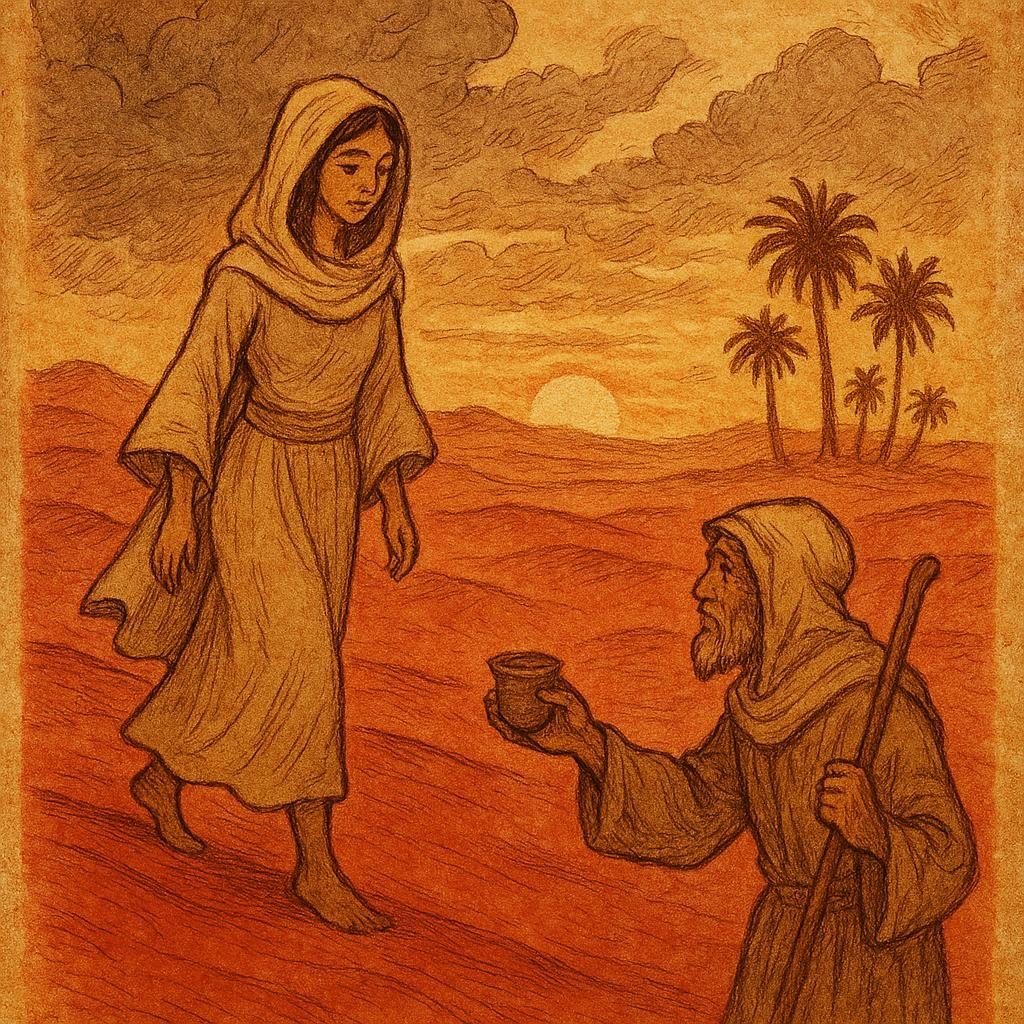
After three days, she came upon a poor shepherd camped beneath a lone palm. His goats were thin, and his skin was cracked from the sun. When he saw her, he offered his last gourd of water. “Drink, stranger,” he said kindly. “No one should suffer thirst in the desert.” Amira hesitated, unused to such generosity. “Why give your water to me?” she asked. “Because the desert gives to none who hoard,” he replied. His words echoed in her heart.
That night, Amira dreamed. She saw the Spirit of the Desert rising from the red sands, tall as a mountain, its eyes like fire and wind. “Princess of Douz,” it said, “the drought was born from the thirst in your soul. Your pride drained the wells of your people. If you wish to restore the rain, you must fill the hearts you emptied.”
When she awoke, the shepherd was gone, but his words and the spirit’s message remained. Amira travelled from village to village, helping wherever she could. She carried water for weary travellers, shared her food with the hungry, and comforted crying children. No one knew who she was, but they felt her kindness and blessed her path.
Weeks passed, and though her body weakened, her spirit grew lighter. One evening, as she rested on a dune glowing red in the sunset, a sudden cool breeze swept across the desert. The scent of rain filled the air. Amira looked up and saw clouds gathering for the first time in months. A single drop landed on her hand, glimmering like a jewel. She smiled and whispered, “Thank you.” The desert answered with thunder.
When Amira returned home, her people hardly recognised her. Her skin was darker, her hands were rough, but her eyes were gentle. The old king, now recovering, embraced her. “You have returned with the rain,” he said proudly. The people rejoiced as the first storm broke over the dunes, washing away months of dust and despair. From that day onward, Princess Amira ruled with humility and compassion. She never sat on her throne without remembering the thirsty faces of her people or the shepherd who shared his last drop of water. And each year, when the rains came, she walked among her people barefoot, letting the desert remind her of the lesson she had learned the strength of a ruler is not in pride but in kindness.
Moral Lesson
This story teaches that pride blinds us to the pain of others, while humility opens the path to healing. True leadership begins with compassion, and true strength lies in service. The Princess of the Red Dunes reminds us that even the proudest heart can find redemption when it learns to kneel before the truth.
Knowledge Check
Who is the main character in The Princess of the Red Dunes? The main character is Princess Amira, a proud royal from the Red Dunes of Douz.
What caused the drought in the story? The drought was caused by Amira’s pride, which angered the Spirit of the Desert.
Why did the king send Amira into the desert? He wanted her to learn humility and understand the struggles of her people.
What lesson did Amira learn from the shepherd? She learned that generosity and compassion sustain life in the desert, not pride or greed.
How was the drought finally broken? Amira’s acts of kindness and repentance moved the Spirit of the Desert to send rain again.
What is the moral of the story? Pride brings destruction, but humility restores balance and peace.
Source: Southern Tunisian folktale of Douz. Transcribed by Zohra Ben Ahmed in Histoires des Dunes Rouges (1946).