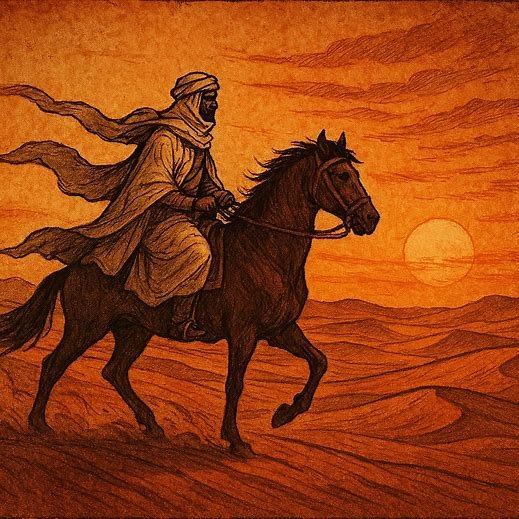
Long ago, before the sands of Algeria shifted into the shapes we know today, when the Hilali tribes rode their camels across the boundless Sahara, there lived a young man named Salim. He was not the strongest of riders, nor the wealthiest among his kin, but he had the heart of a desert rider. His spirit burned like the midday sun, and his patience was as long as the shadow at dusk.
Salim’s people, the Hilali, were known for their journeys that stretched beyond the horizon. Their camels carried tents, grain, and water skins, and their songs carried the stories of warriors, lovers, and wanderers. Yet Salim longed for a story of his own—one that the desert would remember when the wind swept over the dunes.
The Call of the Desert Rider
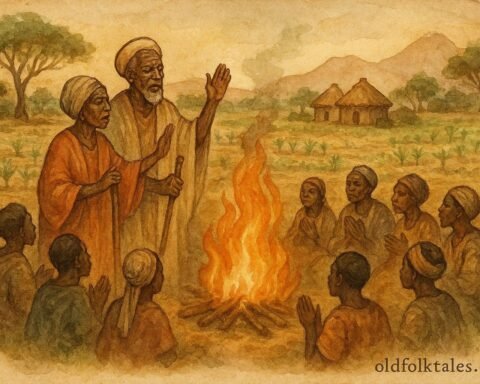
One evening, as the tribe sat around the fire, an elder spoke of a hidden path, a track of endless sands where the desert itself whispered to those who dared to travel alone. “Only the true desert rider can hear the call,” the elder said. “The dunes shift before him, the stars guide him, and the spirits of the sand test his heart.”
Salim felt his chest tighten. He wanted to hear that call. He wanted the desert to know his name.
The Journey into the Endless Sands
Before dawn, Salim mounted his camel, a lean and stubborn beast named Qamar, meaning moonlight. The tribe watched silently, for they knew such journeys could swallow a man whole. With only a waterskin, dates, and his dagger, Salim rode into the waves of sand that rolled like the sea.
At first, the desert seemed kind. The wind cooled his face, the dunes lay quiet, and the stars sparkled above like watchful eyes. But after days passed, the sands grew fierce. The sun pressed down, and the air shimmered with heat. His water thinned, and his strength waned.
Still, Salim pressed on, whispering to Qamar, “We are desert riders, you and I. We cannot turn back.”
The Rider’s Trial
On the seventh night, when hunger and thirst gnawed at his spirit, Salim saw a vision. Out of the shifting sands rose a rider cloaked in white, mounted on a camel as black as midnight. The rider’s face was hidden, but his voice rang clear as the wind:
“Why do you wander, young one? What do you seek in the endless sands?”
Salim answered, his voice weak yet firm, “I seek the path the desert keeps. I wish to be remembered as a true desert rider.”
The mysterious figure nodded. “Then the desert will test you. Not with your sword, but with your soul.”
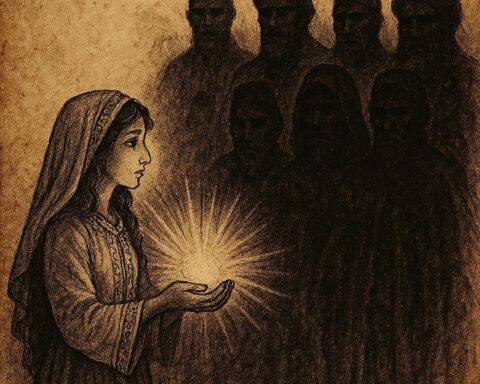
Suddenly, the sands surged like waves. From them rose three spirits, each bearing a trial.
The Spirit of Thirst
The first spirit’s voice cracked like dry earth: “Throw away your last waterskin. Only those who trust the desert fully can claim its secrets.”
Salim’s hand trembled. Water was life. Yet he thought of the elder’s words and cast the waterskin upon the sand. His throat burned, but his heart grew steady.
The Spirit of Fear
The second spirit whispered like a cold night wind: “Turn back, or you will vanish in the dunes. No one will remember your name.”
Fear coiled in Salim’s chest. He thought of his mother’s eyes, his tribe’s fire, and the songs yet to be sung. Then he lifted his face to the stars and said, “Better to vanish as a desert rider than live as a man who never tried.” The spirit faded into dust.
The Spirit of Pride
The last spirit rose tall as a dune, its voice heavy: “If the desert remembers you, it will not be for yourself but for your people. Can you carry their honor, not your own?”
Salim bowed his head. He understood. “A desert rider does not ride for himself alone. He rides for his tribe, his ancestors, and those yet to come.”
The spirit’s stern face softened, and it dissolved into the sands.
The Return of the Rider
When dawn broke, Salim found himself at the edge of the desert, his tribe’s tents rising like white birds in the distance. His waterskin was gone, his body weak, but his spirit was unbroken. The desert had tested him, and he had endured.
When the elders heard his story, they did not praise him for his courage alone. They praised him for carrying the honor of his people in his heart. From that day forward, Salim was known as The Rider of Endless Sands, and his tale was sung by the Hilali tribes as they journeyed across the Sahara.
Moral Lesson
The desert teaches that strength lies not in wealth or power but in courage, sacrifice, and humility. A true desert rider does not ride for his own glory but for the spirit of his people and the honor of those who came before him.
Knowledge Check
- 1. What is the main theme of the folktale ‘The Rider of Endless Sands’?
The main theme is courage, sacrifice, and humility in the journey of a desert rider.
2. Who are the Hilali people in Algerian folktales?
The Hilali are Arab tribes known for their nomadic traditions and epic journeys across the Sahara.
3. What trials did Salim face in the desert rider story?
Salim faced the spirits of thirst, fear, and pride, which tested his soul and determination.
4. Why did Salim throw away his last waterskin in the tale?
He did so to show trust in the desert’s wisdom and to prove his courage as a desert rider.
5. What is the moral lesson of the Hilali folktale ‘The Rider of Endless Sands’?
The moral is that true strength lies in humility, courage, and carrying the honor of one’s people.
6. How do Hilali folktales preserve desert culture and oral tradition?
They pass down lessons, values, and history through storytelling, ensuring the desert rider spirit lives on in each generation.