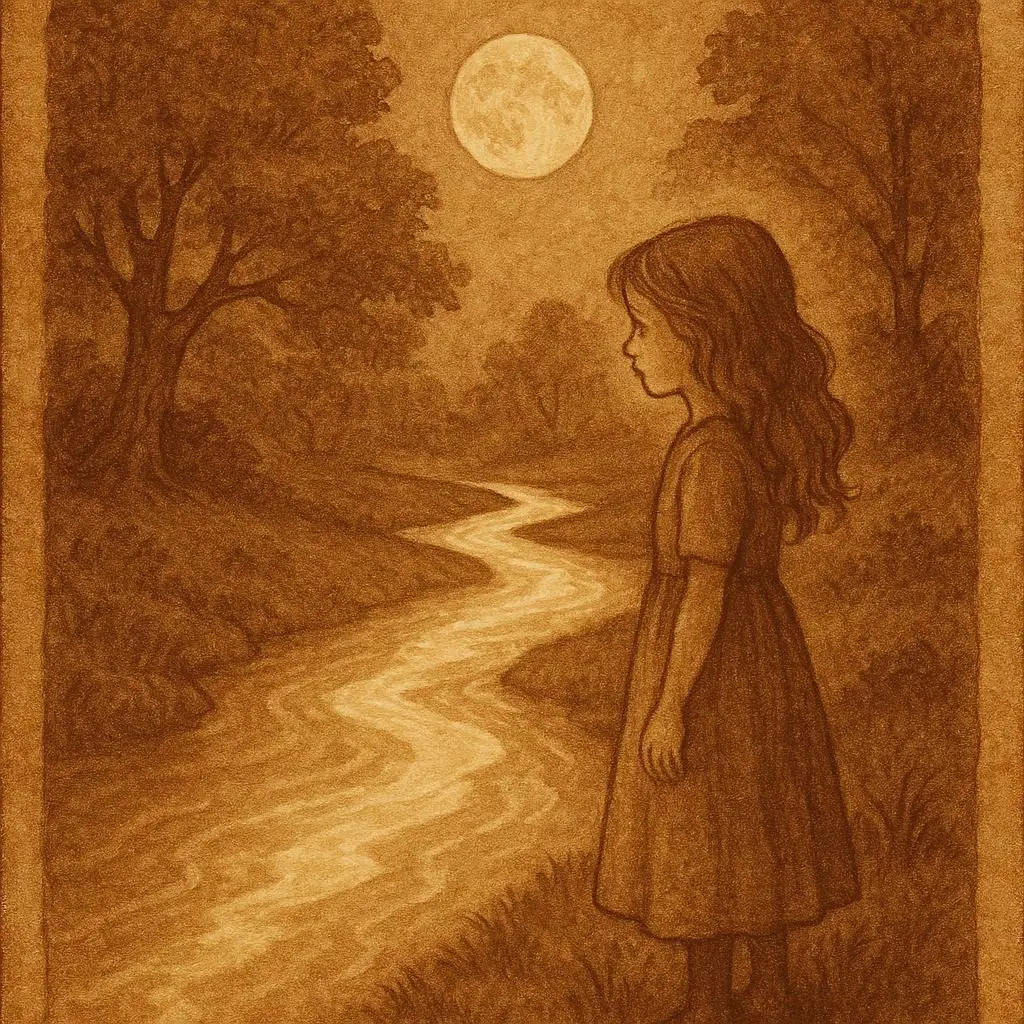
In a quiet village by the edge of the savannah, where the moonlight shimmered over rippling waters, there flowed a river unlike any other. By day, it looked like any ordinary stream, calm, clear, and cool against the sun’s heat. But when night fell and the world grew still, the river began to sing.
Its voice was soft at first, like the hum of a lullaby, then grew into a melody that floated through the trees and across the fields. The villagers would pause their fireside chatter just to listen. Some said the river sang to call the stars closer. Others believed spirits lived beneath the water, keeping the village safe.
Among those who loved the song most was a curious young girl named Awa. She would sit by the riverbank each night, her chin resting on her knees, listening to the tune that seemed to change with the wind. Her mother often warned her, “Do not wander too close, Awa. The river holds mysteries meant only for spirits.” But Awa’s heart was brave, and her curiosity brighter than fear.
If you enjoyed this story, explore our full West African folktales collection
One night, when the moon was full and silver light touched the river like silk, Awa noticed something new. The melody was different, softer, sadder, almost like a call for help. She leaned closer, the cool air brushing her face. “Who are you?” she whispered. To her amazement, the water rippled and glowed faintly, forming gentle patterns that shimmered like stars.
Drawn by the song, Awa stepped closer until the water reached her toes. The melody deepened, wrapping around her like a whispering embrace. “Come,” the river seemed to say. “Come and see what lies beneath.”
Her heart pounded, but her courage carried her forward. She took another step, and the world around her changed.
The surface of the river rippled like glass, and suddenly Awa found herself standing in a glowing underwater kingdom. The light was soft and golden, the currents moving like slow music. Around her swam fish with scales that glimmered like jewels, and plants that waved their leaves as if keeping time with the river’s song.
At the centre of it all stood a spirit woman clothed in flowing water, her eyes gentle and wise. “Welcome, Awa,” said the River Spirit. “You have listened more closely than anyone else. Few hear the heart of the river.”
Awa bowed her head in awe. “I did not mean to intrude,” she said softly. “But your song sounded sad tonight.”
The spirit smiled. “You are kind to notice. The river’s song changes with the hearts of those who live beside it. Lately, your people have stopped visiting. They no longer thank the water that feeds them or sing the songs that once brought joy. The river has grown lonely.”
Awa’s eyes widened. “I will tell them to come again. They will listen if I speak.”
The River Spirit nodded. “You have courage and heart. But remember, Awa, true harmony comes when humans and nature listen to each other. Go now, carry the river’s song back to your people.”
With a wave of her hand, the spirit sent Awa back toward the surface. The next thing Awa knew, she was kneeling on the riverbank, the moonlight still shining and the melody fading into silence. She ran home, her heart full of wonder.
The next morning, she gathered the villagers. Breathless with excitement, she told them everything, about the glowing world beneath the water, the spirit woman, and her message. At first, the elders frowned. Some shook their heads in disbelief. But when night returned, they followed Awa to the river to see for themselves.
They waited in silence. Then, just as the moon reached its highest point, the river began to sing again, a melody more beautiful than ever before. The villagers felt the music in their hearts, soft and full of life. The old women smiled, the men bowed their heads, and even the children sat still, their eyes wide in awe.
From that night onward, the villagers returned to the river often. They offered songs, prayers, and laughter. They learned to take water gently and to care for the trees that shaded its banks. And though the river spirit remained unseen, her melody flowed through their lives, a reminder that nature listens and speaks to those who show respect.
As for Awa, she never stopped visiting her beloved river. She grew into a wise woman whose stories carried the spirit’s wisdom far beyond her village. Whenever people asked her how she found her courage, she would smile and say, “I only followed the song that called my heart.”
And sometimes, when the night was clear and the stars hung low, the villagers swore they could still hear the river singing, not with sadness but with joy.
Moral Lesson
Courage and curiosity can open paths to wisdom. When we listen to nature and treat it with respect, it sings back to us in harmony and gratitude.
Knowledge Check
Who is the main character in The River That Sang at Midnight?
Awa, a curious and brave young girlWhat happens to the river each night?
It sings a magical melody that fills the village with wonderWhy does the river spirit feel sad?
Because the villagers have stopped honouring and listening to the riverWhat lesson does the River Spirit teach Awa?
That harmony comes when humans and nature listen to each otherHow does Awa help her village reconnect with the river?
She shares the river’s message, inspiring them to show respect and gratitudeWhat is the main theme of this folktale?
Courage, curiosity, and living in harmony with nature
Source
Wolof folktale, Senegal. Compiled by Cheikh Anta Babou in Rivers and Spirits of Senegal (2001)