In the rolling hills of an ancient Algerian village, there lived a hardworking man blessed with abundance, seven strong sons, seven goats, and a devoted wife. His household bustled with life, and his goats were the pride of his livelihood, providing milk and cheese for his growing family.
One bright morning, as the sun painted the mountains gold, the father turned to his eldest son with the day’s responsibility. “Take the goats to pasture today, my son. Find them good grass and fresh water.” The young man nodded respectfully, gathered the seven goats, and led them into the verdant meadows that stretched beyond their village.
The eldest son was diligent and caring. He guided the goats to the sweetest grasses and the clearest streams. The animals grazed contentedly throughout the day, their bellies growing round with nourishment, their thirst quenched by cool mountain water. As evening approached, he brought them home, confident he had fulfilled his duty well.
When the goats arrived in their pen, the father approached them with his usual evening question. “Are you hungry?” he asked. To his surprise, the goats bleated back, “Yes, we are hungry.” Confused, he pressed further. “Are you thirsty?” Again, they replied, “Yes, we are thirsty.”
The father’s face darkened with rage. How could his son have been so negligent? Without seeking explanation or considering the possibility of deception, he killed his eldest son in a fit of fury, believing the goats’ testimony over his own flesh and blood.
The next morning brought the same routine. The second son took the goats to even richer pastures, ensuring they ate their fill of tender grass and drank deeply from bubbling brooks. Yet when evening came and the father posed his questions, the goats gave the same false answers: “We are hungry. We are thirsty.”
Once again, blind trust in the goats’ words led to tragedy. The father killed his second son.
Day after day, this horrific pattern continued. Each son dutifully cared for the goats, finding them excellent pasture and abundant water. Each evening, the deceitful animals claimed hunger and thirst. One by one, the father’s rage consumed his children, until all seven sons lay dead, victims of their father’s misplaced trust and the goats’ inexplicable lies.
With no sons left, the desperate man sent his wife to tend the goats. She, too, provided excellent care, leading them to lush meadows and crystal streams. But when she returned home, the goats delivered their familiar deception, and the heartbroken father, still blind to their treachery, killed his beloved wife.
Finally, with his family destroyed and his heart heavy with grief, the father decided to tend the goats himself. He led them to the finest pastures he could find, watched them graze contentedly, and saw them drink their fill. When they returned home that evening, he asked his customary questions: “Are you hungry? Are you thirsty?”
“Yes,” came their reply, as always.
But this time, the truth struck him like lightning. He had seen with his own eyes how well-fed and watered the goats were. The horrible realization crashed over him they had been lying all along. In his fury and anguish over the senseless deaths of his family, he seized his ax and killed six of the seven goats. Only one managed to escape, fleeing swiftly into the rugged mountains.
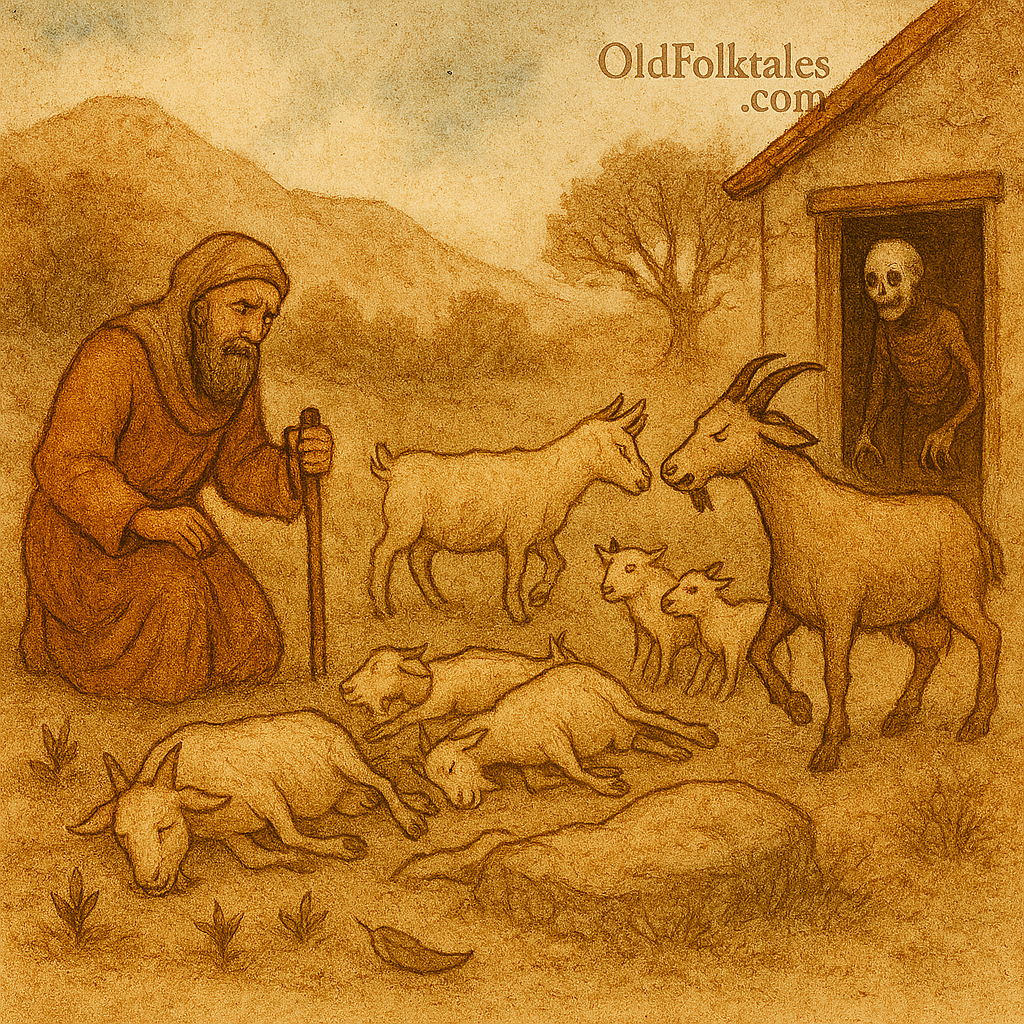
The surviving goat ran deep into the wilderness until she discovered an abandoned house nestled among the peaks. There, she made her new home and eventually gave birth to two kids. These young ones became her world, and she cared for them with fierce maternal love.
One day, needing to find fresh grass for her growing kids, the mother goat left them safely at home with strict instructions to stay inside. But shortly after her departure, an evil spirit known as Bāzghugh came prowling through the mountains. This malevolent creature, drawn by the scent of innocence, approached the little house and knocked upon the door.
The trusting kids, too young to understand danger, called out, “Come in!” The door creaked open, and the evil spirit entered with dark intentions. In moments, both young goats lay dead, their lives snuffed out by the creature’s wickedness.
When the mother goat returned, her heart filled with grass for her children, she found only silence and emptiness. Her kids were gone, and the house felt cold with the presence of death. Grief and rage overwhelmed her, but she was no ordinary goat she was a survivor who had witnessed the power of truth and the consequences of lies.
Standing in the doorway of her violated home, she lifted her voice and declared with supernatural authority, “The one who has killed my two kids must appear before me!”
Compelled by forces beyond his understanding, the evil spirit Bāzghugh materialized before her, unable to resist the mother’s command for justice. Without hesitation, the vengeful goat lowered her head and charged, her sharp horns finding their mark. The evil spirit fell dead, defeated by a mother’s righteous fury and her determination to see justice done.
Thus ended the tale of the deceiving goats, where lies brought destruction to an entire family, but truth and maternal love ultimately triumphed over evil.
The Moral Lesson
This Algerian folktale teaches us several profound lessons about the dangers of blind trust and hasty judgment. The father’s tragic mistake was believing the goats’ lies without seeking the truth or listening to his family’s side of the story. His quick anger and failure to investigate led to the destruction of everything he held dear. The story reminds us that we must seek truth through careful observation and multiple perspectives before making life-altering decisions. Additionally, it demonstrates that while lies and evil may cause great suffering, justice and truth will ultimately prevail, often through the courage of those who refuse to accept wrongdoing.
Knowledge Check
Q1: Who are the main characters in this folktale? A: The main characters include a father with seven sons and a wife, seven goats (one of whom survives), the surviving goat’s two kids, and an evil spirit called Bāzghugh.
Q2: What cultural origin does this folktale come from and what does “Bāzghugh” represent? A: This is an Algerian folktale, and Bāzghugh is the name given to the evil spirit. The story reflects traditional storytelling elements where supernatural creatures encounter humans and animals in mountain settings.
Q3: What was the father’s tragic mistake that led to his family’s destruction? A: The father’s mistake was trusting the goats’ false claims of hunger and thirst without investigating or seeking proof. He killed his family members based solely on the goats’ lies, never questioning their honesty until he witnessed their deception himself.
Q4: How does the surviving goat finally discover the truth about the other goats’ behavior? A: The father discovers the goats were lying when he tends them himself and sees with his own eyes that they are well-fed and watered, yet they still claim to be hungry and thirsty when they return home.
Q5: What symbolic lesson does the mother goat’s victory over the evil spirit represent? A: The mother goat’s triumph symbolizes that justice and maternal love can overcome evil. It represents the idea that truth and righteousness will ultimately prevail, even after great suffering and loss.
Q6: Why is this story particularly told to children in Algerian culture? A: This folktale serves as a cautionary tale for children about the importance of seeking truth, not making hasty judgments, and understanding that lies can have devastating consequences. It teaches critical thinking and the value of investigation before action.