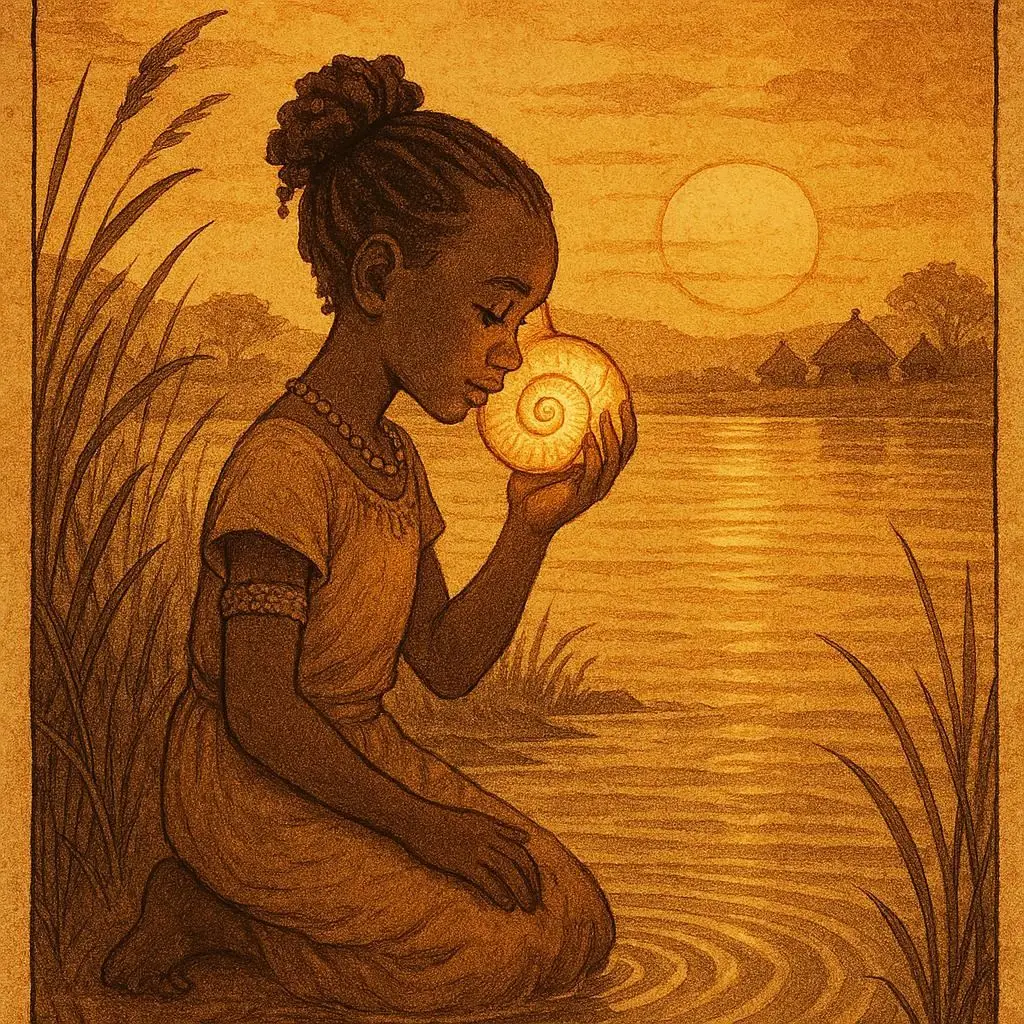
Long ago, when the tides still obeyed the songs of the ancestors, there was a small Wolof village by the edge of the Senegal River. The people there lived by the rhythm of water fishing, trading, and offering thanks to the spirits who guarded the flow between land and sea. Every evening, as the sun rested on the horizon, the griot would remind them: “The river remembers. What we do in its sight will one day speak back to us.”
Among the villagers lived a quiet girl named Adama. She was thoughtful, often found sitting by the water with her feet in the shallows, listening to the ripples. While other children laughed and played, Adama would hum softly to the rhythm of the current. Her grandmother, Nene Kumba, often told her, “Those who learn to listen will never be lost. The river carries the voices of those who came before us.”
One season, the rains came late. The nets returned empty, and the people began to fear the river’s silence. “Perhaps the spirits have turned away,” the elders said. “Perhaps we have forgotten something.”
Want more? Read more West African folktales now
Adama could not bear the sadness that filled her home. One evening, as the sky burned red, she walked along the shore, whispering her worries to the waves. As she bent to touch the water, something hard and cool brushed her fingers, a small, spiral shell glimmering with strange light.
She held it to her ear. At first, she heard only the soft rush of water. Then came a voice faint but clear.
“Adama,” it said, “the river does not forget. But you must remind the people how to listen.”
Startled, she dropped the shell, but when she picked it up again, the voice returned gentle, ancient, and familiar, like the voice of her grandmother and yet not.
“Who are you?” she asked.
“I am the echo of those who came before you,” said the voice. “I am the wisdom that sleeps in water and stone. Take me to the elders, and I will help them remember what was lost.”
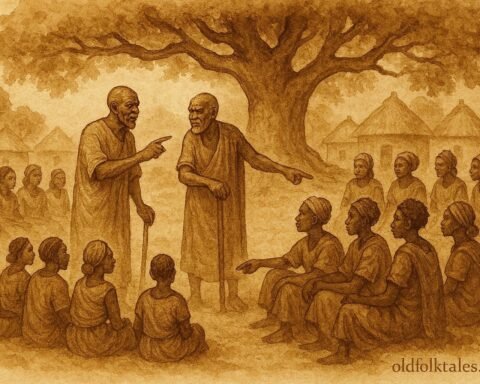
The next morning, Adama went to the village square. The elders sat in a circle, speaking in low tones about the failing river. She stepped forward, clutching the shell.
“Grandfathers, grandmothers,” she said, “I found something by the river. It speaks.”
The elders frowned. “A child’s fancy,” one said. But Nene Kumba, Adama’s grandmother, lifted her hand. “Let her speak. The spirits often choose small voices to carry big truths.”
Adama raised the shell to her ear again, and the voice whispered, “Tell them to offer water to the earth, and silence to their hearts.”
She repeated the words aloud. The elders grew quiet. They remembered an old custom one forgotten over time where the first catch from the river was poured back into the water as a gift of gratitude.
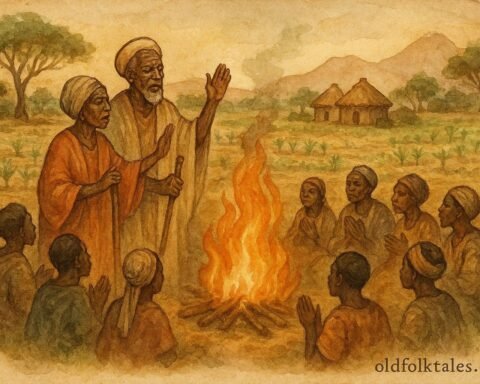
At sunset, the villagers gathered by the shore. Adama stood beside her grandmother and poured a calabash of water into the river. The shell pulsed gently in her hands, glowing like moonlight.
“May our ancestors forgive what we have forgotten,” Nene Kumba said.
The next morning, the fishermen returned with full nets. The air filled with laughter, and the river sang again.
But the shell still whispered. That night, as Adama slept, it called to her once more. “Your people remember, but do not forget your own heart. Each generation must learn to listen anew.”
Years passed. Adama grew into a wise woman known for her calm spirit and her gift of listening. Whenever disputes arose, she would hold the shell to her ear and say, “Let us be silent first.” In the stillness, answers came.
One day, when Adama was old and her hair silver as the moon, she called the children to her side. She handed the shell to her youngest granddaughter and said, “This is not mine. It belongs to all who remember to listen. The ancestors are never far, they speak through the things we neglect.”
That night, the old woman passed peacefully, and the wind from the river rose to carry her spirit home. The next morning, the villagers found the shell resting on the shore, gleaming as though it had never aged.
The granddaughter placed it in the village shrine beside the baobab. From then on, before every festival, before every journey, someone would hold the shell to their ear and listen. Sometimes it spoke, sometimes it did not but always, its silence was full of meaning.
Even today, along the Wolof riversides, elders still say that when the wind moves softly over water and you hear a whisper that sounds like your grandmother’s song, it is the shell reminding you: the past lives in the patient ear.
Moral Lesson
The wisdom of ancestors never disappears; it only waits for ears ready to listen. Those who practice silence and respect for memory will always find guidance.
Knowledge Check
Who is the main character in The Shell That Carried the Voice of Ancestors?
Adama, a young girl who learns to listen to the voices of the pastWhere does the story take place?
In a Wolof village by the Senegal RiverWhat does Adama find by the water?
A glowing shell that carries the voice of the ancestorsWhat message does the shell give the villagers?
To offer water and gratitude to the river and remember forgotten traditionsHow does Adama use the shell later in life?
She listens to it for guidance and helps others find peace and understandingWhat does the story teach about ancestral wisdom?
That the voices of our ancestors remain with us, waiting to be heard in silence and respect
Source
Wolof folktale, Senegal. Recorded by Binta Cissé in Voices of the Ancestors: Senegalese Folktales (2003)