Lena was a young girl who lived in a small seaside settlement on Mahé. She spent her days gathering seashells along the shore. She loved how they whispered when the waves touched them and how their colours changed in the sunlight. Her grandmother always said that the sea carried voices from far across the horizon. Lena believed those stories.
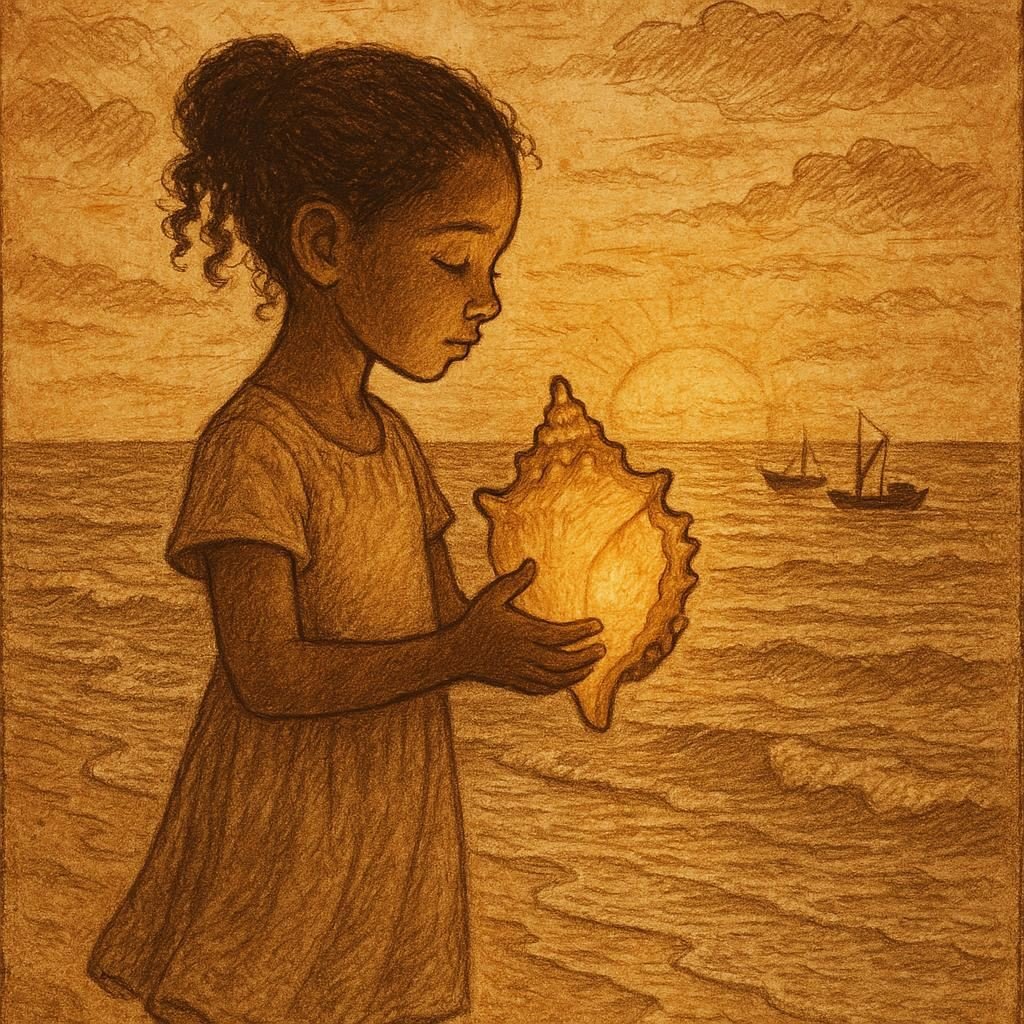
One afternoon Lena waded into shallow water, walking where the coral peered through clear blue waves. She saw a conch shell half buried in sand, its spiral shaped like a coil of moonlight. She picked it up, pressing it to her ear. Instead of only hearing waves she heard voices. Faint at first then rising until words became clear: “We saved your island once remember us.”
Startled, Lena dropped the shell. She stood frozen, saltwater lapping at her ankles. Her heart pounded with fear and wonder. The voices spoke of sailors castaway in storm who were saved by islanders long ago. They spoke of gratitude. They spoke of promises kept. Lena listened until the sun wavered on the water.
Looking for more? Explore the magic of East African folktales here
That evening she told her grandmother. The grandmother’s eyes glistened. She nodded. “This shell carries the memory of our people,” she said softly. “It remembers when we rescued sailors who had lost their way in storms. It remembers that kindness is our strength.”
Lena wanted to share the voices so that no one would ever forget. The next morning she carried the shell to the place where the old trees stand above the beach. Villagers gathered. Lena lifted the shell to her lips. She spoke aloud what she heard: how the sailors wept in salt and thunder how the islanders laid out shelter and fire and song until the sun rose and guided them home.
The villagers bowed their heads. The elders lit candles of coconut oil. Children held hands and sang songs handed down by ancestors. Lena’s voice shook but she continued. When she finished the last words carried by the shell, the sea breeze rose. The villagers turned to see small waves shimmering in pale moonlight. For a moment Lena felt a presence in the spray. A whisper that said thank you and then quiet.
That night Lena slept under a blanket of stars. In her dreams she saw the sailors reaching shore, being welcomed by hands and feasting beneath palms. She saw the shell lying under her mother’s pillow, glowing softly. When she awoke she carried the shell everywhere. She touched it when she felt afraid. She spoke to it when the sea roared with storms.
Seasons passed. Some years rain came late. Some years storms lashed the shore. But the shell never forgot. When travellers arrived lost at sea, the shell’s voices guided fishermen to rescue them. When fishermen forgot prayers at dawn the shell gave a whisper that stirred their conscience. When children forgot the stories, Lena would gather them and show them how to hold the shell and listen.
The memory of those sailors lived on. More than gold or praise it was kindness that defined the island. Lena grew strong in spirit. She learned that memory is not simply the past but living voice. The shell that remembered was not just a conch shell but a heart beating under seashells and moonlight.
Even now villagers walk along the shore at sunset. They carry small shells, they speak softly to the sea. They remember the sailors, their rescue, their gratitude. Lena eventually grew old and passed away. The shell was passed among generations. It rests now in your hands if you listen. It reminds you that the voices of the past are still present if we honour them.
Moral Lesson
The Shell That Remembered teaches that memory and kindness shape identity and that respecting the past enriches the present. When people remember acts of compassion they strengthen their community and help guide those in need.
Knowledge Check
Who found the magical conch shell and what did she hear inside it?
Lena found the shell and heard the voices of lost sailors who had once been rescued by the islanders.What did Lena do after hearing the shell’s voices?
She shared the voices with the villagers, recounted the story of the rescue, and kept the shell’s memory alive through songs and gatherings.How did the shell help the village in later years?
It guided fishermen to rescue lost travellers, reminded people to honour their traditions, and stirred their conscience when they forgot kindness.Why was the shell called “The Shell That Remembered”?
Because it preserved the memories of those who had been helped in the past and spoke to keep those deeds alive across generations.What role did memory play in the story?
Memory acted as a living voice that connected past acts of compassion to present kindness and community values.What message about respect for the sea is included in the tale?
The story shows that the sea carries history and gratitude and that respecting it involves remembering moments of rescue, compassion, and shared humanity.
Source: Seychellois maritime legend. Collected by Jeanne Morel in Sea Voices: Folklore of the Seychelles (1939).