Truth does not always arrive through the voices of people. Sometimes, it comes from unexpected places, carried by those who are overlooked or dismissed. In such moments, what is hidden is brought into the light in ways no one could have imagined.
There was once a household known for its order and respect. The family lived in harmony, each person fulfilling their role, each day following a familiar rhythm. To those outside, it appeared that nothing was ever out of place.
Yet within that household, something had been concealed.
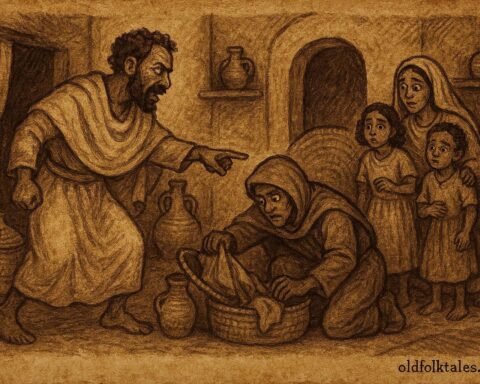
It began with a quiet act, one that no one had witnessed. A valuable item, carefully kept and trusted to remain safe, disappeared. Its absence was noticed quickly, but no one could explain how it had gone.
Questions were asked.
Each member of the household denied any involvement.
Love this story? Discover our full Southern African folktales collection
The more they spoke, the less certain the truth became. Suspicion began to move quietly among them, settling into their thoughts and changing the way they looked at one another.
Among the household was a bird.
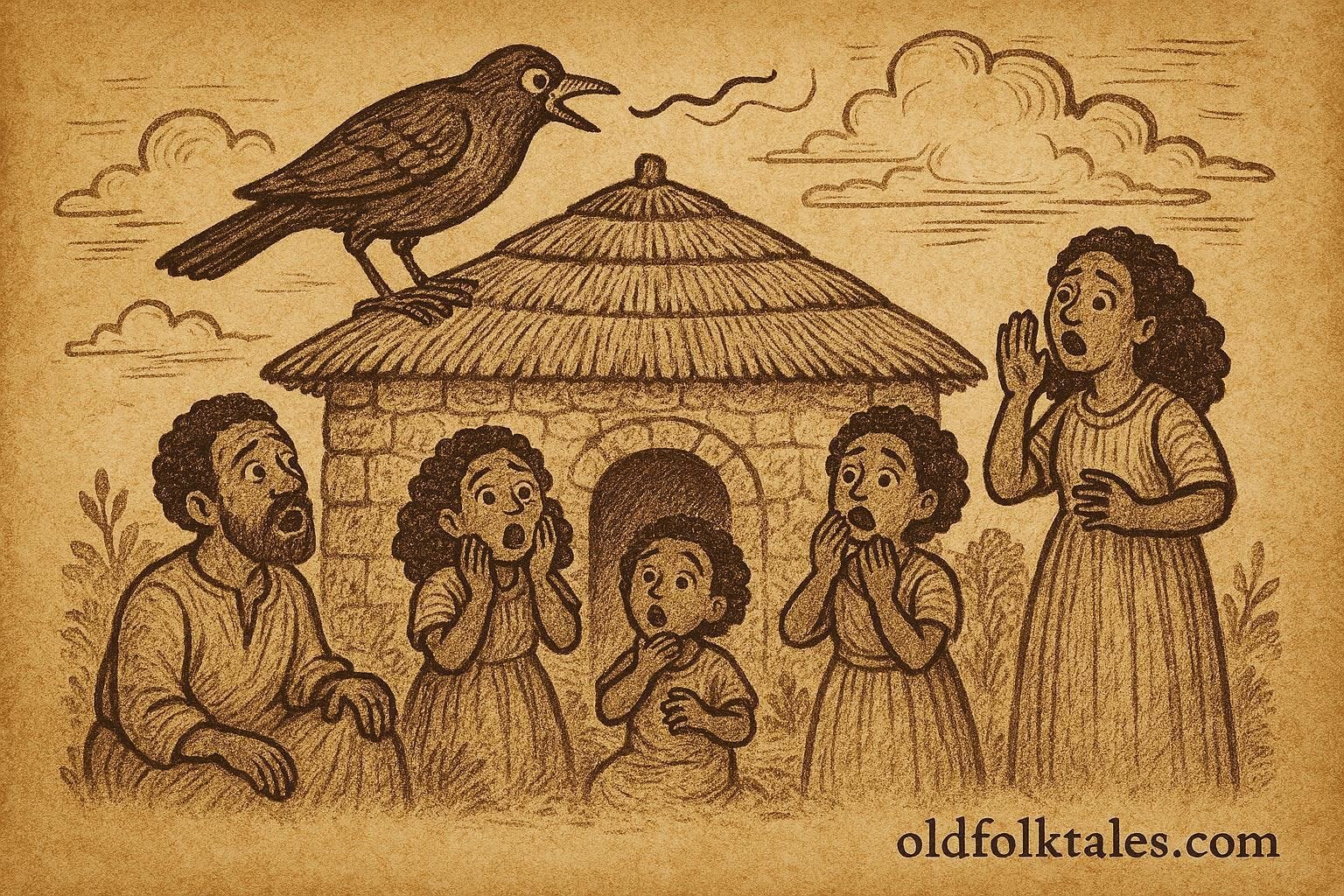
It lived nearby, often seen perched on the roof or resting in the branches close to the home. It was not unusual for birds to be present, and no one paid particular attention to it.
It watched.
Days passed, and the tension within the household grew.
What had once been a place of trust was now filled with quiet doubt. Conversations became careful. Movements were observed more closely.
Still, the truth remained hidden.
One morning, as the family gathered outside, the bird began to make a sound unlike any it had made before.
At first, it seemed like ordinary birdsong. But then, slowly, the sound took shape.
It became words.
The people fell silent.
They turned toward the bird, unsure of what they were hearing.
Again, it spoke.
The words it carried were clear.
It spoke of the missing item. It described the moment it had been taken, the place where it had been hidden, and the person who had taken it.
The household stood in shock.
No one moved. No one spoke.
The truth, which had been so carefully concealed, was now laid bare before them.
All eyes turned toward the one who had been named.
The person stood still, unable to deny what had been revealed. The details were too precise, too complete to be dismissed.
For a moment, silence returned, heavier than before.
Then, slowly, the one who had been accused lowered their head.
The truth could no longer be hidden.
The confession came quietly.
What had been taken, why it had been taken, and how it had been concealed were all brought into the open. The reasons did not remove the wrongdoing, but they allowed the others to understand what had happened.
The bird remained where it was, watching.
It did not speak again.
Its role had been fulfilled.
The members of the household began to reflect on what had occurred.
They realized that the truth had been present all along, unseen but not unknown. It had only needed a voice to bring it forward.
The elders of the community were called to settle the matter.
They listened carefully, considering both the act and its consequences. Justice was required, but so was restoration.
The one who had taken the item was required to return it and to accept the consequences determined by the elders.
But beyond the act itself, the elders spoke of something greater.
“Truth does not disappear simply because it is hidden,” they said. “It waits. And when it comes forward, it does so with clarity.”
The household began to heal.
With the truth revealed, the suspicion that had divided them began to fade. Trust, though shaken, slowly returned.
They spoke more openly, acted with greater care, and remembered the lesson they had been given.
The bird was never seen in quite the same way again.
What had once been considered ordinary had become a symbol of something deeper. It represented the idea that truth can come from unexpected places, and that nothing hidden remains so forever.
The story spread beyond the household.
It was told in the village as a reminder that wrongdoing cannot remain concealed indefinitely. It taught that even when people remain silent, the truth will find a way to be heard.
From that time onward, people listened more carefully, not only to each other, but to the world around them. They understood that truth is not limited to human voices, and that awareness must extend beyond what is obvious.
Don’t stop yet! See our complete East African folktales collection
Moral Lesson
Truth cannot be hidden forever. It will always find a way to be revealed, even through the most unexpected voices.
Knowledge Check
- What role did the bird play in the story?
The bird revealed the truth about the hidden wrongdoing. - What problem did the household face?
A missing item caused suspicion and division among them. - How was the truth revealed?
Through the bird speaking and exposing the details of the act. - What happened to the guilty person?
They confessed and were required to make amends. - What does the bird symbolize?
Truth and revelation from unexpected sources. - What is the main message of the story?
Truth will always come to light, no matter how deeply it is hidden.
Source
Tigre folktale, Eritrea. Recorded by Leo Reinisch (1883).