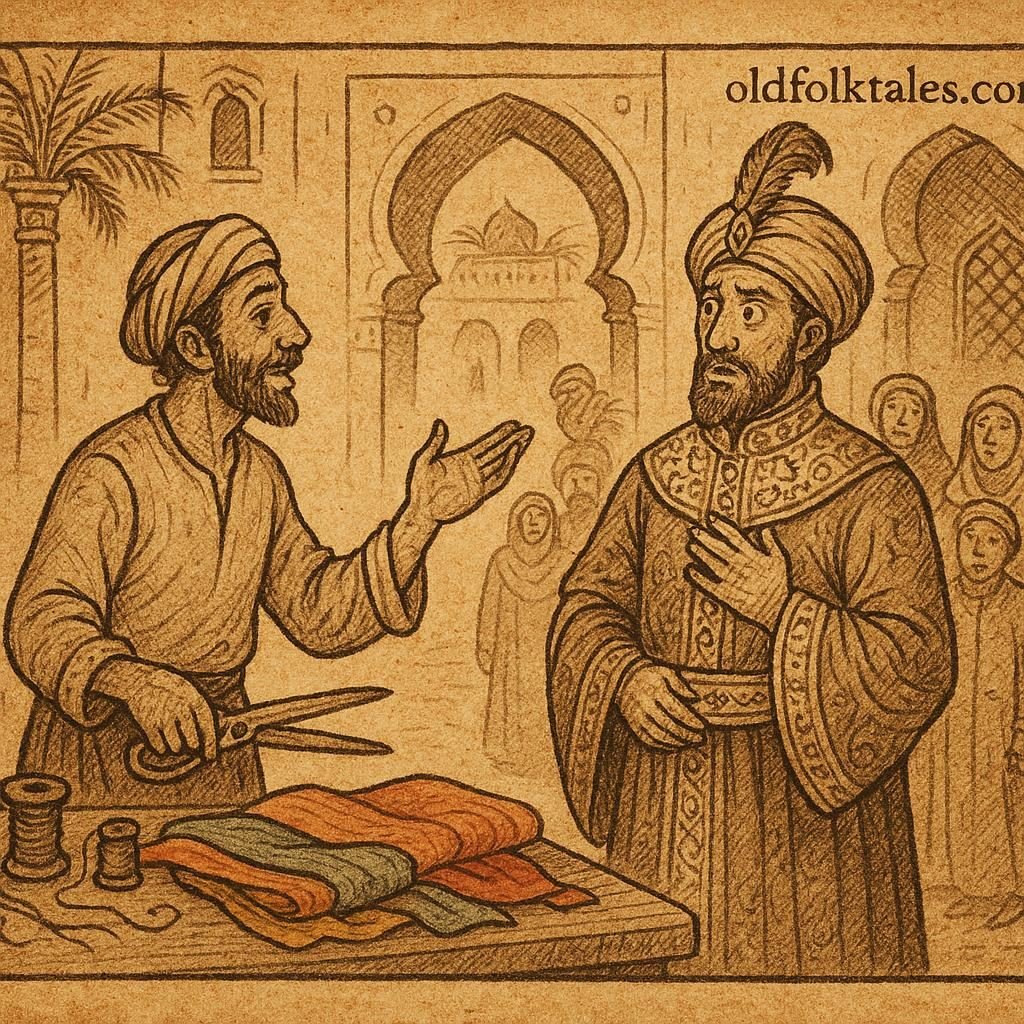
In the bustling heart of Marrakesh, where the narrow streets curved like threads in a great woven cloth, there lived a tailor. He was poor, his shop was small, and his clothes were simple, but his wit was sharper than the needle he carried in his hand. People came to him not only to have their garments mended but also to listen to his clever words and tales that brought both laughter and wisdom. In those days, the Sultan ruled with strength, but the city also suffered under the weight of a greedy vizier. This vizier loved wealth and power more than justice, and he was feared for his cunning schemes. Many men and women had fallen into misery because of his tricks. Yet fate soon brought the vizier face to face with the poor tailor of Marrakesh.
One morning, as the tailor sat at his wooden bench stitching a robe, a wealthy merchant came running. His eyes were wide with fear. He whispered that the vizier had accused him of hiding gold from the palace. The punishment would be cruel, but the merchant knew the tailor’s tongue could spin a rope of words strong enough to save lives. The merchant begged him to come before the Sultan’s court. The tailor hesitated, for he was a poor man with no power. But he agreed, for justice demanded that someone should stand against greed.
Want to dive deeper? Read more North African folktales today
In the palace courtyard, the vizier stood tall in his silk robes. He sneered when the tailor arrived, mocking him for his patched clothes and calloused hands. “What can a beggar with a needle say before the Sultan?” he asked. But the tailor bowed low and replied calmly, “I have only my words, noble vizier, but words, when true, can weigh more than gold.” The Sultan, curious about this bold man, allowed him to speak.
The vizier declared that the merchant had hidden treasure from the palace. He painted a picture of disloyalty and greed. But the tailor raised his voice and began to weave a story. “Once upon a time,” he said, “a lion ruled the forest. Beside him stood a jackal, sly and greedy. The jackal told the lion that the rabbit had stolen from the king’s store. The lion, ready to punish, called the rabbit. But the rabbit asked the lion a question. ‘If I had stolen, where are the fruits of my theft? My paws are clean, my home is empty. The jackal, however, grows fat though he hunts no prey. Who then is the thief?’ The lion opened his eyes and saw the truth.”
The Sultan leaned forward, for he knew the tailor’s story was more than a fable. He asked the merchant to open his home and his chest. Inside, there was nothing but the tools of trade. Then he turned to the vizier. The Sultan ordered his guards to search the vizier’s storerooms. There they found sacks of grain, jewels, and coins taken from the poor. The courtyard erupted in murmurs.
The vizier turned pale, but the tailor did not gloat. He simply said, “Truth, like a needle, may be small, but it stitches a wound no sword can heal.” The Sultan, impressed by his wisdom, rewarded the tailor with freedom from taxes and protection for his shop. The vizier, stripped of his power, was sent away in disgrace. The people of Marrakesh celebrated, not because the vizier had fallen, but because justice had risen. From that day on, the tailor became more than a craftsman. He was a symbol of wit against power, and his name was spoken with respect in the souks and squares of the city.
The story of the tailor of Marrakesh spread across Morocco, carried on the tongues of storytellers in tea houses and market corners. It was told not to boast of a poor man’s triumph, but to remind all that cleverness and honesty are greater shields than wealth and power.
Moral Lesson
The story of The Tailor of Marrakesh teaches us that wisdom and truth are stronger than greed and oppression. The poor tailor, though powerless in wealth, used his words as weapons of justice. His clever storytelling unmasked the vizier’s lies and saved an innocent man. In life, it is not riches or power that make one great, but the ability to speak truth with courage. Greed blinds even the powerful, but wit and honesty open eyes that greed tries to close.
Knowledge Check
What role did the poor tailor play in the story of The Tailor of Marrakesh?
The tailor used his wit and storytelling to expose the lies of the vizier and save an innocent merchant.How did the vizier try to use his power in the tale of The Tailor of Marrakesh?
The vizier accused a merchant of hiding treasure in order to gain more wealth and show his authority.Why did the Sultan believe the tailor’s words in The Tailor of Marrakesh?
The Sultan saw that the tailor’s parable revealed truth, and when he ordered searches, the vizier’s storerooms were full of stolen goods.What lesson about truth and lies does The Tailor of Marrakesh give us?
It shows that lies may hide for a time, but truth will eventually expose them, even against powerful men.Why was the tailor rewarded in The Tailor of Marrakesh?
He was rewarded because he defended justice with wisdom and courage, proving that even the poor can protect the community.What does the tailor mean when he says “Truth, like a needle, may be small, but it stitches a wound no sword can heal” in The Tailor of Marrakesh?
He means that truth may seem small or weak, but it has the power to mend great wrongs and heal injustices that violence or power cannot fix.
Cultural Origin: This folktale is from Morocco, specifically Marrakesh, and reflects the urban storytelling tradition where wit, parables, and clever speech often triumph over greed and oppression. Documented in Émile Dermenghem, Moorish Legends (1954).