In the lush landscapes of Ghana, where the rhythms of drums echo through the forests and the stories of ancestors are carried by the wind, there lived a young girl named Adjoa. She was known throughout her village for her curiosity and her innate talent for music. From a young age, Adjoa could mimic the complex rhythms of the master drummers, and her melodies brought joy to all who heard them.
Adjoa’s village, nestled between the dense forests and the rolling hills, held a sacred tradition: the Festival of Drums. Every year, the best drummers from neighboring villages would gather to celebrate the harmony between humans and the spirits of the land. The highlight of the festival was the playing of the Golden Drum, an ancient instrument said to have been gifted by the gods themselves. Its sound was believed to bring prosperity and peace.
However, the Golden Drum had not been heard for decades. It was said that the drum had been lost during a time of conflict, hidden away to protect its power. Many had searched for it, but none had succeeded.
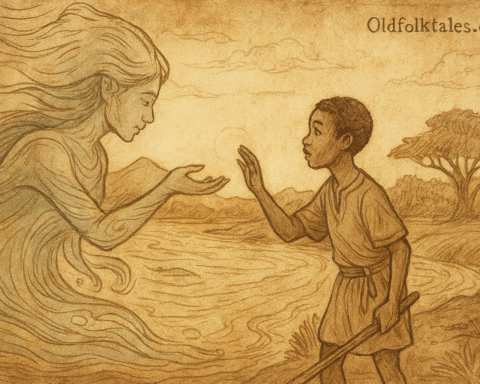
One night, as Adjoa sat by the river, playing her handmade drum, she heard a whisper carried by the breeze. “Seek the heart of the forest, where the oldest tree stands. There, the Golden Drum awaits the one who can awaken its song.”
Determined, Adjoa set out at dawn, venturing into the forest with only her drum and her courage. The journey was arduous, filled with treacherous paths and mysterious creatures. Along the way, she encountered a wise old tortoise who offered her guidance, a mischievous monkey who tested her patience, and a majestic eagle who taught her the importance of perspective.
After days of travel, Adjoa reached the heart of the forest, where a colossal baobab tree stood. At its base lay the Golden Drum, untouched and gleaming. As she approached, the spirits of the forest appeared, challenging her to prove her worth.
“To awaken the drum, you must play the rhythm of unity,” they said. “A rhythm that resonates with the heartbeat of the land and its people.”
Adjoa closed her eyes, recalling the lessons from her journey. She played a rhythm that embodied the wisdom of the tortoise, the playfulness of the monkey, and the vision of the eagle. The forest fell silent, and then, the Golden Drum responded, its sound harmonizing with hers, creating a melody that echoed through the land.
The spirits rejoiced, and the forest came alive with music. Adjoa returned to her village, bringing the Golden Drum and its blessings. The Festival of Drums was revived, and peace and prosperity returned to the land.
Adjoa’s tale became legend, a testament to the power of unity, perseverance, and the universal language of music.
✧ Commentary
This Ghanaian folktale emphasizes the importance of unity, perseverance, and the transformative power of music. Adjoa’s journey reflects the values of courage, respect for nature, and the wisdom gained through experiences. The story also highlights the significance of cultural traditions and the role of music in connecting communities and honoring the past.
✧ Moral
True harmony is achieved through unity, understanding, and the courage to pursue one’s calling.
✧ Questions & Answers
1. Q: What was the significance of the Golden Drum in Adjoa’s village? A: It was a sacred instrument believed to bring prosperity and peace, central to the Festival of Drums.
2. Q: Why had the Golden Drum not been heard for decades? A: It was hidden during a time of conflict to protect its power, and its location was lost over time.
3. Q: What challenges did Adjoa face on her journey? A: She navigated treacherous paths, encountered various creatures, and had to prove her worth to the forest spirits.
4. Q: How did Adjoa awaken the Golden Drum? A: By playing a rhythm that embodied unity and the lessons she learned during her journey.
5. Q: What is the central lesson of the tale? A: The importance of unity, perseverance, and the power of music to bring communities together.