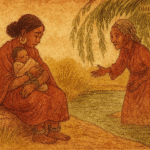
In the verdant hills of Sierra Leone, nestled between emerald forests and winding rivers, lay the village of Njala. The villagers lived in harmony with nature, drawing sustenance from the land and water. Among them was a young girl named Kumba, known for her inquisitive nature and deep connection to the river that flowed near her home.
Kumba would often sit by the riverbank, listening to the gentle babble of the water and watching the fish dart beneath the surface. Her grandmother, Mama Sia, would tell her stories of the river’s spirit, a guardian known as Mami Wata, who protected the waters and those who respected them.
“Remember, child,” Mama Sia would say, “the river gives life, but it must be honored. Mami Wata watches over it, and she rewards those who show reverence.”
One year, a severe drought struck Njala. The once-bountiful river shrank, and the villagers grew desperate. Crops withered, and the fish disappeared. The village elders decided to seek the aid of Mami Wata, hoping to appease her and restore the river’s flow.
A ceremony was organized, and offerings were prepared. However, as the villagers gathered by the parched riverbed, a sudden gust of wind extinguished their ceremonial fires, and a voice echoed through the air.
“Your offerings are tainted by neglect,” the voice proclaimed. “You have taken without gratitude, and now you face the consequences.”
Fear gripped the villagers, and they turned to the elders for guidance. The elders, in turn, looked to Kumba, whose bond with the river was well-known. They believed she might be able to commune with Mami Wata and seek forgiveness.
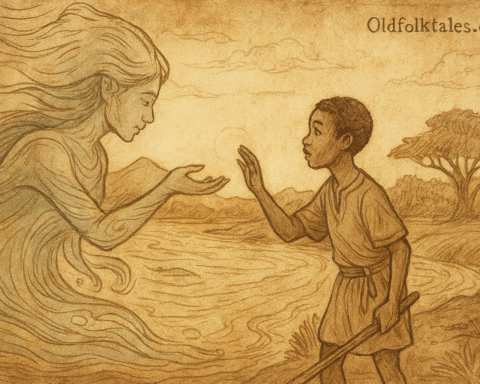
Determined to help her village, Kumba set out alone along the river’s path, venturing deeper into the forest than ever before. As night fell, she reached a secluded pool where the moonlight danced upon the water’s surface. There, she called out to Mami Wata, expressing remorse on behalf of her people and pledging to restore balance between the village and the river.
The water shimmered, and from its depths emerged Mami Wata, radiant and serene. She listened to Kumba’s plea and, moved by her sincerity, agreed to grant the village another chance. However, she warned that the villagers must honor the river and its spirit henceforth.
Kumba returned to Njala and relayed Mami Wata’s message. The villagers, humbled, vowed to respect the river and its guardian. They implemented sustainable practices, held regular ceremonies to honor Mami Wata, and taught their children the importance of living in harmony with nature.
Gradually, the river’s flow returned, and the land flourished once more. Kumba’s bravery and devotion became legend, and the tale of her journey was passed down through generations as a reminder of the sacred bond between humans and the natural world.
✧ Commentary
This Sierra Leonean folktale underscores the importance of respecting nature and the spiritual entities believed to govern it. Mami Wata, a prominent figure in West African folklore, embodies the river’s life-giving and destructive powers. Kumba’s journey reflects the values of courage, responsibility, and the need for harmony between communities and their environment.
✧ Moral
Respect and gratitude towards nature and its guardians are essential for the well-being and prosperity of a community.
✧ Questions & Answers
1. Q: Who is the guardian spirit of the river in the story? A: Mami Wata.
2. Q: What caused the river to dry up in Njala? A: A severe drought and the villagers’ neglect of honoring the river’s spirit.
3. Q: How did Kumba communicate with Mami Wata? A: She journeyed to a secluded pool and sincerely pleaded for forgiveness on behalf of her village.
4. Q: What changes did the villagers make after Kumba’s encounter with Mami Wata? A: They adopted sustainable practices, held regular ceremonies to honor Mami Wata, and educated their children about respecting nature.
5. Q: What is the central lesson of the tale? A: The necessity of living in harmony with nature and showing reverence to the spiritual forces that protect it.