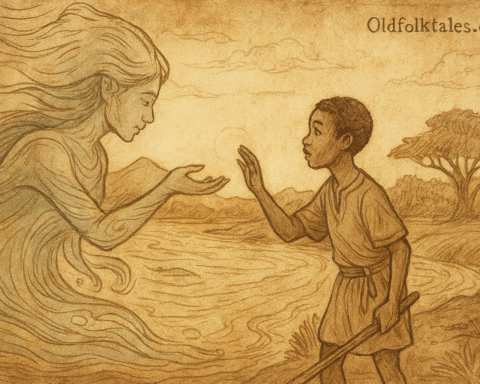
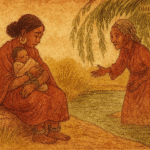
In the heart of the savannah, where the tall grasses whispered secrets to the wind, lay the village of Nyama. The villagers lived in harmony with nature, drawing water from clear springs and hunting only what they needed. They respected the spirits of the land, especially the madebele—small, elusive beings with backward feet and large heads, who dwelled in the surrounding bush.
The madebele were known to be impartial, capable of both benevolence and mischief. They could bless a hunter with abundant game or lead him astray into the wilderness. To maintain harmony, the villagers offered gifts at the foot of sacred trees and performed rituals to honor these spirits.
Among the villagers was a young man named Kofi, known for his ambition and restlessness. Unlike his peers, Kofi questioned the old ways. He saw the rituals as superstitions that held the village back from progress. “Why should we fear beings we cannot see?” he would ask. “We should clear more land, build bigger homes, and expand our fields.”
One day, Kofi proposed clearing a section of the forest considered sacred—a place where the madebele were believed to reside. The elders warned him, “Disturbing their domain invites misfortune.” But Kofi dismissed their concerns, rallying a group of young men to help him.
As they chopped down trees and burned underbrush, strange occurrences began. Tools disappeared, paths shifted, and eerie sounds echoed at night. The village’s water source dried up, and crops withered. Illness spread, and the once-thriving village fell into despair.
Realizing their mistake, the villagers sought the guidance of the elders, who consulted the diviner. “The madebele are angered,” he declared. “We must make amends.”
The villagers prepared offerings and performed rituals to appease the spirits. Kofi, filled with remorse, led the ceremonies, pleading for forgiveness. Gradually, the village’s fortunes improved. The springs flowed again, crops flourished, and peace returned.
Kofi became a changed man, dedicating himself to preserving the balance between progress and tradition. He taught others the importance of respecting the unseen forces that govern the world.
Commentary
This tale from the Senufo people highlights the delicate balance between human ambition and the natural world. The madebele represent the unseen forces that, when respected, maintain harmony but, when angered, can disrupt life. Kofi’s journey from skepticism to reverence underscores the importance of acknowledging and honoring traditions that safeguard this balance.
Moral
Disregarding the wisdom of tradition and the unseen forces of nature can lead to unforeseen consequences. Respect and harmony with the spiritual world are essential for a community’s well-being.
Questions & Answers
1. Q: Who are the madebele? A: The madebele are bush spirits in Senufo folklore, known for their impartial nature and influence over human affairs.
2. Q: Why did Kofi want to clear the sacred forest? A: Kofi believed that the village’s traditions were outdated and sought to expand the village by clearing more land, including sacred areas.
3. Q: What consequences did the village face after disturbing the madebele’s domain? A: The village experienced misfortunes such as disappearing tools, drying water sources, failing crops, and widespread illness.
4. Q: How did the villagers restore harmony? A: They performed rituals and offered gifts to appease the madebele, seeking forgiveness for their transgressions.
5. Q: What lesson did Kofi learn? A: Kofi learned the importance of respecting traditions and the unseen forces that maintain balance in the world.