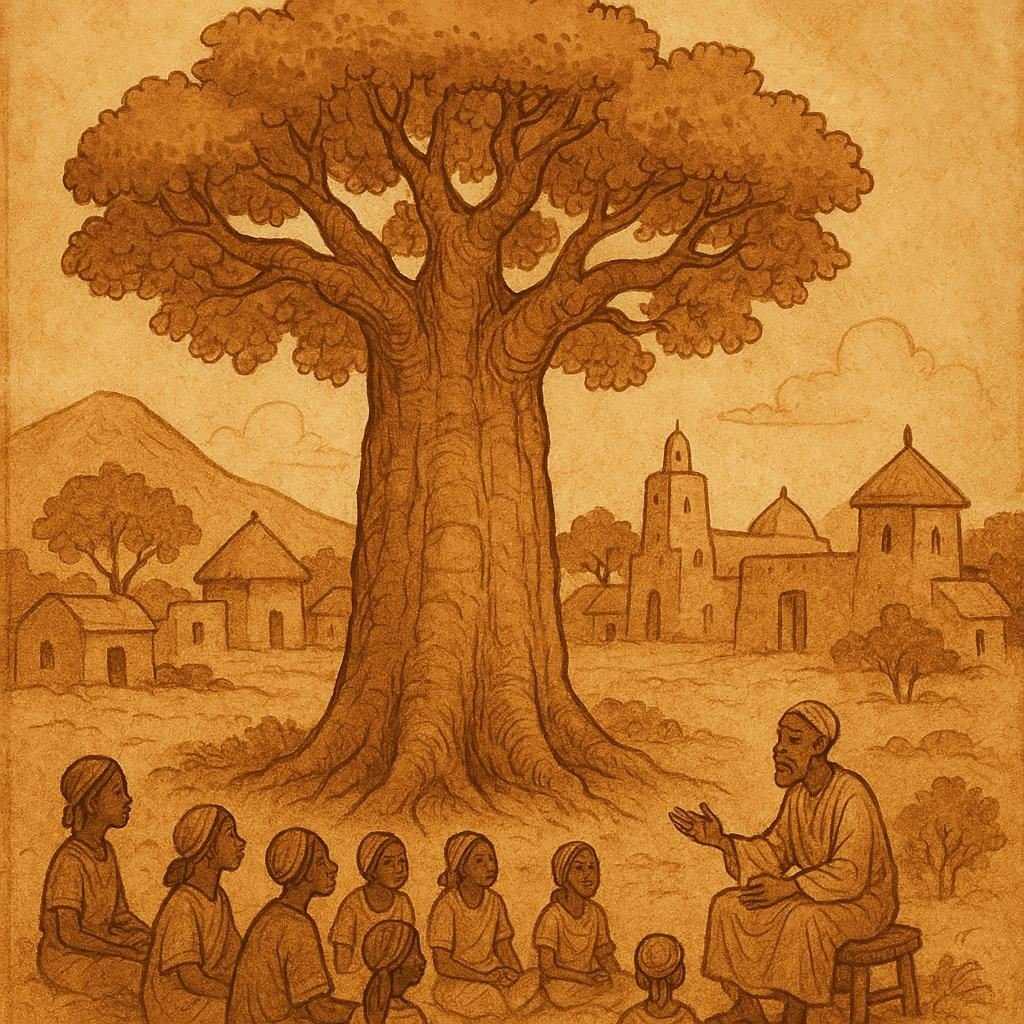
In the heart of Mali where the red earth meets the wide open sky and the winds carry whispers of ancient songs there stood a baobab tree unlike any other. Its trunk was enormous wider than a house and its branches stretched upward like arms reaching to embrace the heavens. The people of a nearby village often came to rest in its shade for it was said that this tree was as old as the ancestors themselves. Yet few knew that this baobab held a secret that would change their lives forever.
One morning as the village stirred awake with the sounds of pestles pounding grain and children’s laughter ringing through the dusty streets an old woman walked to the baobab with her calabash of water. She often sat beneath the tree to escape the heat and speak her troubles aloud though no one ever listened. On that day however a deep and gentle voice answered her words. Fear not mother the voice said for your struggles are heard. The woman dropped her calabash in shock for the voice came from the baobab itself.
The tree spoke with kindness offering her comfort and wisdom. It told her where to find healing herbs for her sick grandson and where to draw the purest water to quench her thirst. Trembling with awe she returned to the village and told the others. At first no one believed her but when they went together to the tree it greeted them as well. Soon the whole village came to know that the baobab could speak.
READ THIS: The Cunning Hare and the Mighty Lion
For many moons the tree shared its wisdom freely. It guided farmers to fertile soil and taught hunters where game would appear. It blessed women with fertility and children with health. The people prospered and the village flourished as never before. Each evening they gathered beneath its branches listening as the baobab told stories of the earth the spirits and the ancestors. The people were filled with gratitude and they brought offerings of millet honey and milk laying them at the base of the sacred trunk.
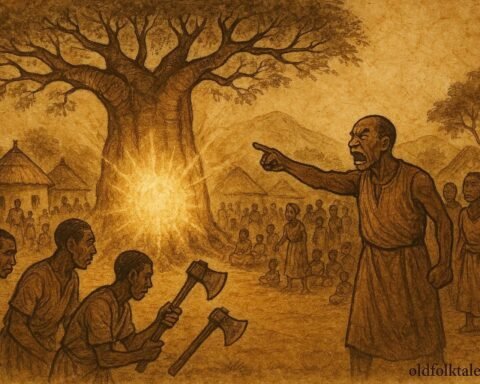
But as time passed gratitude gave way to desire. Some villagers began to ask not for guidance but for riches. They demanded gold cattle and wealth beyond measure. The baobab spoke patiently reminding them that wisdom and harmony were greater treasures than earthly riches. Yet the seeds of greed had already taken root. A group of men decided that if the tree could give knowledge then it must also hide power within its heart. They whispered among themselves and one moonless night they came with axes to cut it down believing they could capture its spirit and force it to grant them wealth.
The blows of their axes echoed through the village and the baobab let out a cry so deep it shook the ground. The people awoke and rushed to the tree but by the time they arrived the great baobab had vanished. Only bare earth remained where it once stood and the offerings at its roots were gone as if swallowed by the earth. The villagers wept for they knew their greed had driven away the blessing that had nourished their lives.
From that day forward the land grew harder the rains came less often and the soil yielded little. The people remembered the voice of the baobab and mourned the wisdom they had lost. The old woman who had first heard its words told the children never to forget what had happened. Respect what is given she told them for if you grasp too tightly you may lose it all.
The griots of Mali still recall the tale of the Talking Baobab Tree to remind listeners that the earth speaks but only to those who listen with humility. The baobab’s absence became its greatest lesson showing that wisdom is a gift not a possession and that greed blinds the heart to the blessings already in hand.
Moral Lesson: The Talking Baobab Tree teaches that wisdom and blessings must be received with humility and gratitude. Greed destroys harmony and when people value wealth above respect for nature and spirit they risk losing the very gifts that sustain them.
Knowledge Check
What is the main setting of The Talking Baobab Tree folktale?
Answer : The story takes place in a Malian village where a sacred baobab tree shares wisdom and blessings with the peopleWho first heard the voice of the baobab tree?
Answer : An old woman who came to rest under the tree and speak her troubles aloud was the first to hear the tree speakWhat kinds of help did the baobab tree give to the villagers?
Answer : It offered guidance to farmers hunters and families blessing them with health prosperity and harmonyWhy did some villagers decide to cut down the baobab tree?
Answer :They were consumed by greed and believed they could capture its spirit to gain riches and powerWhat happened when the villagers struck the baobab with axes?
Answer: The tree let out a deep cry and vanished leaving behind only bare earth where it once stoodWhat moral lesson does The Talking Baobab Tree folktale teach?
Answer : It teaches that greed destroys blessings and true wealth lies in wisdom respect and harmony with nature
Source: Bambara folktale Mali Recorded in oral traditions collected by African storytellers in the 20th century