There was once a time when the voice of the drum was more than music. It spoke, it warned, and it carried messages across the land for those who knew how to listen. In a village in Dahomey, the people trusted the drum as both messenger and guardian, believing that its rhythms carried the wisdom of the unseen.
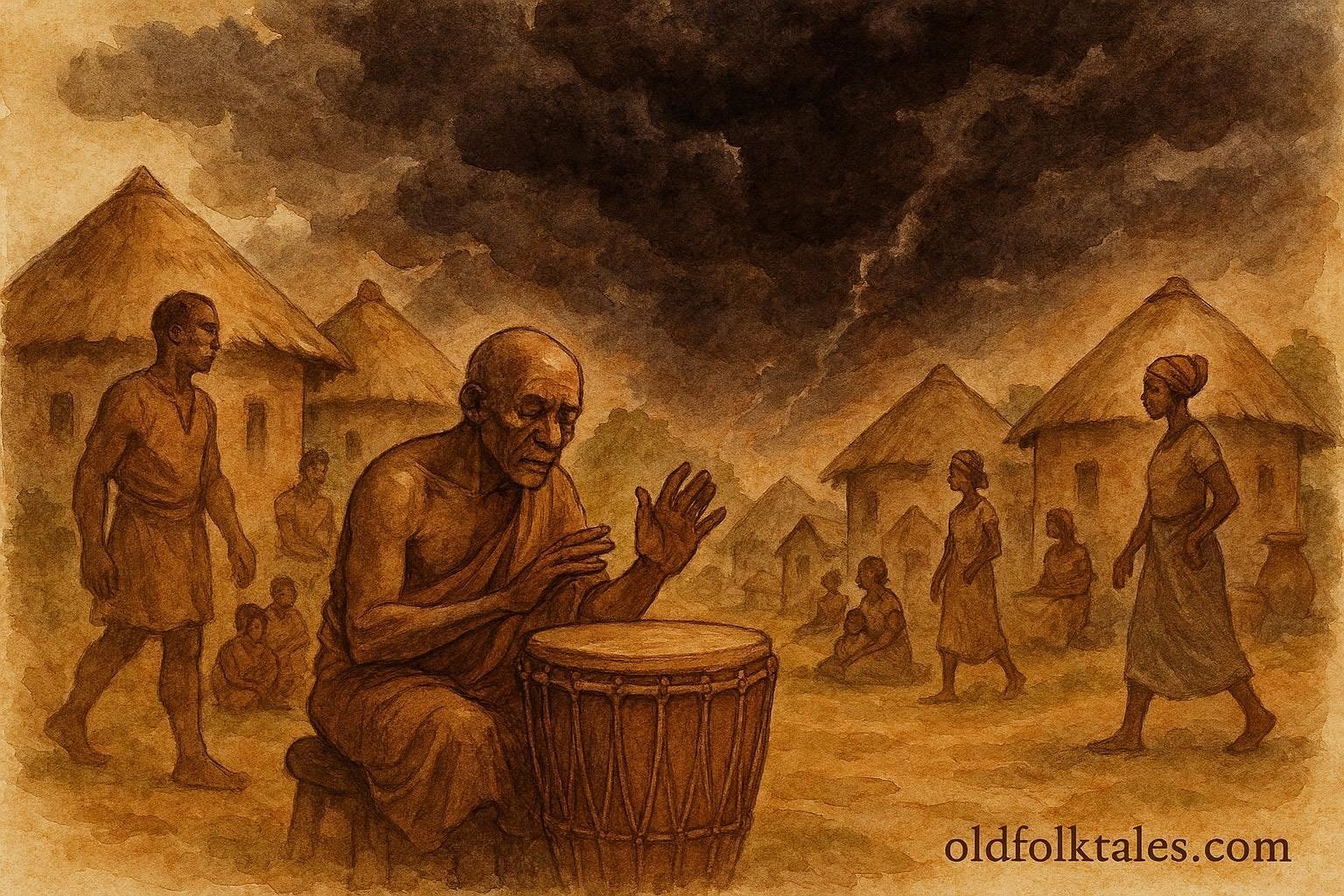
At the center of the village stood a sacred drum, carved from a great tree and wrapped with care in fine leather. It was not beaten for ordinary celebrations. Only the chief drummer, a man trained from youth to understand its language, was allowed to play it. Through its sounds, messages could travel beyond the reach of the human voice, warning of danger or calling people together.
For many years, the drum had served the village faithfully. When enemies approached, it sounded the alarm. When storms threatened, it called the people to prepare. Its voice had never been wrong. Because of this, the elders held it in the highest respect.
As time passed, however, a new generation grew up in the village. They enjoyed the festivals, the dancing, and the lively sounds of ordinary drums, but they paid little attention to the deeper meaning of the sacred drum. To them, it was simply another instrument, old and unimportant.
Continue your journey: Read more East African folktales
The elders warned them.
“This drum speaks truth,” they said. “Its voice must never be ignored.”
But the younger villagers laughed.
“We can see danger with our own eyes,” they replied. “We do not need a drum to tell us what is coming.”
Slowly, the respect for the sacred drum began to fade.
One afternoon, as the sun hung high in the sky and the village moved through its usual rhythm, the chief drummer approached the sacred drum. His face was serious, and his movements were deliberate. He had felt a strange unease, as though something unseen was approaching.
He raised his hands and struck the drum.
The sound that followed was not one of celebration. It was sharp, urgent, and filled with warning. The rhythm echoed through the village, carrying a clear message to those who understood its language.
Danger is near. Prepare.
The elders heard it immediately. They stopped what they were doing and listened carefully. Some began to gather their families, sensing the seriousness of the message.
But many others ignored it.
In the marketplace, traders continued their bargaining, laughing and calling out to customers.
“It is only the old drum again,” one man said. “There is no danger here.”
Near the river, women fetching water paused briefly, then returned to their work.
“If there were danger, we would see it,” they said.
Children continued to play, chasing one another through the dusty paths, unaware of the warning that echoed around them.
Even some of the younger men shook their heads.
“The elders worry too much,” they said. “Nothing will happen.”
The chief drummer struck the drum again, louder this time. The rhythm was unmistakable, urgent and insistent.
Danger is coming. Do not ignore this warning.
The sound carried far beyond the village, into the surrounding fields and forests. The elders grew more concerned.
“Listen to the drum,” they urged. “It has never spoken falsely.”
But still, many refused to act. They had grown too confident in their own judgment, believing they could rely only on what they could see.
As evening approached, the sky began to change. A strange stillness settled over the land. The air grew heavy, and the usual sounds of birds and animals faded into silence.
Then, without warning, the danger revealed itself.
A sudden and powerful force swept toward the village. Whether it was a violent storm, a fierce attack, or another form of disaster, it came with overwhelming speed. Winds tore through the huts, overturning structures and scattering belongings. Panic spread as people rushed to protect themselves, but many were unprepared.
Those who had listened to the drum had already taken shelter. They had secured their homes, gathered their families, and moved to safer ground.
But those who had ignored the warning were caught in confusion. They ran in every direction, unsure of what to do. By the time they realized the truth, it was too late to prepare properly.
When the danger finally passed, the village was left shaken. Some homes had been damaged, and many possessions were lost. The people gathered together, their faces filled with regret and understanding.
The elders stood before them, their expressions solemn.
“The drum spoke,” they said. “It warned you. But you chose not to listen.”
The villagers lowered their heads. They remembered the sound, the urgency, and the warnings they had dismissed.
The chief drummer approached the sacred drum once more. This time, the rhythm he played was slow and heavy, carrying a message of reflection and sorrow.
The people listened carefully, hearing not just the sound, but the meaning behind it.
They understood now that wisdom does not always come in the form they expect. Sometimes it comes through tradition, through symbols, and through voices that must be learned and respected.
From that day forward, the village changed.
The sacred drum was no longer treated as an ordinary object. It was honored once again as a messenger of truth. When it spoke, the people listened. When it warned, they prepared.
The younger generation learned from the mistake of their elders and themselves. They were taught the language of the drum, so that its voice would never again be ignored.
And the story of the talking drum was passed down through generations, reminding all who heard it that warnings, no matter how they come, must be taken seriously.
Want more? Read more West African folktales now
Moral Lesson
Wisdom often comes through unexpected voices. Ignoring warnings and guidance can lead to regret, while listening and acting in time brings safety and protection.
Knowledge Check
- What was special about the talking drum in the story?
It could communicate warnings and messages to the village. - Who understood the drum’s message?
The chief drummer and the elders understood its meaning. - Why did many villagers ignore the warning?
They believed they could rely only on what they could see and dismissed tradition. - What happened after the warning was ignored?
A sudden disaster struck, catching many villagers unprepared. - What lesson did the villagers learn?
They learned to respect wisdom, tradition, and warnings. - What is the origin of this folktale?
Dahomey, Benin.
Source
Dahomean narrative, Benin. Recorded by Melville J. Herskovits in Dahomean Narrative (1958).