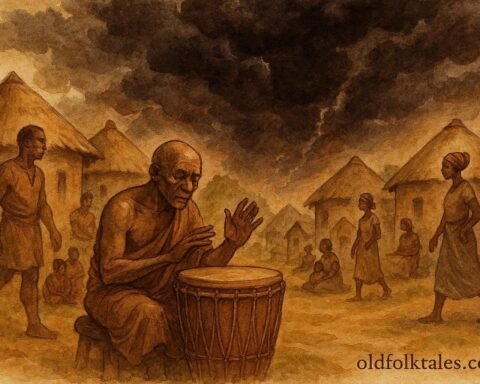
Long ago, in the heart of Banda land, there was a wide, flowing river. Its waters sang like drums, rushing over smooth stones that gleamed under the sun. The Banda people lived by this river , fishing, farming along its banks, and performing rituals that honored the spirits of water and earth.
One season, the rains came heavy and the river grew fierce. The villagers whispered among themselves:
“The river is alive,” they said, “and it listens.”
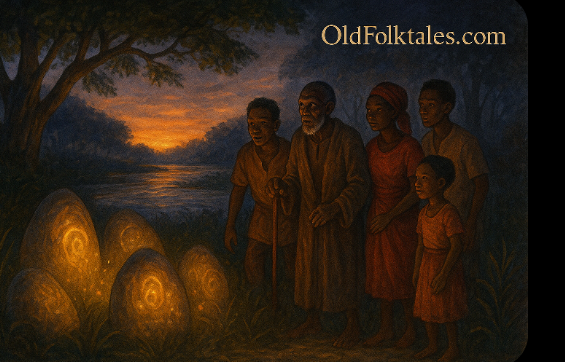
One moonlit night, a boy named Lambo went to fetch water. As he dipped his calabash into the current, he heard a murmur , not of water, but of voices. Startled, he looked around. The stones at his feet shimmered, and from them came deep, echoing voices, like the voices of ancestors speaking through drums.
“Child of the river,” said the stones, “tell your people: do not cut too many trees by the riverbank, or the waters will rise in anger. Do not cast nets too greedily, or the fish will vanish. Do not forget the songs of offering, or the spirits will turn their faces away.”
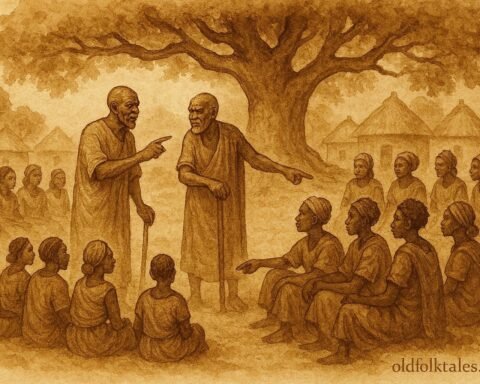
Terrified yet awed, Lambo ran back to the village and told the elders what he had heard. The elders gathered under the great baobab tree, listening as the boy repeated the voices of the stones. Some nodded, remembering the old rituals; others laughed, thinking it was only a child’s fancy.
But the old healer, N’dambo, stood and raised his staff.
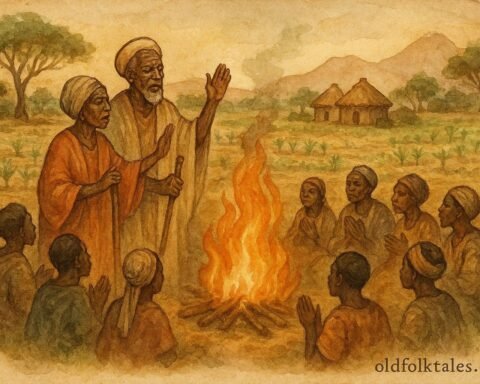
“The ancestors speak in many ways,” he said. “Even through stones. We must listen.”
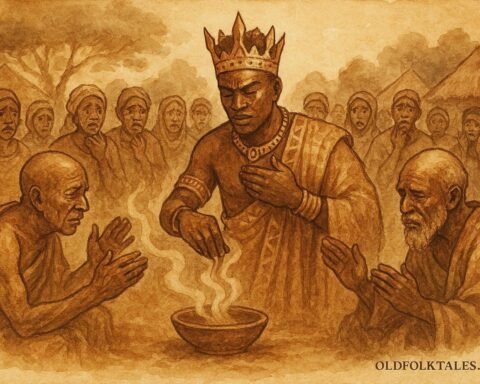
From that day, the community revived their river rituals. At dawn, women sang as they fetched water, offering kola nuts to the river spirits. Fishermen poured the first catch back into the waters as a gift. Children were taught not to throw waste into the river, for it was a living spirit.
Seasons passed, and the river remained calm, generous with its fish and kind to the fields. Yet one year, a group of young men ignored the teachings. They cut trees recklessly for canoes and hunted fish beyond need. That night, the river roared louder than ever. Floods swallowed the fields, and fish grew scarce.
In the chaos, the stones spoke again. Their voices rumbled in the water:
“We warned you, children of Banda. Respect the river, respect the earth. Wisdom ignored brings sorrow.”
The villagers wept, remembering the words of the stones. From then on, no one doubted the voices. The Banda people lived with care ,taking what they needed, giving thanks, and honoring the balance between people and river.
Moral of the Story
Wisdom can be found in unexpected places. When communities listen to guidance, whether from elders, nature, or even stones , they preserve harmony for future generations.
Knowledge Check (SEO Friendly Questions & Answers)
Q1: What is the Banda folktale “The Talking River Stones” about?
A1: It tells the story of a river whose stones speak with ancestral voices, guiding the Banda villagers to respect nature and community rituals.
Q2: What cultural practices are shown in the folktale?
A2: The story highlights river rituals such as offering gifts to the water spirits, singing while fetching water, and returning the first fish as a sacrifice.
Q3: What warning did the river stones give to the Banda people?
A3: The stones warned against cutting too many trees, overfishing, and neglecting ancestral rituals, as these actions would anger the river.
Q4: How did the Banda people respond to the stones’ message?
A4: At first some doubted, but later the villagers revived their rituals and lived more carefully with the river to maintain harmony.
Q5: What happened when some villagers ignored the stones’ wisdom?
A5: The river flooded, fish bercame scarce, and the community suffered, proving the truth of the stones’ warning.
Q6: What is the moral lesson of “The Talking River Stones”?
A6: The story teaches that wisdom may come from unexpected sources, and respecting nature ensures the survival and balance of the community.