
In the bustling marketplace of an ancient Ethiopian trading town, where the scents of frankincense and berbere spice mingled with the dust kicked up by countless feet, a wealthy merchant found himself facing a crisis that threatened to ruin his carefully planned journey. The town sat at the crossroads of ancient trade routes, where caravans from distant lands would pause to rest their animals and resupply before continuing across the harsh terrain that stretched between the highland cities and the lowland desert.
This particular merchant was known throughout the region for his fine goods and fair dealings. His caravan carried precious cargo destined for markets many days’ travel away, sacks of the finest grain, jars of golden honey that caught the sunlight like liquid amber, and other treasures that would bring good prices in the cities beyond the mountains. But the most valuable asset of any merchant in those days was not his goods, but the sturdy camels that carried them across the unforgiving landscape.
On this morning, as the sun climbed above the eastern peaks and cast long shadows across the marketplace, the merchant discovered that his prize camel had vanished during the night. This was no ordinary beast, but a strong and reliable animal that had carried loads across countless miles of desert and mountain paths. Without it, his entire trading expedition would be delayed, possibly for weeks, while he searched for a suitable replacement.
Also read: Half boy and the Seven Brothers
Panic began to creep into the merchant’s voice as he questioned everyone in the vicinity. Had anyone seen his camel? Did they know where it might have wandered? The animal had been securely tethered the night before, but somehow it had disappeared, leaving behind only the empty rope that had bound it to the wooden post outside the caravanserai.
As word of the missing camel spread through the marketplace, three men who were known throughout the town for their wisdom and learning approached the distraught merchant. These were not young men, but scholars whose hair had been silvered by years of study and observation. They had spent their lives watching the world with careful eyes, noting the small details that most people overlooked in their hurry to complete their daily tasks.
“Peace be upon you, brother merchant,” said the eldest of the three, his voice calm and reassuring. “We have heard of your misfortune. Perhaps we can be of service in locating your lost animal.”
The merchant, grasping at any hope of recovering his valuable camel, eagerly accepted their offer of help. He began to describe the missing beast in great detail, its size, its color, its particular markings, and all the cargo it had been carrying. But before he could finish his lengthy description, the first wise man raised his hand.
“Tell us nothing more of the animal’s appearance,” he said with quiet confidence. “Instead, show us the place where it was last seen, and we will tell you what we can discover.”
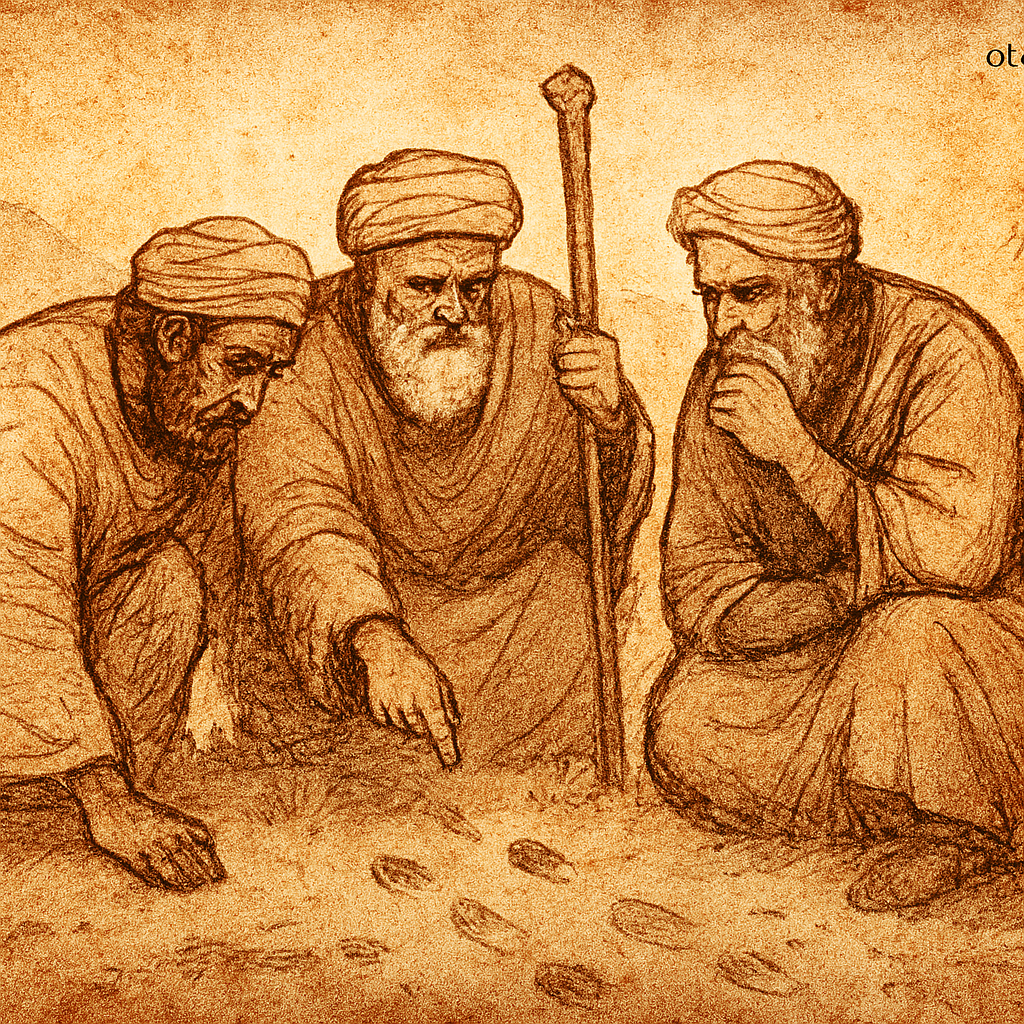
Puzzled but desperate, the merchant led the three wise men to the spot outside the caravanserai where his camel had been tethered. The area was well-traveled, with the packed earth showing the tracks of many animals and the feet of countless travelers. To the merchant’s untrained eye, it was simply a patch of dusty ground that revealed nothing useful.
But the three wise men immediately knelt and began examining the earth with the intensity of hunters following a trail. They studied every mark in the dust, every disturbed pebble, every trace that the missing animal might have left behind. Their fingers traced patterns in the dirt that meant nothing to the watching merchant, but spoke volumes to their experienced eyes.
After several minutes of careful examination, the three men rose and brushed the dust from their robes. The eldest turned to the anxious merchant with the expression of one who had solved a complex puzzle.
“Your camel,” he announced with certainty, “is blind in the right eye. It is missing a tooth on the left side of its mouth. On its right side, it carries sacks of grain, while on its left side it bears containers of honey.”
The merchant’s jaw dropped in amazement. Every detail they had described was perfectly accurate. His camel was indeed blind in one eye, the result of an old injury that had never properly healed. It had lost a tooth years ago when it had tried to chew through a rope that was too tough for its aging teeth. And yes, the cargo they described matched exactly what the animal had been carrying grain on one side, honey on the other, carefully balanced to prevent the load from shifting during travel.
“Surely you have seen my camel!” the merchant exclaimed. “Where is it now? Who has taken it?”
But the three wise men shook their heads. “We have never laid eyes on your animal,” the second scholar replied. “We know these things only from what the earth has told us.”
Word of this remarkable demonstration quickly spread through the marketplace, growing with each telling until it reached the ears of the local magistrate. Such uncanny knowledge could only mean one thing, the official reasoned, these three men must be thieves who had stolen the camel themselves. How else could they know such specific details about an animal they claimed never to have seen?
The magistrate ordered the three wise men to be arrested and brought before him for questioning. Standing in the judgment hall with chains upon their wrists, the scholars faced accusations of theft and demands to reveal the location of the stolen camel.
“We are innocent of any crime,” declared the eldest with dignity intact despite his circumstances. “We are guilty of nothing more than careful observation and logical reasoning.”
“Then explain your sorcery,” demanded the magistrate. “How could you know these things without supernatural aid or criminal knowledge?”
The first wise man stepped forward, his voice clear and steady. “The tracks showed us that the camel stepped on grass and leaves only on its left side, never on its right. This told us it was blind in the right eye and could not see food on that side.”
The second scholar continued the explanation. “Where the animal had paused to graze, we found chewed grass that showed the marks of missing teeth on the left side of its mouth.”
The third wise man completed their defense. “Along the path, we observed that ants had gathered on the left side where drops of honey had fallen, while grain scattered on the right side showed where that cargo had leaked from its containers.”
As the three men explained their reasoning, the magistrate’s expression changed from suspicion to wonder. Each deduction was logical, based entirely on observable evidence that any careful observer might have noticed. There was no magic involved, no criminal knowledge, only the application of wisdom and attention to details that others had overlooked.
Before the magistrate could render his judgment, a commotion arose outside the hall. The lost camel had been found wandering in a distant field, exactly as the three wise men had described it. The merchant rushed into the judgment hall, his face beaming with joy and gratitude.
“Release these good men immediately!” he declared. “They speak the truth. Every word they said about my camel was perfectly accurate. They are scholars, not thieves.”
The magistrate, now thoroughly convinced of their innocence and impressed by their demonstration of careful reasoning, ordered the chains removed and offered the three wise men his apologies. The merchant, overwhelmed with gratitude, rewarded them generously for their help, though they had asked for nothing in return.
Moral Lesson
This Ethiopian folktale teaches us that true wisdom comes not from supernatural powers or secret knowledge, but from careful observation and logical reasoning. The three wise men succeeded where others failed because they took the time to examine evidence that was available to everyone, but which most people overlooked. The story reminds us that what appears to be magic is often simply the result of paying attention to details and thinking clearly about what we observe.
Knowledge Check
Q1: What specific physical characteristics did the three wise men deduce about the lost camel in this Ethiopian folktale? A1: The wise men determined that the camel was blind in the right eye, missing a tooth on the left side of its mouth, and was carrying grain on the right side and honey on the left side of its load.
Q2: How did the wise men determine the camel was blind without seeing it? A2: They observed that the camel’s tracks showed it had grazed only on the left side of the path, stepping on grass and leaves only where it could see them, indicating blindness in the right eye.
Q3: What evidence revealed the camel’s missing tooth in this Ethiopian wisdom tale? A3: The scholars found chewed grass along the path that showed bite marks indicating missing teeth on the left side of the camel’s mouth, revealing the dental problem through careful examination.
Q4: Why were the three wise men initially accused of theft by the magistrate? A4: The magistrate believed their accurate knowledge of the camel’s appearance and cargo could only come from having stolen it themselves, since they claimed never to have seen the animal.
Q5: What does this Ethiopian folktale teach about the difference between wisdom and magic? A5: The story demonstrates that apparent “magic” or supernatural knowledge is often just careful observation and logical deduction. True wisdom comes from paying attention to evidence that others overlook.
Q6: How do the three scholars represent Ethiopian cultural values about learning and observation? A6: The wise men embody Ethiopian respect for scholarship, careful reasoning, and the value of experience gained through attentive observation of the natural world rather than relying on supernatural explanations.
Source: Ethiopian folktale

