
In the days when the world was still young, the great Mawu, Creator of all, sent her messenger to walk the earth. Each day, this messenger set out at sunrise and traveled until sunset, carrying out the hidden decrees of the divine. Though he moved in the likeness of a man, his spirit was more than human.
One evening, as the shadows lengthened and the sun slipped low, the messenger reached the town of Adjala. Tired from the day’s journey, he sought shelter and entered a house where another traveler also came to rest. The two strangers, one divine and one mortal, shared the night under the same roof.
At dawn, the sound of bitter weeping filled the air. A child in the house lay gravely ill, and its parents wailed in despair. Mawu’s messenger, calm and deliberate, reached into his pouch and gave the family a small packet of powder. They trusted him, for his presence carried authority. Yet as soon as they used it, the child drew its last breath and died.
The human traveler stared in shock. His heart trembled with pity for the grieving parents and confusion at the messenger’s cruel gift. But the journey continued.
The Burning of Savalou
Together, the two men walked on until they reached Savalou, where the hills rise high and the air carries the sound of drums. There, they found lodging in another household. Once again, night passed into dawn. And as the sky brightened, the messenger took a torch, bent low, and deliberately lit the house aflame.
Flames roared through the walls. Smoke billowed into the morning sky. The startled family scrambled to escape, crying out in anguish:
“Where are the strangers who betrayed us?”
The messenger and his human companion fled the burning house, leaving behind sobs, curses, and the smell of ruin. The mortal traveler was horrified beyond words. Each step weighed heavy on his spirit. First a child’s death, now a family’s home reduced to ashes.
At the River of Badahwedji
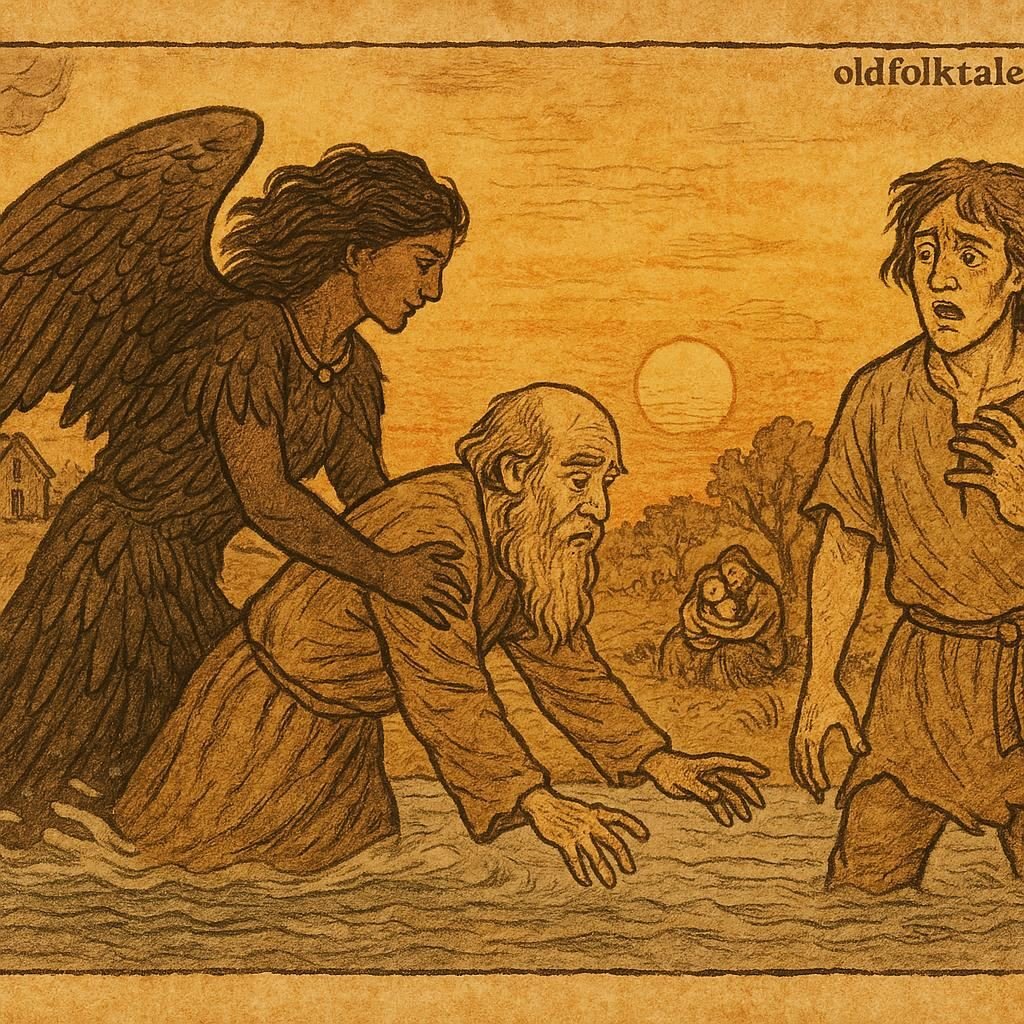
At last, they came to Badahwedji, the place where the sun sinks into the river and the day dies. As they neared the water, they saw an old man struggling to cross. Bent with age, his steps were slow, his staff trembling as he leaned upon it.
Without hesitation, Mawu’s messenger stepped forward, placed his hands on the man, and pushed him into the rushing current. The old man flailed once, then vanished beneath the waters, never to rise again.
The mortal companion gasped, his voice breaking with fear:
“No more! I can endure this no longer. You bring only death, fire, and ruin. I will not walk with you another step.”
He turned to flee, but the messenger caught him firmly by the arm. His gaze was unshaken, and his voice rang with divine authority:
“Do not be astonished. I am not as you are. I am no man. I am a vodun, the servant of Mawu. What I do is not mine to choose; it is the will of the Creator.”
The Hidden Justice of Mawu
Then he revealed the truth of his deeds.
“That child in Adjala, though small and innocent to your eyes—would have grown to bring ruin upon its own parents. When it learned to walk, it would have turned against them and taken their lives. By ending its days early, I spared them a darker grief.
“That house I set ablaze in Savalou, its walls hid great wealth, secret treasures long forgotten. By fire, the house is lost, yet when the family rebuilds, they will uncover the riches and rise to greater fortune.
“And that old man I pushed into the river, he was destined to become king. But had he reigned, famine would have plagued the land, and the people would have suffered hunger and despair. In his death lies the preservation of his people.”
The messenger’s words carried a solemn weight, for they unveiled a justice unseen by ordinary eyes.
Mawu’s Hand in the World
He looked deep into his companion’s frightened face and spoke one final time:
“Remember this truth: What seems evil is often the hidden justice of Mawu. I am her hand. Year after year, she sends me across the earth. Sometimes I walk as a man, sometimes I slither as a serpent, sometimes I strike as sickness or misfortune. When such things come, do not despair. Know they are from Mawu, who is just, and whose wisdom surpasses human sight.”
And with that, the messenger vanished like mist at sunrise, leaving the mortal man trembling on the riverbank, forever changed by what he had seen.
Moral Lesson
This Dahomean tale teaches that the judgments of the divine are often beyond human understanding. What may appear cruel, unfair, or tragic can be part of a greater design meant to protect, provide, or preserve. The story urges humility before the mysteries of life, reminding us that justice often takes forms we cannot immediately comprehend.
Knowledge Check
1. Who sent the messenger in the story?
The messenger was sent by Mawu, the Creator.
2. What happened to the child in Adjala?
The messenger gave the family powder, causing the sick child to die, sparing its parents future harm.
3. Why did the messenger burn the house in Savalou?
The house contained hidden wealth; burning it would lead the family to discover the treasure when rebuilding.
4. What was the fate of the old man at Badahwedji?
He was pushed into the river and drowned to prevent him from becoming a destructive king.
5. What lesson does the story emphasize?
That events which seem evil may be Mawu’s justice, beyond human understanding.
6. Where does this folktale originate?
It is a traditional story from Dahomey, present-day Benin.
Source: Beninese Folktale

