In the heart of the African grasslands, where the golden savanna stretched endlessly under the vast blue sky and seasonal rains brought both blessing and challenge to all who lived there, two neighbors prepared for the most important time of the agricultural year. The clever hare, small but thoughtful in all his endeavors, and the mighty hyena, powerful and confident but often lacking in careful planning, had both decided to plant crops during the promising rainy season.
The rains had been generous that year, soaking the red earth and awakening seeds that had waited patiently through the long, dry months. Across the landscape, green shoots began to emerge, and the air filled with the sweet scent of growing things. It was a time of hope and hard work for all the creatures who depended on the land for their survival.
Both the hare and the hyena had chosen fertile patches of ground near the life-giving river that meandered through their territory. The soil was rich and dark, perfect for growing the grains and vegetables that would sustain them through the next dry season. However, they both knew that their location near the river, while providing excellent growing conditions, also presented a significant challenge.
The area was a natural corridor for many animals, elephants traveling to drink, antelope herds moving between grazing areas, wild pigs foraging for roots, and countless other creatures following ancient paths to the water. These animals, focused on their own survival needs, would not hesitate to trample through any crops that stood in their way or to feast on tender young plants that looked more appealing than the tough grasses of the dry season.
“We must protect our crops,” the wise hare observed, watching a family of warthogs root enthusiastically through a nearby patch of wild vegetation. His keen eyes had already spotted the well-worn animal trails that crisscrossed the area, and his practical mind was calculating the best way to safeguard his future harvest.
The hyena, busy admiring her newly planted seeds, glanced up dismissively. “Oh, a simple fence will do the job,” she declared with characteristic confidence. “With my strength, I can throw together some kind of barrier in no time. These other animals will surely respect our boundaries once they see we’ve marked our territory.”
But the thoughtful hare understood that protection required more than just marking territory, it demanded solid, reliable construction that could withstand both the elements and the determined efforts of hungry animals. He began to survey the area carefully, looking for the best materials and planning his approach with methodical precision.
The hare spent the next several days gathering materials for his fence. He searched the surrounding woodland for the strongest, straightest branches he could find, selecting pieces that showed no signs of rot or insect damage. With his sharp teeth, he carefully stripped away bark and trimmed each branch to the proper length. He tested the flexibility and strength of each piece, discarding any that seemed weak or unreliable.
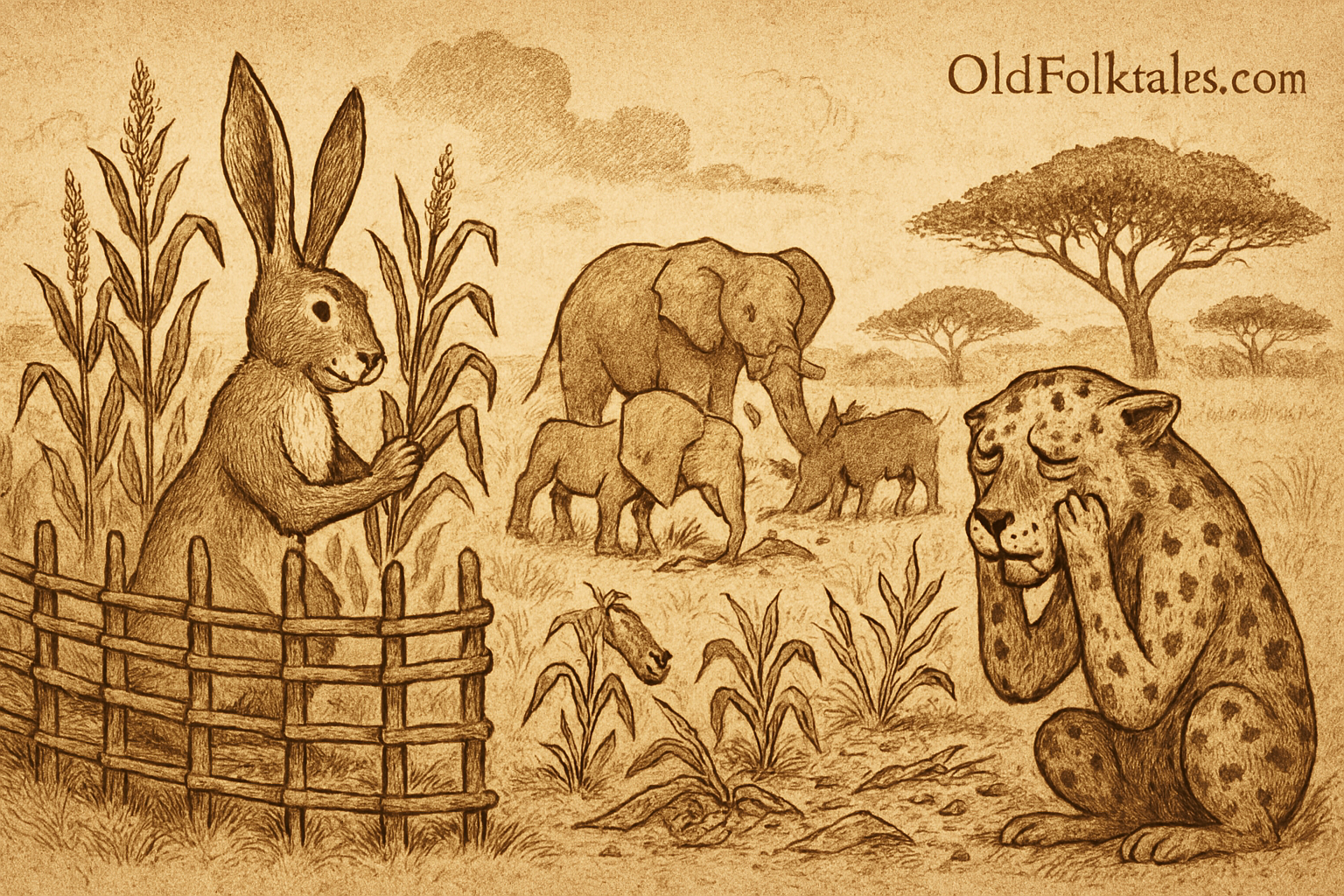
When construction began, the hare worked with painstaking attention to detail. He dug deep holes for his fence posts, ensuring they would remain stable even in the softest mud of the rainy season. Each branch was firmly planted and secured, and he wove additional branches horizontally between the posts, creating a tight, impenetrable barrier. He reinforced weak spots and double-checked every connection, making sure his fence formed a complete, unbroken perimeter around his precious crops.
Meanwhile, the impatient hyena had begun her own fence construction with characteristic haste. She gathered branches quickly, paying little attention to their quality or condition. Some were already beginning to decay, others were twisted or too thin to provide real strength. In her eagerness to finish the task quickly, she planted her fence posts shallow, barely pushing them into the soft earth.
Her fence was a hasty assembly of mismatched pieces, with large gaps between branches and loose connections that swayed precariously in even the gentlest breeze. Where the hare had spent days perfecting his construction, the hyena declared her fence complete after just a few hours of careless work.
“There!” she announced proudly, stepping back to admire her ramshackle creation. “Fast and efficient that’s the way to get things done. While you waste time fussing over every little detail, I’m already finished and can relax.”
The hare continued his careful work without comment, knowing that true protection could not be rushed.
As the weeks passed, both crops began to flourish in the rich soil and regular rainfall. The hare’s plants grew tall and healthy behind his sturdy fence, while the hyena’s crops also showed promising growth behind her flimsy barrier.
Then came the first real test. A herd of hungry antelope, seeking fresh grazing during their seasonal migration, discovered the area. The scent of tender young plants drew them like a magnet, and they approached both gardens with eager anticipation.
At the hare’s plot, the antelope encountered his solid, well-built fence. They pushed against it experimentally, but the strong branches held firm. They tried to find gaps in the barrier, but the hare’s careful construction had left no openings. Frustrated but respectful of the obvious boundary, the herd moved on to seek easier targets.
At the hyena’s garden, however, the story was very different. The antelope quickly discovered the weak points in her hastily constructed fence. The shallow fence posts offered little resistance to their pushing, and the loose branches scattered easily under their weight. Within minutes, the entire flimsy barrier had collapsed, leaving the hyena’s crops completely exposed and defenseless.
The hungry antelope wasted no time in devouring the hyena’s tender plants, trampling what they didn’t eat and leaving behind only broken stalks and churned mud where once a promising garden had grown.
Other animals soon discovered the breach as well. Wild pigs rooted through the remains, elephants casually stepped over the fallen fence to reach the river, and countless smaller creatures helped themselves to whatever edible remnants they could find.
When the hyena discovered the destruction, her anguished cries echoed across the savanna. She wept bitter tears as she surveyed the complete devastation of her crops, months of potential food reduced to nothing by her own poor preparation. Her carelessness had cost her dearly, and now she faced the prospect of hunger in the coming dry season.
Meanwhile, the wise hare continued to tend his thriving crops behind his strong, reliable fence. His careful planning and patient construction had protected his investment completely. As harvest time approached, he worked peacefully in his garden, gathering the abundant fruits of his labor while his strong fence continued to keep all intruders at bay.
The Moral Lesson
This timeless African folktale teaches us that proper preparation and attention to detail are essential for protecting what we value most. The hare’s success came not from superior strength or resources, but from his understanding that good work requires time, patience, and quality materials. The story warns us that shortcuts and hasty efforts, like the hyena’s poor fence, often fail when we need them most. True security, whether for our crops, our goals, or our future, demands thoughtful planning, quality construction, and the wisdom to invest time upfront rather than face devastating losses later.
Knowledge Check
Q1: What is the main difference between how the hare and hyena built their fences in this African folktale? A1: The hare built his fence with strong branches, deep post holes, and careful construction that created an impenetrable barrier, while the hyena hastily assembled weak materials with shallow posts and loose connections that easily collapsed.
Q2: What do the fences symbolize in this traditional African story? A2: The fences symbolize the protective measures we put in place for our goals and investments, representing how proper preparation and quality work provide real security, while hasty shortcuts offer only false protection.
Q3: What cultural lesson about farming does this African folktale teach? A3: The story teaches that successful farming requires not just planting crops but also protecting them through careful planning and solid construction, reflecting African agricultural wisdom about the importance of preparation and foresight.
Q4: Why did the animals destroy the hyena’s crops but leave the hare’s untouched? A4: The animals destroyed the hyena’s crops because her poorly built fence collapsed easily under pressure, offering no real protection, while the hare’s strong, well-constructed fence successfully deterred them from entering his garden.
Q5: How does the hyena’s weeping at the end reflect the consequences of poor preparation? A5: The hyena’s weeping represents the devastating emotional and practical consequences of inadequate preparation showing how shortcuts and careless work lead to complete loss and regret when protection is actually needed.
Q6: What does this folktale teach about the relationship between effort and results in African cultural wisdom? A6: The story embodies African cultural values emphasizing that the quality of our preparation directly determines our success, teaching that investing proper time and effort in protective measures prevents much greater losses and suffering later.