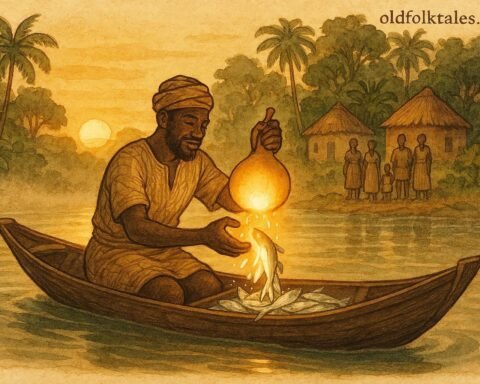
Long ago, when the world was still learning the language of mirrors, a maiden named Morounke lived near the river Osun. Her skin shone like the palm wine’s first pour, and her laughter carried across the fields like evening bells. Yet, she hid a sorrow. Each dusk, when the shadows gathered, she slipped behind her hut, removed a second skin of blemish and dust, folded it inside a gourd, and bathed in moonlight until her true skin glimmered again.
Her neighbors whispered that Morounke’s beauty never tired, that her youth refused to fade. A trader once saw her at dawn, skin half changed, and his tongue tangled between praise and fear. Word spread to the chief’s palace, where courtiers hungered for novelty the way ants hunger for sugar. The chief sent messengers: Let the woman of two faces come and share her secret.
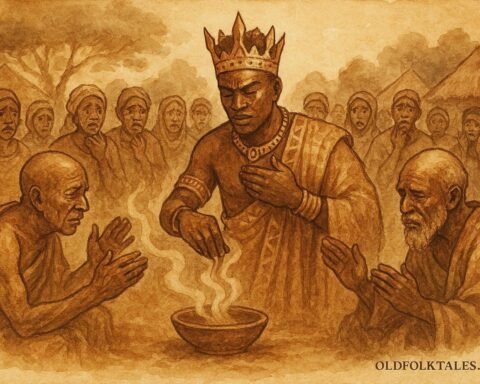
Morounke came barefoot, carrying her calabash wrapped in cloth. She bowed low. Kabiyesi, I hold only what the river allows. The chief smiled the way a crocodile smiles. Then the river must speak to the throne. He ordered her to open the gourd. A hush fell like dust. Inside lay a folded second skin, dull, dry, lifeless as shed bark. A lie! cried one adviser. A witch! shouted another.
Morounke lifted her eyes, calm as a still pond. The first skin is the world’s approval; the second is the truth we hide. One cannot live without the other until honesty marries courage. The chief laughed and demanded the secret of changing. She replied, Wash in your reflection until you recognize it. He grew angry and ordered guards to seize her.
That night, thunder carried a whisper from Osun’s water: Come, daughter. Morounke walked to the riverbank, still holding the gourd. Lightning danced like drums of freedom. She placed the second skin upon the water, and it floated, glowing faintly. The river rose, wrapped her in gold light, and when dawn arrived, she was gone—only a trail of lilies where she had stood.
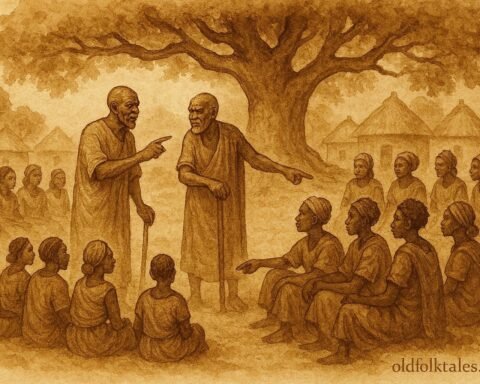
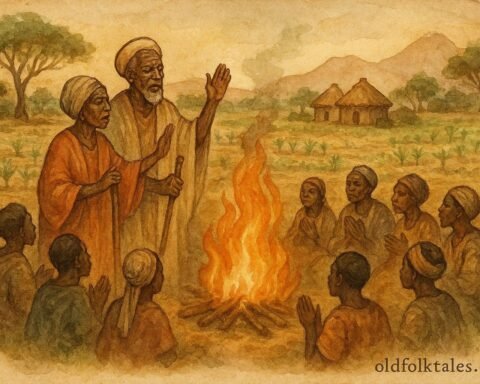
When the chief’s men came to fetch her, they found only her footprints turning into ripples. The river carried her story downstream, where women still wash with care and whisper blessings before touching the mirror of the water. In every Yoruba market, an elder tells young brides, Keep no false skin longer than love requires.
Moral: True beauty is the courage to live without disguise.
Author’s Note: In Yoruba cosmology, Osun represents purity and feminine wisdom. This version roots the tale in water ritual and moral self-knowledge. Morounke’s two skins embody the social versus spiritual self, a lesson mirrored in proverbs about integrity and inner light.
Knowledge Check
Symbol: What does the calabash hold? Answer: Her discarded outer skin.
Setting: Which river spirit guides Morounke? Answer: Osun, the goddess of purity.
Conflict: Who demands her secret? Answer: The village chief.
Resolution: How does Morounke escape judgment? Answer: She returns to the river’s embrace.
Theme: What lesson links mirror and truth? Answer: Honesty reveals lasting beauty.
Legacy: Where do people recall her story? Answer: At Yoruba markets and riversides.