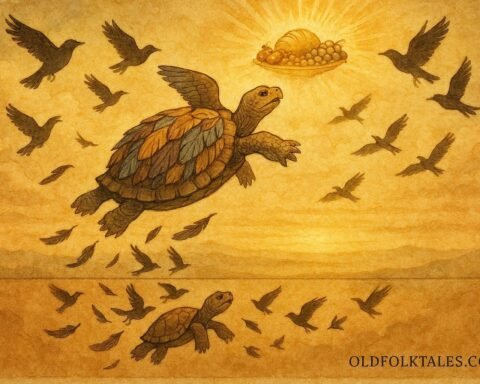
In the heart of Benin, stories passed from one generation to another reveal how the world and its creatures came to be as we know them. These folktales, rich in symbolism, teach lessons about mortality, mistakes, and companionship. Here are three such stories: Why There Is Death in the World, Why the Toad Croaks, and Why the Dog Lives With Man.
Why There Is Death in the World
In the beginning, death did not exist. Human beings lived without end. When they grew old and their skin became wrinkled, they did not perish. Instead, they would simply cast off their old skin like the serpent does, and their bodies would be made young again. Life was an endless cycle of renewal.
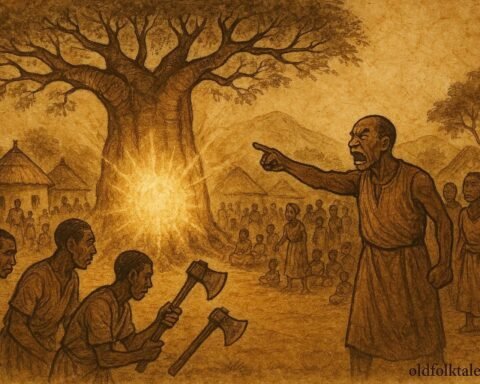
One day, an old woman went down to the river to wash her clothes. As she bent by the water, she noticed something strange: the shed skin of a serpent glistening by the shore. She was filled with terror and disgust. Throwing down her laundry, she ran back to the village crying, “I saw something ugly! Something evil!”
Her voice stirred the people. They gathered and asked what she had seen. When she described the serpent’s discarded skin, her fear infected them too. They began to say, “How shameful! How dreadful! Who would want to look like that?”
From that day forward, the people refused to shed their skins. They rejected the gift of renewal, declaring it too hideous to endure. When Mawu, the great Creator, saw that humankind despised this blessing, she took it away.
Thus it was that the serpent kept the gift of renewal and still lives long, casting its skin again and again, while humankind lost the chance at endless life. From that day onward, men and women grew old, weakened, and eventually died.
Why the Toad Croaks
In those early days, when the Creator still walked closely with her creatures, Toad served as a faithful messenger of Mawu. He lived in her house, carrying her errands between the heavens and the earth.
One day, Mawu entrusted Toad with her most precious gift. She filled a calabash with life-giving water and said, “Carry this to the people of earth. Give it to them so they may live forever.”
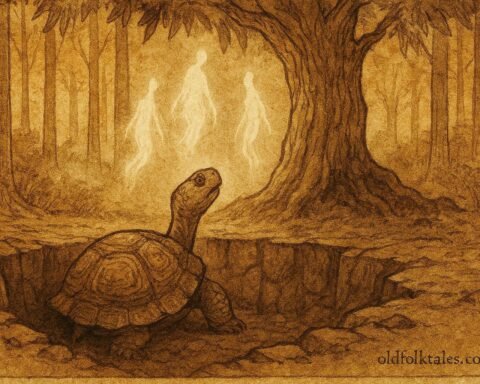
Toad balanced the calabash carefully and began his journey. The road was long and hot, and thirst pressed upon him. His mouth grew dry, his belly ached for coolness, and he looked again and again at the water in his care. At last, his weakness overcame him. He lifted the lid and drank deeply.
By the time he reached the people, the calabash was nearly empty. He gave them the little that remained, but it was not enough to grant eternal life. Because of Toad’s weakness, humanity remained mortal.
When Mawu learned what had happened, her anger was great. She cursed Toad, saying, “Forever you shall cry out beside the waters, mourning what you lost. Your voice will be a reminder of your failure.”
That is why, even today, the toad croaks beside rivers and ponds. His call is not mere noise but a lament, a song of regret for the gift he squandered.
Why the Dog Lives With Man
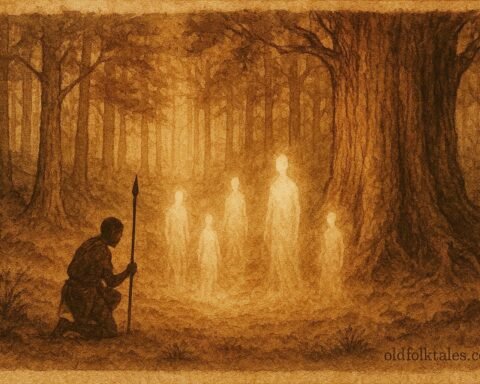
In the days of beginnings, Dog roamed freely with the wild animals of the forest. He had no master, no home, and no bond with humankind.
But then a terrible famine came. Food grew scarce, and the animals of the bush grew thin with hunger. Dog too became weak, his ribs showing through his skin, his strength failing.
One day, he wandered near the village. There he saw man sitting by the fire, eating food that had been cooked until it was tender and rich with aroma. The scent filled Dog’s nose and made his hunger unbearable.
Cautiously, he crept closer. The man, seeing him, threw a bone toward him. Dog seized it, gnawed it, and for the first time in many days felt satisfied.
From that moment, Dog no longer returned to the forest. He stayed by man’s side, guarding his home, following him on hunts, and sharing in his food. He became man’s faithful companion, bound by loyalty and need.
This is why Dog lives with man to this very day, no longer counted among the wild beasts of the bush, but instead known as man’s companion and protector.
Moral Lessons
These three tales from Benin remind us of profound truths. Fear and rejection of life’s mysteries brought death into the world. Weakness and selfishness caused Toad to rob humanity of immortality. And hardship drove Dog to seek companionship, creating one of the deepest bonds between humans and animals. In each tale, choices, whether made by fear, folly, or need, shaped the destiny of the world.
Knowledge Check
Q1: What does the serpent symbolize in the tale Why There Is Death in the World?
A1: The serpent symbolizes renewal and the gift of endless life, which humans lost.
Q2: Why did humans reject the power of shedding their skin?
A2: They found it ugly and shameful after the old woman declared it evil.
Q3: What mistake did Toad make in Why the Toad Croaks?
A3: He drank from the calabash meant to grant humans eternal life, leaving only a little water.
Q4: Why does Toad croak by the water according to the folktale?
A4: He cries out in mourning and regret for losing Mawu’s gift.
Q5: What led Dog to join humankind in Why the Dog Lives With Man?
A5: Hunger during a famine drove him to seek food from humans, who shared bones and meals.
Q6: What overarching lesson do these three Beninese folktales teach?
A6: They teach that fear, weakness, and hardship shape human destiny, but also create bonds and reveal wisdom.
Source: Beninese Folktales