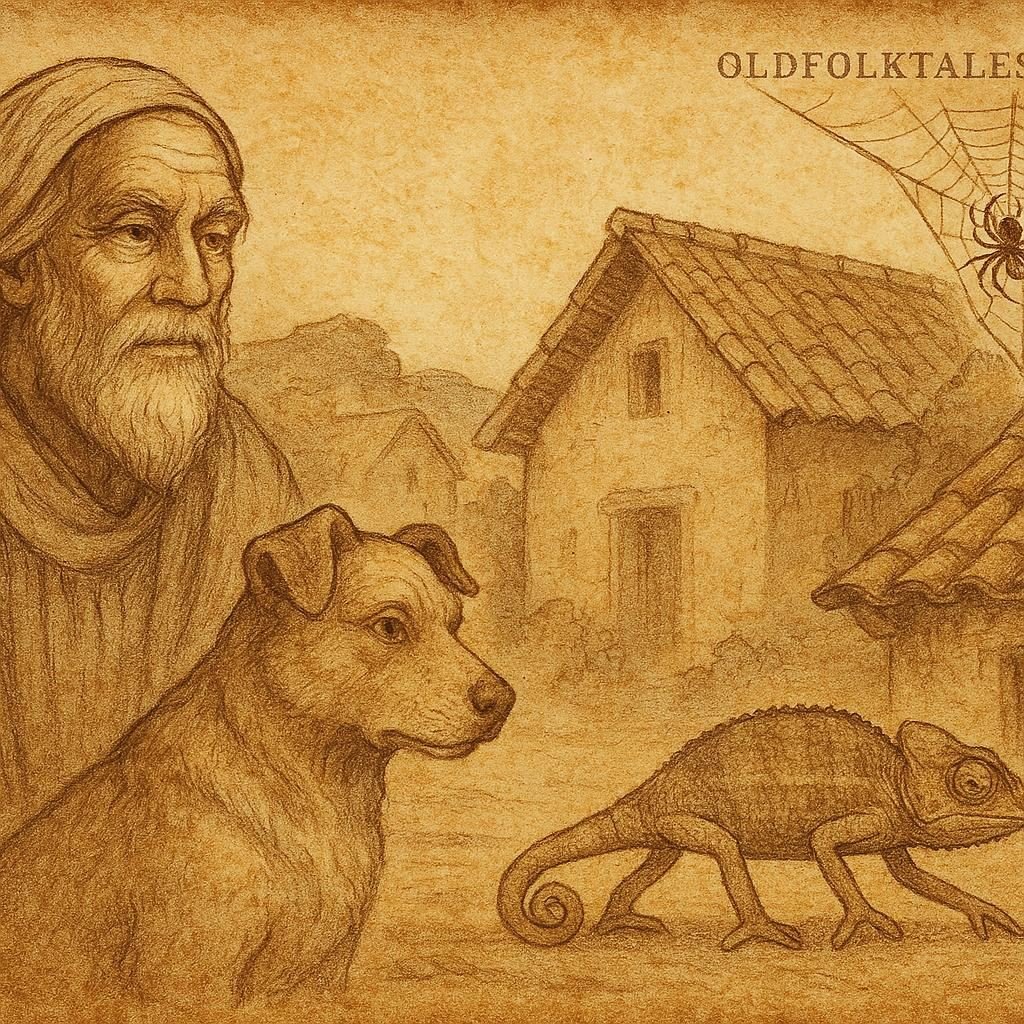
Long ago, in the heart of West Africa, the people of Benin told stories that explained the world and the ways of its creatures. These folktales, rich with wisdom, reveal the origin of traits we still see in animals today and remind us of human virtues and failings. Here are three such tales: the wisdom of the Dog, the slow walk of the Chameleon, and the cunning nature of the Spider.
Why the Dog Is Wise
In the earliest days, Dog and Man were equals. They lived side by side, sharing food, shelter, and labor. Neither one was greater than the other, for both had been created by Mawu, the great deity.
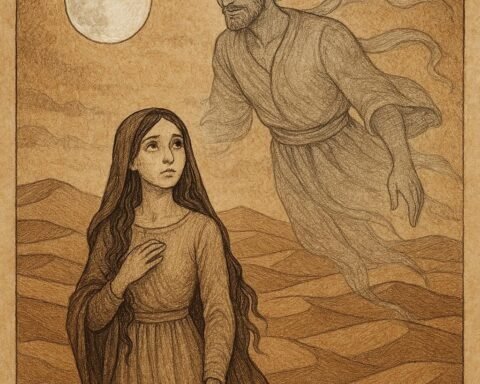
One day, Mawu called Man and Dog to her presence. She looked upon them and decided it was time to give each a gift that would shape their lives forever.
To Man, Mawu gave strength, a body capable of plowing the earth, hunting in the wild, and building homes to shelter his family. Man rejoiced in this gift, proud of his strong arms and his ability to tame the land.
To Dog, however, Mawu gave something different: wisdom. This gift allowed Dog to perceive what others could not. He knew how to guard and protect, how to sense danger before it arrived, and even how to understand the voices of spirits carried on the wind.
From that day, Man and Dog no longer seemed equal. Man had strength, but he looked to Dog for insight. Even now, people say that when they look into the eyes of their dogs, it feels as though the animal understands their thoughts and feelings. It is no accident, Dog has carried wisdom since the very beginning.
Why the Chameleon Walks Slowly
There was a time when Chameleon was the swiftest of all creatures. He could outrun the antelope and dash faster than the hare. With pride swelling in his chest, he grew boastful.
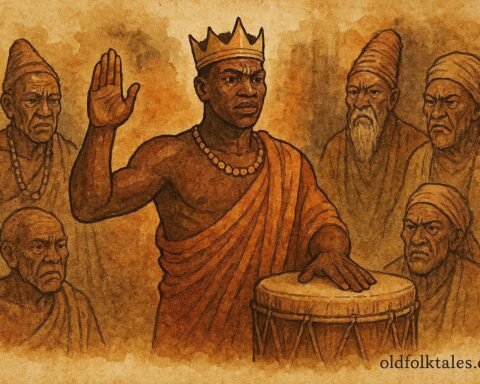
Before Mawu and the gathered animals, Chameleon proclaimed, “No one can catch me. I am greater than all. My speed is unmatched!”
The animals murmured at his arrogance, but Mawu answered with calm warning: “Take care, Chameleon. Pride goes before a fall. Even the swiftest may stumble.”
Yet Chameleon ignored her words. Day after day, he raced about, darting past others and laughing at their slower steps. His pride grew heavier than his feet.
Finally, Mawu’s patience ended. She declared, “From this day forward, you shall walk slowly and carefully. Every step you take will be measured, rocking back and forth, as a reminder of the folly of pride.”
And so it is to this day. The chameleon no longer races. Instead, he moves with deliberate caution, one careful step at a time, his body swaying as though forever humbled by the weight of Mawu’s curse.
Why the Spider Lives in the Roof
Spider once lived peacefully among people. He had a house in the village, greeted neighbors, and walked the paths like any other man or beast. But Spider’s nature was not noble, it was greedy.
He began to sneak into the fields at night, stealing yams and grain. He crept into cooking pots, snatching food before it was ready. Whenever someone’s back was turned, Spider’s hands were quick to take.
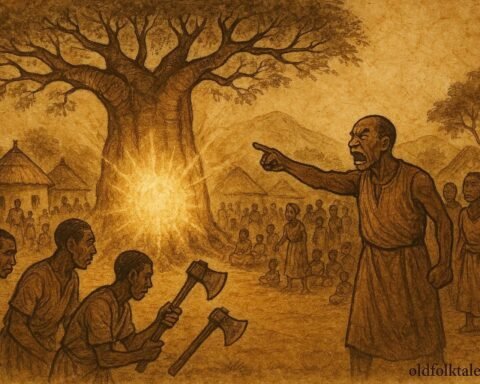
At first, the people grumbled. Then their frustration grew into anger. “This one is too cunning,” they said. “We cannot live in peace while he lives among us.”
Together, the villagers confronted him and drove him away. Shamed, Spider fled upward. He climbed into the rafters of a hut and spun a web among the beams. There he found safety, out of reach of the people who had rejected him.
From that day forward, Spider has remained in the roof. High above human eyes, he spins his silent nets, always watching, always scheming, still searching for what he might take without being seen.
Moral Lessons
These three folktales from Benin remind us that the world’s order is shaped by choices, gifts, and flaws. Dog shows that wisdom is greater than strength. Chameleon warns us that pride leads to downfall. Spider teaches that greed drives us into exile, leaving us apart from the community we once belonged to. Together, they illustrate that character, not power, swiftness, or cunning, determines our place in the world.
Knowledge Check
Q1: Why is the Dog considered wise in Beninese folklore?
A1: Because Mawu gifted Dog with wisdom, allowing him to sense danger and understand spirits.
Q2: What lesson does the tale of the Chameleon teach?
A2: It warns against pride, showing how arrogance can lead to downfall and humility.
Q3: Why does the Spider live in the roof, according to the folktale?
A3: Because his greed and theft angered the villagers, who drove him away.
Q4: What gifts did Mawu give to Man and Dog?
A4: Man received strength, while Dog received wisdom, shaping their roles in the world.
Q5: What cultural origin do these folktales belong to?
A5: These stories are traditional folktales from Benin, West Africa.
Q6: How do these tales reflect community values in Beninese culture?
A6: They emphasize wisdom, humility, and honesty while condemning pride, greed, and arrogance.
Source: Beninese Folktales