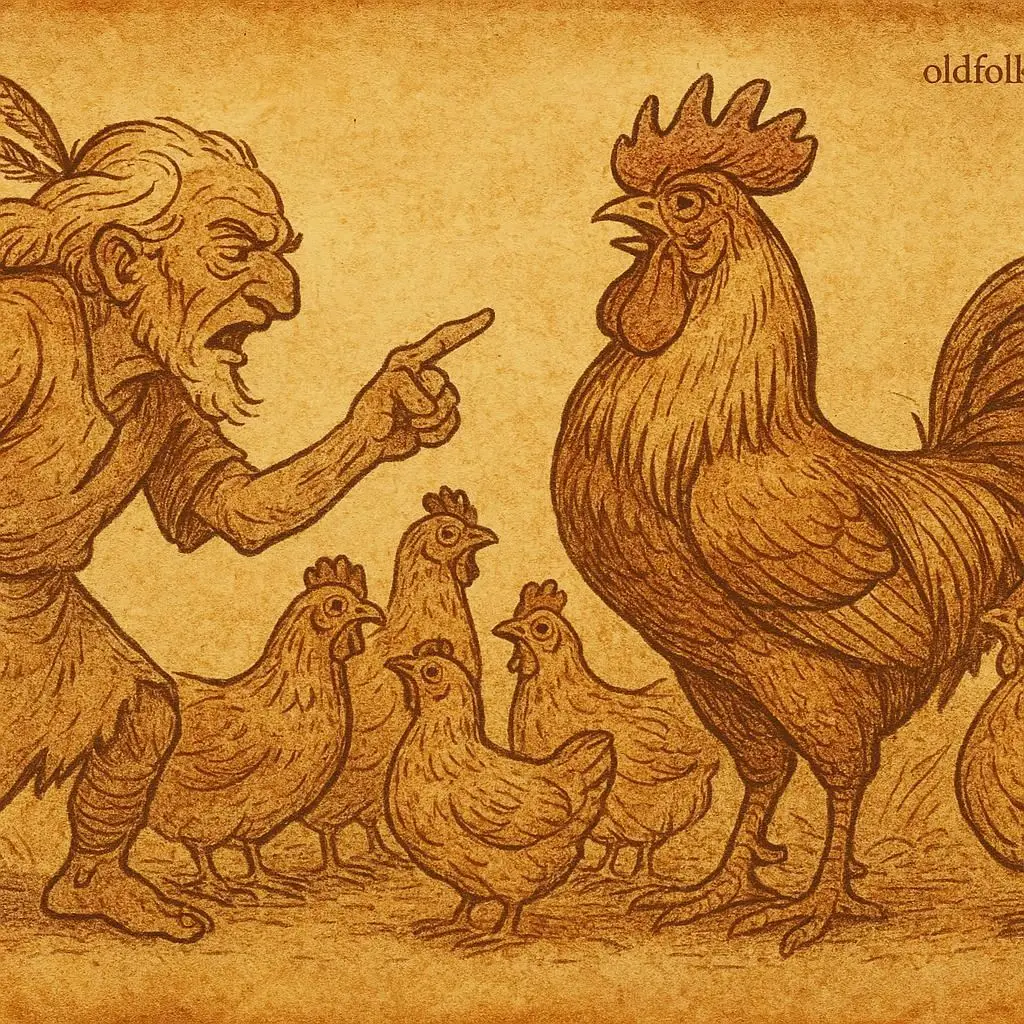
Long ago, in a village where animals and humans shared close ties, there lived a chief who owned a great number of fowls. These birds, though lively and colourful, were also quarrelsome, especially when it came to simple tasks that required unity. One early morning, as the sun painted the horizon with gold, the chief rose from his bed and walked to the fowls’ house. To his surprise, he discovered that the door had been left wide open all through the night. Concerned, he summoned the Head Cock and demanded an explanation.
The Cock bowed respectfully and began to speak. “Master, we did not sleep early last night. We quarrelled over who should shut the door. I told one of my fellows to do it, but he refused and passed the task to another. The next did the same until anger grew among us all. Each one said it was not his duty, and in the end, no one would move. So, we slept, leaving the door open.”
The chief listened in disbelief. His hand rose to his lips, and with a snap of his fingers, he turned away in speechless disappointment. That very moment, he realized that disunity, even in small matters, could cause great neglect.
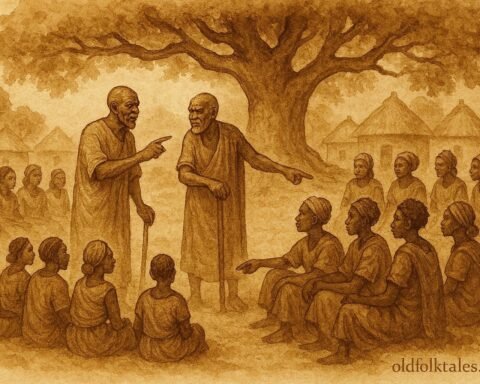
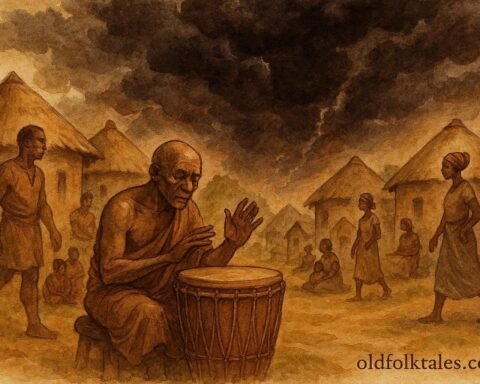
Some days later, the chief went to inspect the farms of his wives. He was pleased to see that each farm was well weeded and carefully tended. Yet, as he walked along the road leading to the farms, he noticed that it was overgrown with tall grasses and weeds. No one had taken responsibility for the pathway, since it belonged to none of them directly. That evening, the chief called out in a loud voice, so that all in the town could hear him clearly.
READ: The Gazelle’s Trick and the Leopard’s Loss: A Traditional African Folktale
“You women of my household,” he declared, “today I visited your farms and found them well cared for. But the road leading to them was choked with weeds. This is no different from the fowls, who leave their door open because each tells the other to close it, yet none will act. Tomorrow, all of you must go and clear the road.”
The words spread quickly, for the chief had spoken before all. The fowls, who overheard his declaration, were deeply offended. The Head Cock gathered his wives and companions and spoke in a tone heavy with indignation. “You have all heard what our owner shouted before the town. He has disgraced us and held us up as an example of neglect. Yet humans themselves are guilty of far worse!”
The Black Hen tilted her head and asked her husband, “What do you mean? Tell us what you have seen.”
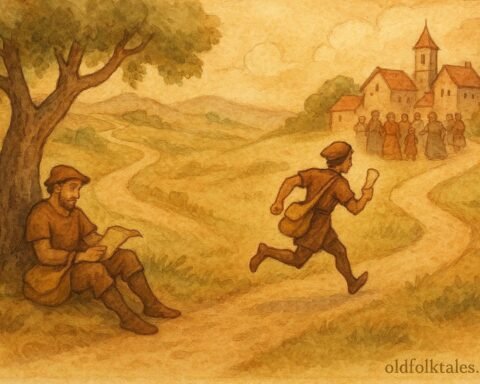
The Cock cleared his throat and began recounting a tale from a neighbouring town he had visited. “Two days ago, I passed through another village and heard of a great buffalo that had been spotted near the houses. Don’t-care, the son of Peter Pay-if-you-like, saw it and called his companions. ‘Go and shoot it!’ he urged. But they told him, ‘Go and shoot it yourself.’
“Don’t-care protested, saying, ‘What! Am I to see the buffalo and also kill it?’ At last, Wise-man took his weapon and shot the buffalo. But then he told another to go and see whether it had died. That one went, returned, and reported that the buffalo was only wounded. So, another went out and killed it completely. Yet when the carcass lay there, none wished to cut it. Finally, one among them cut the animal into pieces, but no one would carry the meat into the town. Each expected the other to do it, and in the end, the buffalo’s flesh was left to rot by the roadside.”
The Black Hen listened intently. “Indeed, is that true?” she asked.
“Yes,” replied the Cock firmly.
At this, the Speckled Hen clucked loudly and said, “Then it would be better if human beings learned to manage their own affairs before pointing fingers at us. They call us careless, but they themselves waste food and neglect duties that are plainly theirs.”
The Head Cock, stirred by anger and pride, raised his beak high. “From this day forward,” he proclaimed, “neither I nor my children, nor the children of my children, will ever close the doors of our houses. No matter how cold the night, no matter what danger lurks outside, the doors shall remain open. Humans, who conduct their own affairs so poorly, have no right to condemn us.”
From that time onward, fowls have kept their houses open at night, leaving their doors wide in silent protest against human criticism. And thus, the story explains why fowls, even today, never shut their doors.
Moral Lesson
This folktale highlights the dangers of neglect, blame-shifting, and lack of responsibility. The fowls quarrelled over a simple task and failed to act, while humans, despite their wisdom, also neglected responsibilities that were clearly theirs. The lesson is clear: unity, responsibility, and personal accountability are essential. If each person waits for another to act, even simple duties are left undone, and opportunities turn to waste.
Knowledge Check
Q1: What mistake did the fowls make on the night in question?
A1: They quarrelled over who should shut the door, and no one did.
Q2: Why did the chief compare his wives to the fowls?
A2: Because the road to their farms was neglected, just as the fowls neglected their door.
Q3: What lesson did the story of the buffalo illustrate?
A3: That humans also neglect responsibilities when each expects another to act.
Q4: Who became angry after the chief’s public remarks?
A4: The fowls, especially the Head Cock, felt humiliated.
Q5: What vow did the Head Cock make?
A5: That neither he nor his descendants would ever close their doors again.
Q6: What cultural value does this folktale teach?
A6: The importance of responsibility, unity, and avoiding blame-shifting.
Folktale Origin
Source: Traditional African folktale from the oral heritage of the Akan people of Ghana, passed down through generations to teach lessons about responsibility and accountability.