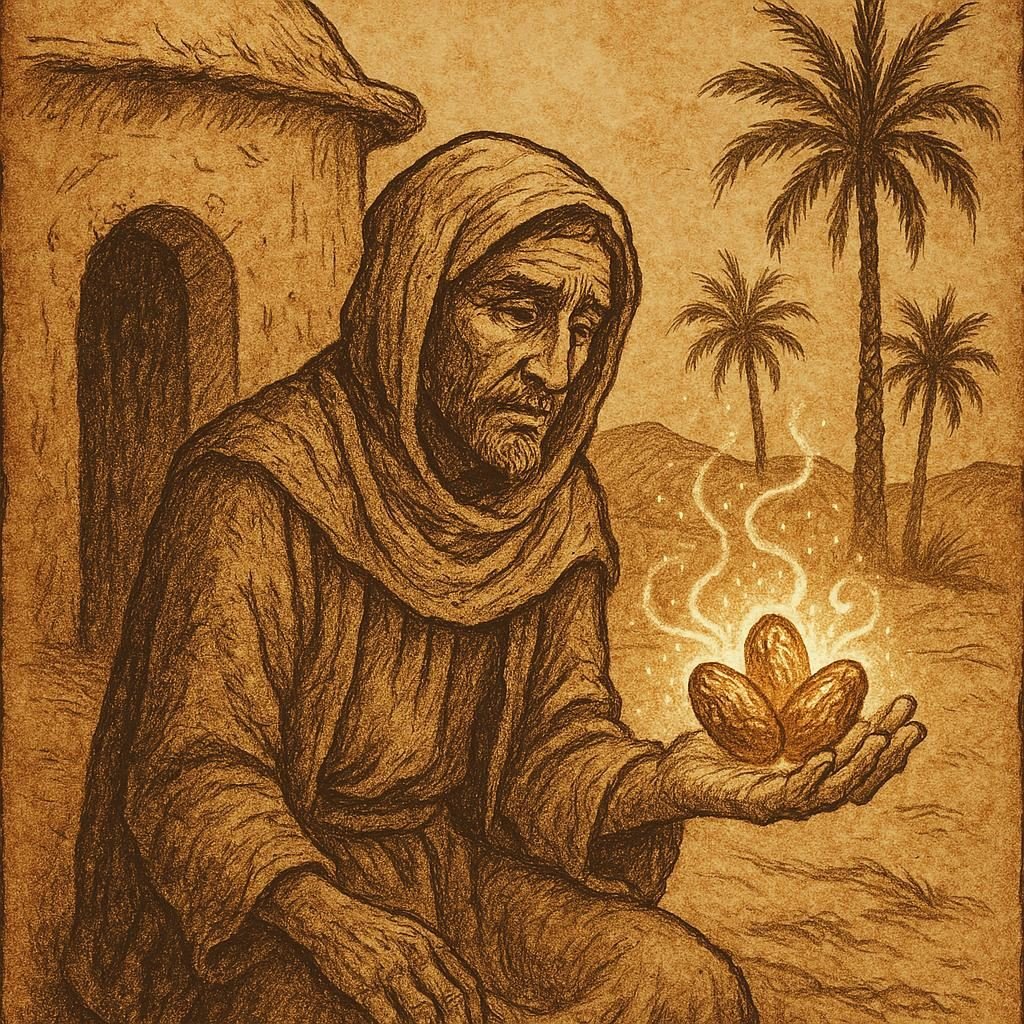
Once upon a time in a small Moroccan village there lived a poor man called Youssef who had nothing to his name except a tiny hut and a ragged mat. Every morning he wandered the streets begging for food or offering to do small tasks in exchange for a little bread. The villagers sometimes pitied him but many were struggling themselves and could not always help. Youssef longed for one thing above all else. He wanted his life to change and for fortune to smile upon him at least once.
One hot afternoon as he sat tired and hungry beneath a date palm an old traveler appeared. The man’s robe shone as though touched by sunlight and his beard was white as salt. He stopped and looked kindly at Youssef. The stranger asked, Why do you look so hopeless, young man? Youssef sighed and answered, Because I am poor and unlucky. No matter what I try, life gives me nothing.
The old man then reached into his bag and brought out three dates that glistened as though they had been ripened by the sun itself. He placed them gently into Youssef’s palm and said, These are not ordinary dates. Each one holds the power to grant your greatest wish. But be careful, for blessings wasted will never return. Before Youssef could reply the old man vanished like mist over the desert.
Fascinated by this tale? Discover more North African folktales
Youssef looked at the fruit in his hand. Could this truly be real? Was it possible that such small fruits held the key to his happiness? That night lying on his mat he stared at the first date. What should I wish for? he asked himself. At last he said, I want to be rich. Wealth will solve all my problems. He swallowed the first date and fell asleep.
By dawn his hut had turned into a grand house filled with carpets, chests of gold and clothes of fine silk. The villagers could hardly believe their eyes. Youssef who once begged for crumbs was now the wealthiest man in the village. For a while he was satisfied but soon his heart grew restless. Is money enough to make me happy? he wondered. He longed for something more.
That evening he looked at the second date. If I had power I would command respect. Everyone would bow to me and no one would treat me as a beggar again. Without thinking further he swallowed the second date. By morning messengers arrived announcing that the king had made him a nobleman. He was dressed in fine robes, servants attended to him, and people greeted him with deep bows. Youssef felt proud and mighty, yet pride brought with it arrogance. He began to look down on the very villagers who once gave him food.
Soon greed clouded his mind once more. He turned to the third date. He said, Wealth and power are not enough. I want to be greater than the king himself. I want to rule the land. Only then will I be truly satisfied. He swallowed the last date and waited for the miracle. But instead of a crown appearing on his head his grand house vanished, the gold turned to dust, and the servants disappeared. In an instant he was back in his tiny hut with nothing but his ragged mat.
Youssef cried out in despair. Why has this happened to me? he shouted. Then he remembered the warning of the old traveler. Blessings wasted will never return. His greed had consumed every gift. What might have been a lasting fortune and happiness had slipped through his fingers because he never learned to be grateful.
From that day Youssef wandered the streets once more, poorer than before, but this time he carried a heavy heart. He had tasted wealth and power, but he had thrown it away by always asking for more. The villagers shook their heads and whispered, Greed will always leave a man with nothing.
Moral Lesson
The story of The Three Dates teaches that greed destroys blessings while gratitude multiplies them. Youssef could have lived a comfortable life if he had been content with his first wish, yet his endless desire for more made him lose everything. True happiness comes not from constant wanting but from appreciating and wisely using what we already have.
Knowledge Check
Who gave Youssef the three magical dates and what warning came with them?
An old traveler gave him the dates and warned that wasted blessings would never return.
What did Youssef wish for after eating the first date?
He wished for wealth and woke up in a grand house filled with riches.
How did Youssef’s second wish change his life?
He became a nobleman with servants, fine clothes, and respect from villagers.
Why did Youssef lose everything after eating the third date?
He wished to become greater than the king, and his greed caused all the blessings to vanish.
What message does the story of The Three Dates give about greed?
Greed leads to loss and misery because it prevents contentment with what one has.
How can we apply the lesson of The Three Dates to our daily lives?
By being grateful for what we have, avoiding greed, and using opportunities wisely.
Source: Moroccan folktale. Paolo Canova, Tales from Morocco (1972).