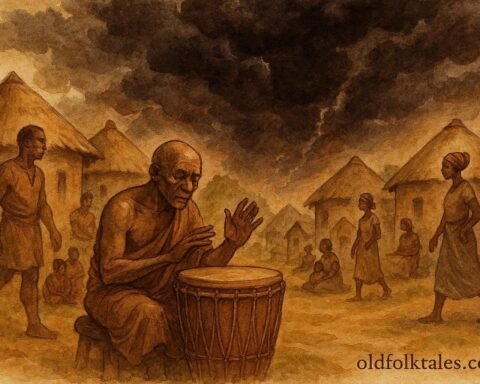
In the forests of Ashanti, Bat was once a respected drummer for the animal council. His wings beat time so well that dance and music felt the same. During one festival, he boasted, No creature keeps rhythm like I do; even truth follows my beat. The elders warned, When pride leads, truth stumbles.
Soon after, Bat argued with Parrot over a song’s ownership. Bat claimed it his own, though Parrot had taught it. When Parrot challenged him, Bat struck him mid-flight, and the bird fell lifeless to the ground. In panic, Bat hid the body in a hollow log. But the drum he played that night echoed with strange hollow tones — the log had become a coffin of sound.
The animals noticed. Lion, the chief, asked, Whose voice cries inside your drum? Bat fled as sunrise colored the trees. Since that day, whenever the drums begin, Bat stays away until night, when music rests and judgment sleeps. Yet, each evening the wind still beats a rhythm through the forest, and Bat answers with his wings, remembering both song and sin.
Moral: Pride that kills truth turns music into silence.
Author’s Note: Akan oral traditions link drumming to truth-telling; this version converts the bat’s flight into a musician’s exile. It draws from Ashanti festivals where drum language is moral speech.
Knowledge Check
Occupation: What is Bat’s role before the crime? Answer: A drummer for the animal council.
Conflict: Who does Bat quarrel with? Answer: Parrot.
Symbol: What object reveals the crime? Answer: The hollow drum.
Justice: Who confronts Bat? Answer: Lion, the chief.
Punishment: How does Bat live afterward? Answer: He flies only at night.
Lesson: What turns music into silence? Answer: Pride that kills truth.