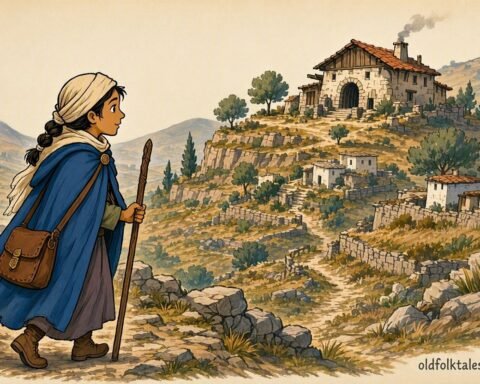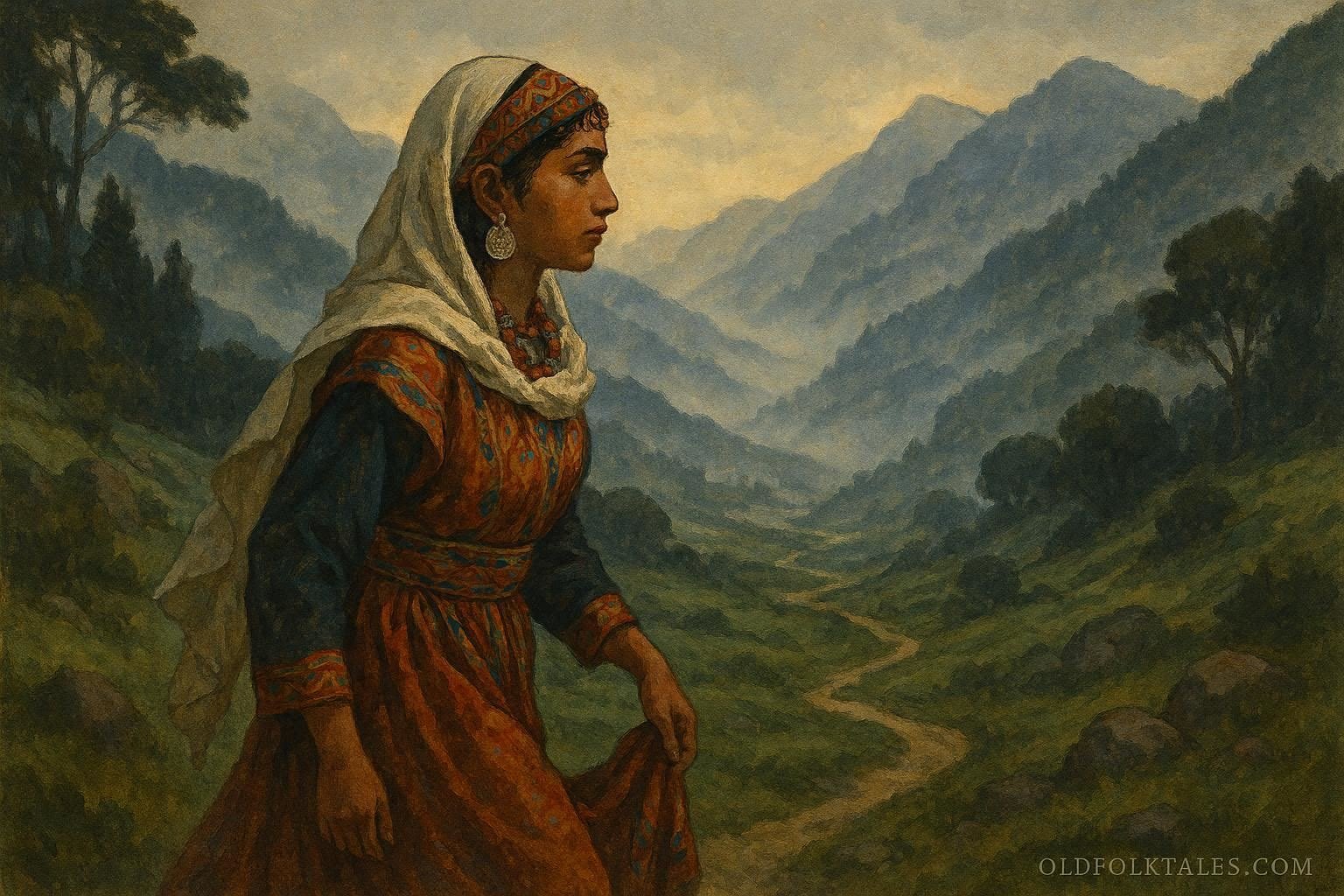
In the mountain regions of Kabylia, where steep hills rise above deep valleys and villages sit between stone and sky, there lived a young woman named Loundja, daughter of Tseriel. She was known in her community for her calm nature and quiet strength. People often described her as someone who listened more than she spoke, yet seemed to understand more than she revealed.
Her life began in a world shaped by tradition and oral stories. Elders in the village often spoke about destiny, trials, and unseen forces that guide human lives. These stories were not considered distant myths, but reflections of how life itself often unfolded in unexpected ways.
Loundja grew up hearing these narratives, yet she never thought her own life would be shaped by such forces.
As she reached adulthood, her life began to change in ways she did not expect. A series of events led to separation from what she once considered stable and familiar. The life she knew began to shift, slowly at first, then more deeply until she found herself moving away from the comfort of her original world.
At the beginning of this separation, she struggled to understand what was happening. Nothing felt stable anymore. The people and places she once relied on seemed distant, and the certainty she once had faded into confusion.
Looking for more? Explore the magic of East African folktales here
She found herself entering a journey that did not follow a clear path. Each step forward felt uncertain, and each moment carried both hope and difficulty. There was no clear guidance, only movement through situations that demanded patience and resilience.
As time passed, Loundja began to experience trials that tested her inner strength. Some of these trials came in the form of waiting, where nothing seemed to change and silence became heavy. Other trials came through emotional distance, where she felt disconnected from everything familiar.
There were moments when she questioned her direction. She wondered whether her suffering had meaning or whether she was simply being carried through events beyond her control.
Yet even in these uncertain moments, she did not abandon herself to despair. Instead, she learned to endure what she could not change. Slowly, she began to understand that not all struggles are meant to break a person. Some exist to shape character and reveal strength that is not visible at the beginning.
Her journey was not marked by sudden victories or dramatic events. Instead, it unfolded gradually through experience. Each challenge added weight to her understanding of life, and each moment of endurance strengthened her ability to continue.
Over time, the separation she once feared began to feel like part of a larger pattern. She started to see that her experiences were not random but connected in ways she could not fully understand.
The hardships she faced slowly became part of her transformation. She was no longer only the daughter of Tseriel living a simple life in the mountains. She was becoming someone shaped by experience, patience, and endurance.
As her journey continued, Loundja began to accept that destiny does not always reveal itself clearly. It often unfolds in stages, through waiting, loss, and gradual understanding.
She learned to move forward without needing full clarity. Instead of resisting uncertainty, she began to live within it, trusting that meaning would reveal itself in time.
By the time her journey reached a turning point, she was no longer the same person who had once lived in quiet simplicity. Life had changed her through experience rather than instruction.
Her story became one of endurance through unseen trials, where strength was not defined by action alone but by the ability to continue when everything felt uncertain.
In the end, Loundja’s journey reflected a deeper truth about human life. Not all destinies are immediate or clear. Some are revealed slowly, shaped through separation, patience, and quiet endurance that only time can explain.
Want to dive deeper? Read more North African folktales today
Moral Lesson
True strength is found in patience and endurance, especially when life does not give clear answers.
Knowledge Check
- Who is Loundja?
She is the daughter of Tseriel from Kabylia in Algerian tradition - What defines her journey?
Separation, trials, and emotional endurance - What themes are central to the story?
Fate, love, endurance, and destiny - How does Loundja respond to hardship?
She endures quietly and continues forward despite uncertainty - What does her story represent?
The slow unfolding of destiny through life experiences - What is the main lesson?
Strength is built through patience and endurance during difficult times
Source
Kabyle oral tradition, Algeria. Recorded by Auguste Mouliéras in Contes populaires d’Algérie (1893).