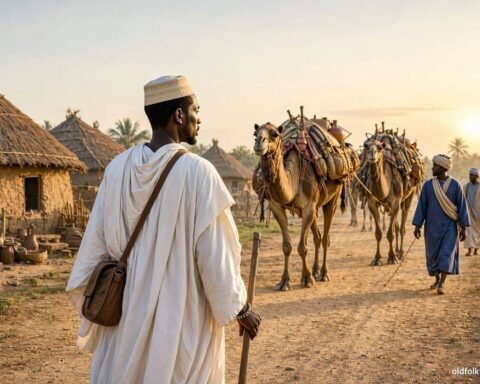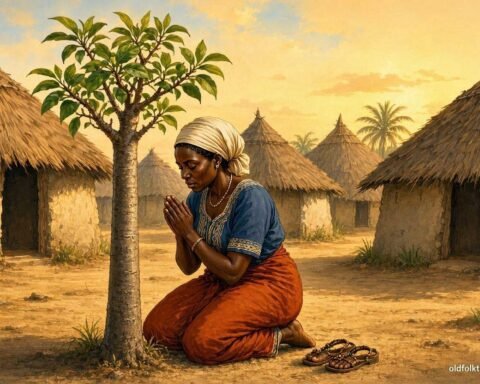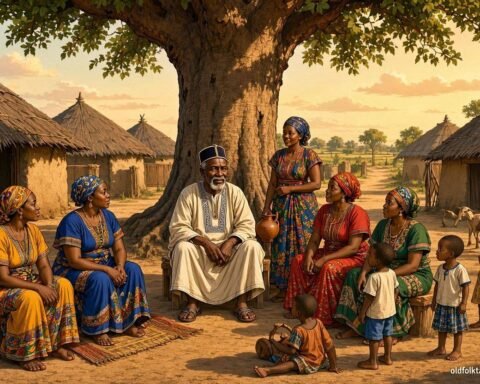
In the rolling highlands of rural Burundi, where hills rise and fall like waves frozen in earth, there was once a village nestled between steep slopes and narrow paths.
The people of this village lived close to the land, growing crops on terraced fields carved carefully into the hillsides. Life was shaped by effort. Nothing came easily. Every journey required endurance, especially the long and dangerous path that wound through a towering mountain pass.
Fascinated by this tale? Discover more North African folktales
The path was not just steep, it was exhausting.
During rainy seasons, it became slippery and unpredictable. During dry seasons, it became harsh and unforgiving. Many times, goods were lost. Livelihoods were delayed. And people often returned home weary, carrying more burden than they had left with.
Yet for generations, the villagers accepted it as part of life.
“This is how the mountain is,” they would say.
And so, nothing changed.
Among them lived a woman known for her determination.
She was not a ruler, nor an elder, nor someone of formal authority. But she was deeply observant. She noticed what others had grown accustomed to ignoring, the way people slowed their steps at the mountain path, the way children struggled to keep pace, the way even strong men sighed before beginning the climb.
She saw not just difficulty.
She saw limitation.
And limitation, to her, was not permanent.
One evening, after returning home exhausted from yet another difficult journey through the mountain path, she stood quietly at the edge of the village.
The mountain loomed in the distance.
Massive.
Unmoving.
Unbothered by human struggle.
She watched it for a long time.
Then she said something that made others laugh when they later heard it.
“I will carry it away.”
At first, no one understood her words.
Some thought she was joking.
Others believed she was overwhelmed by fatigue.
A few dismissed her as dreaming beyond reason.
“Carry the mountain?” they said. “Is she speaking in riddles now?”
But the woman did not correct them.
She simply began to act.
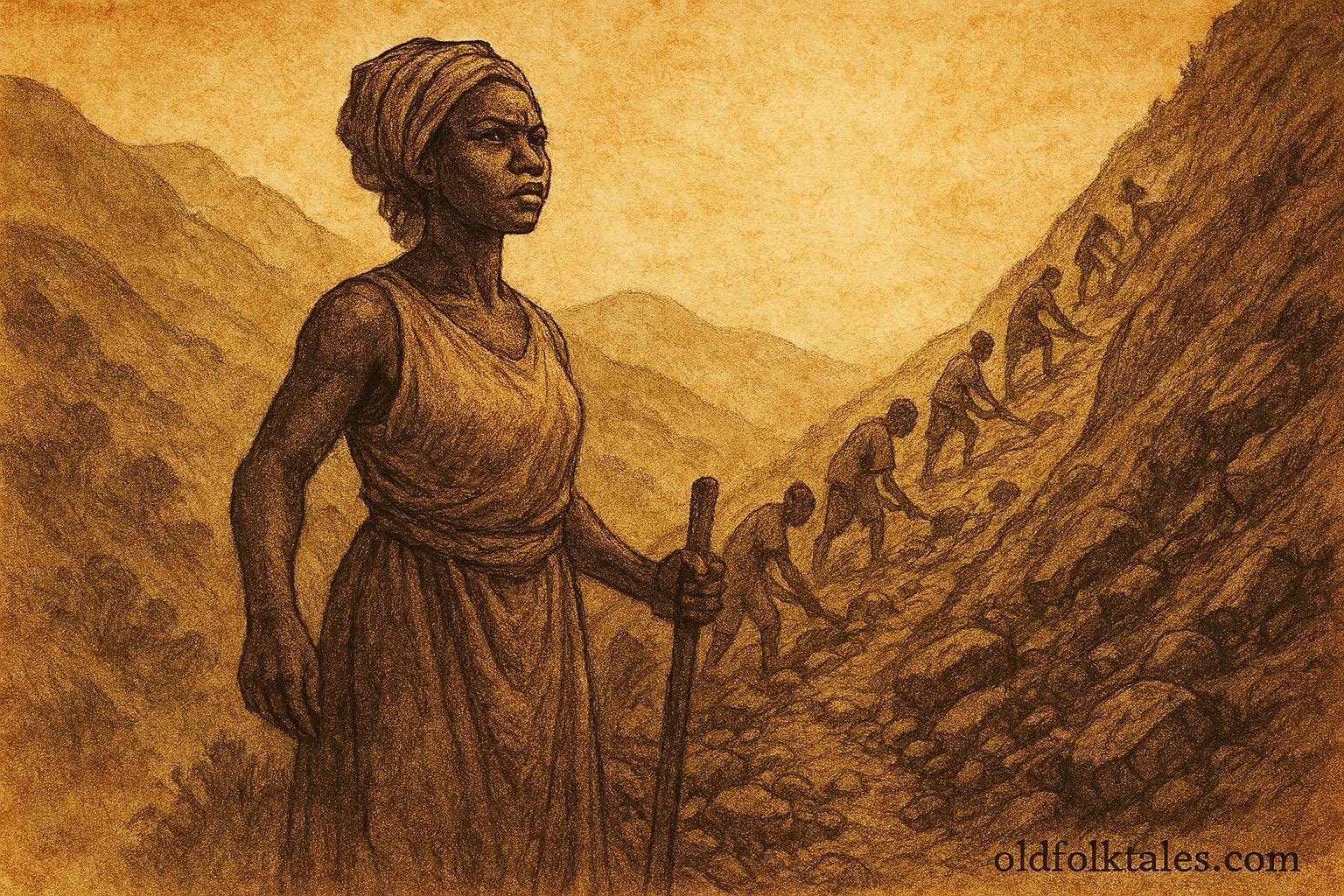
The next morning, she went to the mountain path.
She did not carry tools to dismantle it.
She did not bring a plan that others could easily recognize.
Instead, she began walking it differently.
Slowly.
Carefully.
Observing every slope, every uneven stone, every point where movement became difficult.
She stopped often.
She studied the path not as something fixed, but as something that could be understood.
And she began speaking to others who passed.
Not with commands.
But with questions.
“What makes this path so difficult for you?”
“Where do you lose strength the most?”
“If we moved this stone, would the climb become easier?”
At first, people answered politely but without interest.
The mountain had always been there.
Why question it?
But she continued.
Day after day.
Step after step.
Question after question.
Slowly, something began to shift.
A young man tried adjusting a loose stone she had pointed out.
It helped.
A group of travelers cleared a small section where water gathered dangerously during rain.
It improved safety.
A woman suggested resting points along the steepest parts of the climb.
Others agreed.
Small changes began accumulating like drops of water forming a stream.
Still, many villagers mocked her.
“Is the mountain gone yet?” they would ask jokingly.
“Have you finished carrying it?”
She would smile gently and continue her work.
Because she understood something they did not yet see.
Mountains are not always moved by force.
Sometimes they are moved by refusal to accept them as unchangeable.
As weeks turned into months, more people joined her efforts.
Not because they fully believed her words at first.
But because they experienced small improvements themselves.
Paths became safer.
Travel became less exhausting.
Trade became more efficient.
And slowly, the mountain pass no longer felt like an impossible burden.
It felt manageable.
Then it felt familiar.
Then it felt transformed.
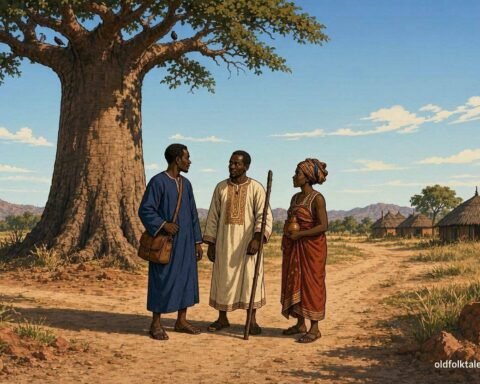
One elder, who had watched quietly from the beginning, finally spoke to her.
“You said you would carry the mountain,” he said.
The woman nodded.
“Yes,” she replied.
“And have you?” he asked.
She looked toward the path that now bore visible changes, cleared stones, reinforced edges, resting spaces shaped by many hands.
Then she answered:
“I did not carry it alone.”
The elder smiled slightly.
“You taught others to carry it with you,” he said.
She shook her head gently.
“I showed them it could be carried at all.”
From that day forward, the village began to see the mountain differently.
Not as an unmovable obstacle.
But as something that could be shaped through effort.
What had once been accepted as permanent difficulty became a shared project of improvement.
And the woman, though still not in position of formal authority, became known for something far greater.
Vision.
Years later, travelers passing through the region no longer spoke of the mountain as a barrier.
They spoke of the path.
Of how it had been changed.
Of how it had been made safer not by one great force, but by many small efforts guided by one determined idea.
The woman herself remained humble.
She continued her life as before.
But whenever someone complained that something was “just the way it is,” she would smile quietly.
And sometimes, she would say:
“Even mountains are carried, if not by hands, then by will.”
Looking for more? Explore the magic of East African folktales here
Moral Lesson
Change begins with one bold idea, but it is sustained through collective effort. What seems impossible can be transformed when persistence replaces resignation and communities work together toward a shared vision.
Knowledge Check
- What is the main lesson of “The Woman Who Carried the Mountain”?
The story teaches that persistence and collective effort can transform even the most difficult challenges. - Why did the woman want to “carry the mountain”?
She wanted to eliminate the hardship caused by the dangerous mountain path affecting her village. - How did the villagers initially react to her idea?
They mocked and dismissed her idea as impossible or unrealistic. - What actions did she take to create change?
She studied the path, asked questions, and encouraged small improvements that others could contribute to. - How did the village eventually change the mountain path?
Through collective effort, villagers gradually improved and reshaped the path into a safer route. - What cultural themes are reflected in this Burundian folktale?
Themes include perseverance, community responsibility, oral wisdom, and the power of vision in rural Burundian traditions.
Source: Inspired by proverbs and oral narratives documented in Proverbs and Oral Traditions of Burundi (1980)
Cultural Origin: Rural Burundian communities where oral wisdom and proverbs guide social values and communal responsibility