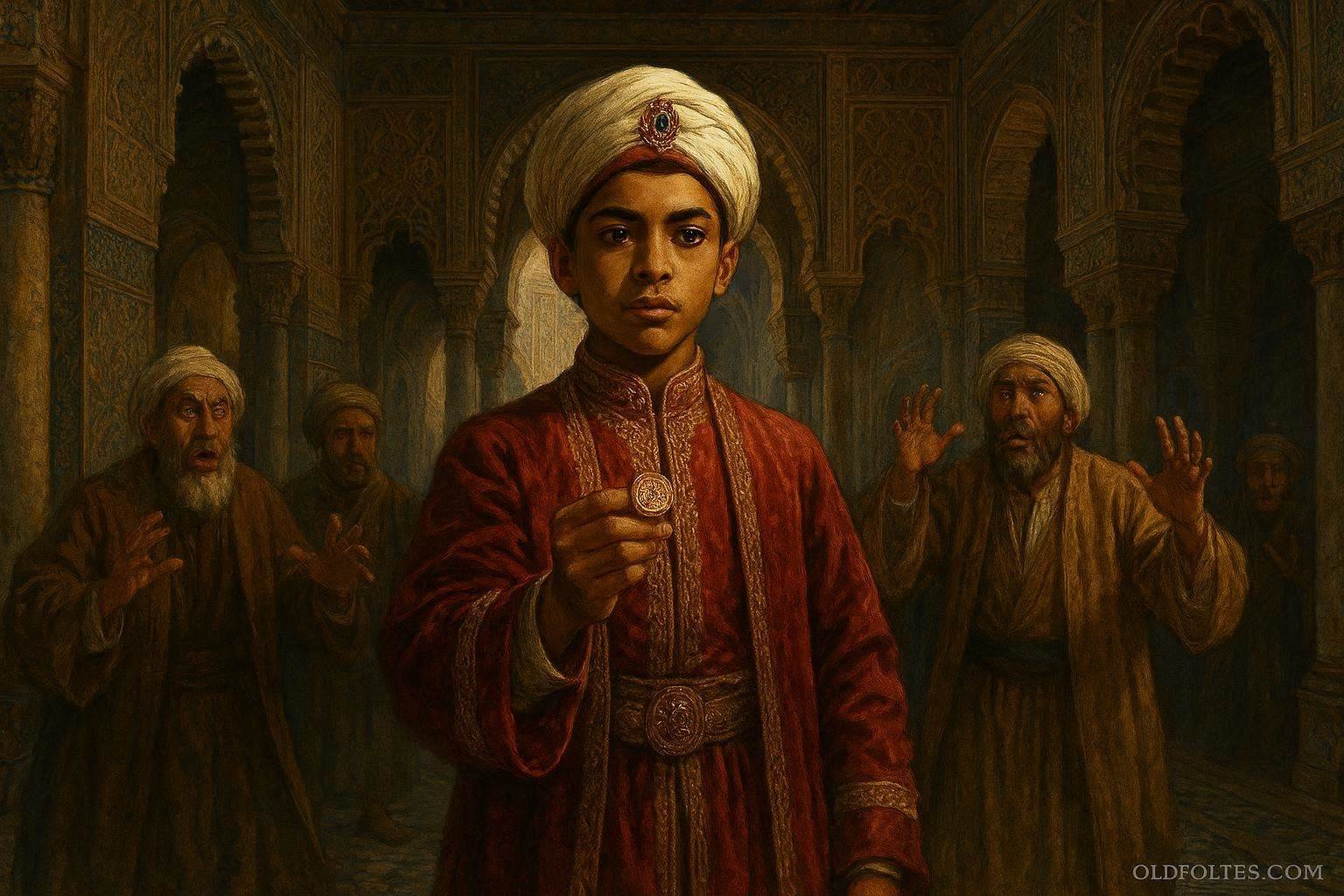
Along the Atlantic coast of Morocco, where ocean winds moved through ancient walls and palace towers overlooked the city streets, Rabat stood for centuries as a center of royal authority, political influence, and cultural power. Its fortified gates, crowded markets, and grand royal courts attracted scholars, soldiers, merchants, and travelers from across North Africa and beyond.
Yet behind the beauty of the capital existed a world shaped by rivalry and ambition.
Royal succession often determined the future stability of entire regions.
When rulers died unexpectedly or disputes emerged between powerful families, political tension could spread quickly throughout the kingdom.
Among Moroccan oral traditions preserved through generations, many stories warned that kingdoms weakened when truth became hidden behind greed, fear, or political manipulation.
One of the most enduring legends from Rabat became known as the story of the Forgotten Prince, a tale of exile, identity, and a hidden heir whose return threatened to reshape the kingdom during one of its darkest moments.
Long ago, during a period of growing instability within the royal court, Morocco was ruled by Sultan Hassan, a respected leader admired for maintaining peace between rival tribal leaders, military commanders, and noble families.
Looking for more? Explore the magic of East African folktales here
Though aging, Sultan Hassan remained wise and cautious.
But one concern troubled him deeply.
He had only one young son named Amin, born after many years without an heir to continue the royal bloodline.
The child quickly became precious not only to the sultan but also to the kingdom itself, because many believed the stability of the throne depended upon him.
However, powerful figures inside the court viewed the prince differently.
Several ambitious nobles feared losing influence once the young heir eventually became ruler. Secret political alliances began forming quietly among those who hoped to place another branch of the royal family upon the throne instead.
Among the most dangerous of these men was a royal advisor named Farid.
Publicly, Farid appeared loyal and devoted to Sultan Hassan.
Privately, he manipulated court politics carefully while building support among military leaders and wealthy governors.
Farid understood that as long as Prince Amin lived safely within the palace, his own ambitions could never fully succeed.
Then tragedy struck the kingdom.
During a violent season of unrest near the borders, Sultan Hassan fell seriously ill. Rumors spread quickly across Rabat that the ruler might not survive much longer.
Fear consumed the palace.
Nobles argued constantly about the future.
Military commanders strengthened their alliances.
And whispers about succession echoed through every corridor of the royal court.
Amid this growing chaos, the queen secretly discovered evidence that several advisors planned to remove Prince Amin permanently before the sultan’s death could be announced publicly.
Terrified for her son’s safety, she turned to the only person she trusted completely, an elderly palace guard named Idran who had served the royal family faithfully for decades.
Under cover of darkness, the queen made a painful decision.
To save the prince’s life, he would need to disappear.
That same night, while political conspirators focused on palace meetings surrounding the dying sultan, Idran secretly escaped Rabat carrying the young prince disguised as an ordinary child traveling with merchants leaving the city.
By dawn, Prince Amin had vanished completely.
Only the queen and Idran knew the truth.
When Sultan Hassan died days later, confusion consumed the kingdom.
Farid and his allies quickly spread the claim that the young prince had died mysteriously during the unrest. Without proof to challenge the story, another branch of the royal family assumed temporary control over the throne while political instability deepened across the region.
Meanwhile, far from Rabat, Prince Amin grew up hidden among ordinary villagers near the mountains outside the capital. To protect him, Idran never revealed the child’s true identity.
The boy was raised under another name.
Karim.
Though living simply, Karim displayed unusual qualities from an early age. He learned quickly, questioned injustice openly, and carried a natural sense of leadership that impressed those around him.
Idran trained him carefully in history, languages, diplomacy, and the traditions of the royal court without ever explaining why such knowledge mattered.
As years passed, Morocco changed dramatically.
Political corruption spread through the kingdom.
Several regions suffered from conflict between rival governors.
Heavy taxes burdened ordinary families while wealthy officials expanded their power.
Many people quietly longed for stronger leadership capable of restoring unity and justice.
By the time Karim reached adulthood, Rabat itself had become deeply divided by political tension.
The ruling court no longer trusted its own advisors completely.
Rumors of conspiracy, betrayal, and hidden royal secrets spread constantly through the capital.
Then Idran finally revealed the truth.
One evening beside a mountain fire, the old guard told Karim everything about his past.
The dying sultan.
The queen’s sacrifice.
The conspiracy within the royal court.
And the true identity hidden from him since childhood.
Karim listened in complete silence.
At first, disbelief overwhelmed him.
But gradually, memories and unanswered questions from his childhood began making sense. The careful education. Idran’s constant warnings about trust. The hidden documents preserved secretly for years.
Most importantly, Idran possessed undeniable proof.
A royal signet ring once belonging to Sultan Hassan.
A written declaration sealed by the queen herself.
And official palace records confirming Karim’s birth as Prince Amin, rightful heir to the throne.
Shortly afterward, Idran died peacefully, leaving the young man alone with the truth.
For many months, Karim struggled with the decision before him.
Part of him wished to continue living anonymously far from political danger.
But another part understood that the kingdom remained trapped in instability partly because the truth had been buried through fear and ambition.
Eventually, he made his choice.
Disguised as an ordinary traveler, Karim journeyed toward Rabat carrying the hidden documents and royal seal protected for so many years.
The capital he entered barely resembled the stories Idran once described.
Distrust filled the streets.
Palace officials competed openly for influence.
Ordinary citizens suffered while corruption spread through the royal administration.
As Karim quietly investigated the court, he discovered that several elderly servants still remembered the disappearance of Prince Amin decades earlier. Some secretly doubted the official story surrounding the prince’s supposed death but feared speaking publicly.
Among them was an old palace historian named Malik.
After examining the royal seal and documents Karim carried, Malik immediately recognized their authenticity.
The historian agreed to help him carefully reveal the truth before powerful officials could silence him permanently.
But news of Karim’s arrival soon reached dangerous ears.
Several influential court figures realized that if the hidden heir truly returned, decades of political manipulation could collapse overnight.
Secret orders spread across Rabat demanding the mysterious traveler be captured before appearing publicly.
For days, Karim moved carefully through hidden palace passages and old sections of the capital protected by loyal supporters who believed the kingdom deserved to know the truth.
Finally, during a major royal gathering attended by nobles, governors, military leaders, and religious scholars, Malik stepped forward publicly before the court.
In complete silence, the historian revealed the documents preserved since Sultan Hassan’s death.
One by one, the hidden truths emerged.
The conspiracy.
The false reports.
The disappearance of the prince.
And the survival of the rightful heir.
Shock spread across the chamber.
Then Karim entered carrying the royal signet ring once belonging to his father.
Several elderly palace servants immediately recognized the resemblance between the young man and the late Sultan Hassan.
Political arguments erupted instantly throughout the court.
Some officials denied the claims out of fear for losing power.
Others demanded full investigation.
But among the people of Rabat, news spread rapidly that the forgotten prince had returned.
Crowds gathered outside the palace calling for justice and truth.
Faced with overwhelming evidence and growing public support, the royal court could no longer hide the secret.
Prince Amin was formally recognized as the lost heir to the throne.
Though many political challenges still remained ahead, his return restored hope to a kingdom weakened by years of corruption and deception.
According to Moroccan oral tradition, the forgotten prince later ruled with caution and wisdom shaped by his years living among ordinary people rather than within palace walls.
He never forgot the sacrifices made to protect him.
And he understood better than most rulers that legitimacy depends not only on royal blood but also on justice, humility, and responsibility toward the people.
Even generations later, storytellers in Rabat continued sharing the legend as a reminder that truth may remain hidden for many years, but eventually it finds its way back into the light.
Fascinated by this tale? Discover more North African folktales
Moral Lesson
Truth and legitimacy cannot remain hidden forever, and wise leadership requires humility and justice.
Knowledge Check
- Where is the story set?
It is set in Rabat, the royal capital of Morocco. - Who was Prince Amin?
He was the hidden royal heir secretly removed from the palace as a child. - Why was the prince forced into exile?
Political conspirators planned to remove him to control the throne. - Who protected the young prince?
An elderly palace guard named Idran protected and raised him. - How was the prince’s identity revealed?
Royal documents, a signet ring, and palace records exposed the truth. - What lesson does the story teach?
Truth and rightful leadership eventually overcome deception and corruption.
Source
North African folklore. Adapted from Moroccan royal oral histories preserved in historical court narratives and folklore collections.