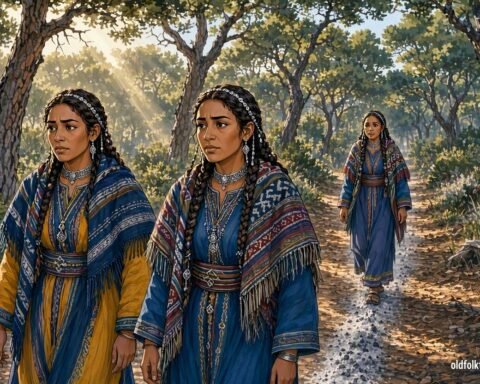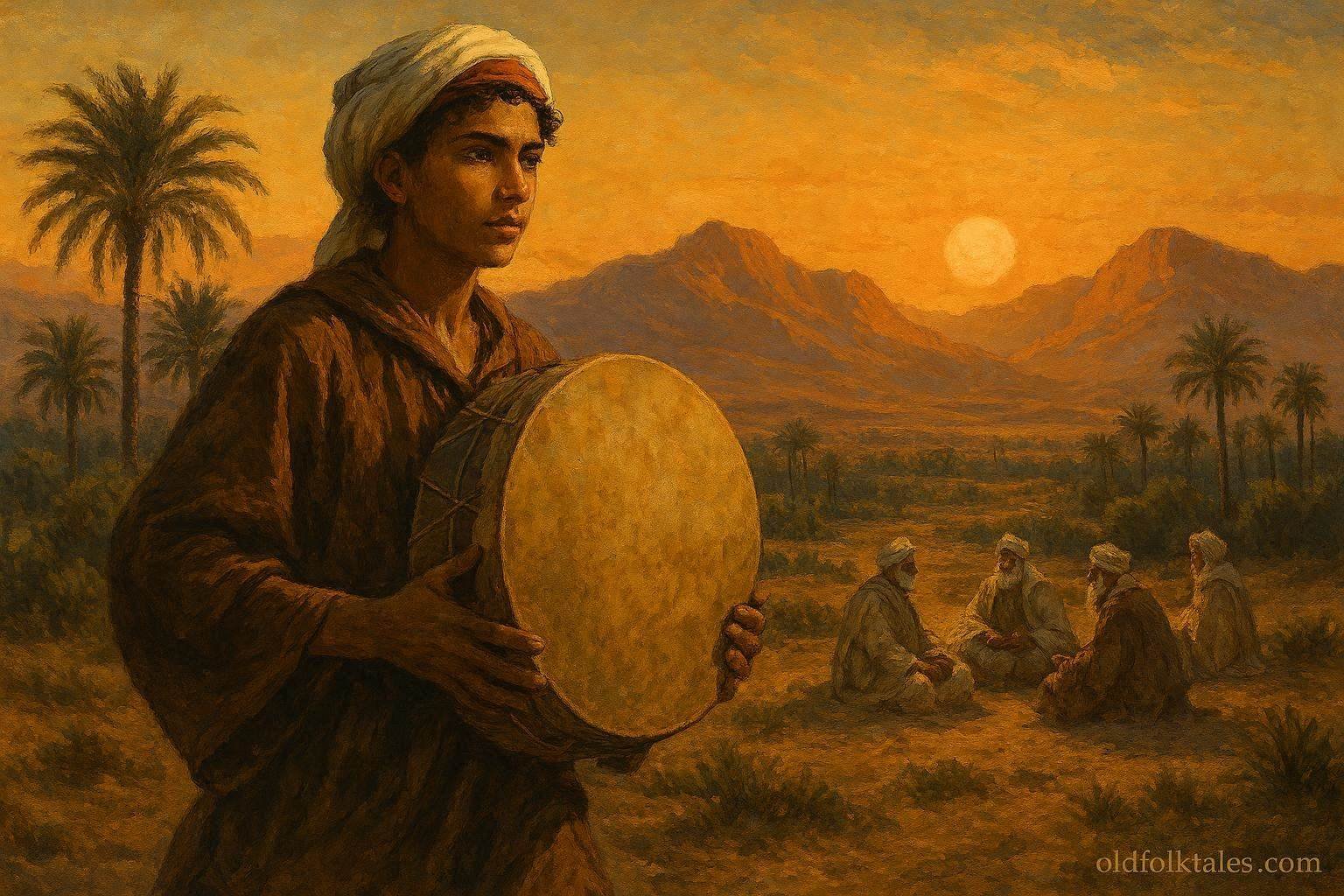
Far south of Morocco’s great imperial cities, beyond the snow covered mountains and winding caravan roads, stretched the wide and fertile lands of the Sous Valley. Palm groves lined the rivers, villages stood between rolling hills, and Amazigh communities lived from farming, trade, and ancient traditions preserved carefully through generations.
For centuries, the people of the Sous Valley survived through cooperation.
Water sources were shared.
Harvest festivals united neighboring villages.
And tribal elders often settled disputes peacefully before conflict could spread across the region.
Yet peace within the valley was never guaranteed.
Longstanding rivalries sometimes divided tribes over farmland, trade routes, or access to rivers during dry seasons. Old disagreements passed from one generation to another, and in difficult times even small arguments could threaten the balance between communities.
Among the Shilha Amazigh people, one object symbolized unity above all else.
A sacred ceremonial drum known as Anzar n Tafukt, meaning the Drum of the Sun.
According to oral tradition, the drum had existed for centuries and was used only during important gatherings involving peace agreements, harvest ceremonies, or moments of crisis affecting the entire valley.
Don’t stop yet! See our complete East African folktales collection
Elders believed the drum carried spiritual importance beyond music itself.
Whenever it sounded during ceremonies, rival communities were expected to lower their anger and listen with honesty.
No peace gathering could begin without it.
Stories claimed the drum had once prevented devastating tribal wars long ago after respected spiritual leaders used its rhythms to restore unity among divided villages.
Because of this, the drum was guarded carefully within a sacred building near one of the oldest settlements in the Sous Valley.
Only chosen elders were permitted to handle it.
And every year, during the Festival of Reconciliation held after the harvest season, the drum was carried publicly through the valley while musicians performed rhythms believed to strengthen harmony between communities.
One year, however, disaster struck.
The harvest season arrived during a period of growing tension across the valley. Several tribes argued bitterly over river access after months of unusually dry weather reduced water supplies.
Farmers blamed neighboring villages for taking too much water upstream.
Trade disagreements increased.
And small fights between young men from rival communities became more common.
The elders feared violence would spread unless peace could be restored quickly.
A great reconciliation gathering was announced, and tribal leaders prepared to meet beside the river plains where the sacred drum would traditionally open the ceremony.
But three nights before the festival, the impossible happened.
The sacred drum disappeared.
At first, the elders refused to believe it.
The building protecting the drum showed no signs of forced entry.
The guards stationed nearby heard nothing unusual during the night.
Yet when the ceremonial chamber was opened at dawn, the sacred artifact was gone.
Fear spread rapidly through the valley.
Some accused rival tribes of stealing the drum to sabotage the peace gathering.
Others whispered that spiritual forces had removed it because the people no longer respected unity.
Without the drum, many feared the reconciliation ceremony would fail completely.
Among the villages lived a young musician named Tariq, son of a respected drum maker known throughout the valley. Unlike warriors or political leaders, Tariq spent most of his time studying traditional rhythms and ceremonial music passed through generations of Shilha musicians.
He understood the importance of the sacred drum deeply.
As a child, he once witnessed the Festival of Reconciliation and never forgot the moment the drum echoed across the valley while rival tribes embraced one another after years of hostility.
To Tariq, the drum represented more than tradition.
It represented hope.
When the elders announced the drum’s disappearance publicly, suspicion spread immediately between neighboring tribes. Armed men began guarding village entrances, and several tribal leaders threatened to abandon the peace gathering entirely.
Tariq feared the valley stood dangerously close to violence.
Unable to ignore the crisis, he approached the council of elders with an unusual request.
He wished to search for the missing drum himself.
At first, several elders dismissed the idea.
Tariq was young.
He carried no political authority.
And searching for the sacred artifact across rival territories could place him in serious danger.
But an elderly ceremonial leader named Musa supported him.
Musa believed musicians understood the spirit of the valley differently than warriors or politicians.
“The drum will not return through anger,” the old man warned.
“It must be found through wisdom.”
Reluctantly, the council allowed Tariq to begin the search.
Traveling between villages carrying only his father’s small hand drum, Tariq listened carefully to conversations, rumors, and tensions spreading throughout the valley.
Everywhere he traveled, fear and suspicion followed him.
Some communities blamed outsiders immediately.
Others accused certain tribes of plotting against the peace gathering for political advantage.
But Tariq noticed something important.
The growing hostility itself seemed more dangerous than the disappearance of the drum.
People had already begun turning against one another before any evidence appeared.
Several days into his search, Tariq arrived at a remote mountain village where an old shepherd shared strange information.
According to the shepherd, mysterious figures had been seen traveling at night toward abandoned caves overlooking the valley shortly after the drum disappeared.
Curious, Tariq followed the trail into the hills.
After hours climbing narrow mountain paths, he discovered signs of recent activity near a hidden cave entrance. Inside, he found not thieves from rival tribes, but a group of angry young men from multiple villages gathered together secretly.
To Tariq’s shock, the missing drum stood in the center of the cave.
The young men confessed they had stolen it intentionally.
Frustrated by years of tribal disputes and political failures among the elders, they believed destroying the peace gathering would force communities to confront deeper problems hidden beneath ceremonial traditions.
Some wanted revenge for past grievances.
Others simply believed peace between the tribes was impossible.
“We are tired of pretending the valley is united,” one of them declared bitterly.
Tariq listened carefully before speaking.
He explained that the sacred drum itself was not magical.
Its power came from what people chose to remember when hearing its sound.
If the younger generation abandoned unity completely, the valley would inherit only endless conflict and suffering.
For hours, the discussion continued inside the cave.
Slowly, the anger among the young men began softening as Tariq shared stories about earlier generations who survived droughts, famine, and war only because rival communities eventually chose cooperation over revenge.
By dawn, the young men agreed to return the drum.
But Tariq insisted they should not hide their involvement.
Instead, they must face the valley openly and explain why frustration and division had pushed them toward such desperate actions.
That evening, the reconciliation gathering finally began beside the river plains.
Thousands gathered anxiously, uncertain whether peace could still be restored.
Then Tariq appeared carrying the sacred drum.
Behind him walked the young men responsible for its disappearance.
Murmurs spread across the crowd.
Several tribal leaders reacted with anger immediately.
But before accusations could erupt, the elderly leader Musa stepped forward and ordered silence.
One by one, the young men admitted what they had done and explained the resentment, fear, and hopelessness spreading among the younger generation throughout the valley.
For the first time in many years, tribal leaders listened honestly instead of defending themselves.
The atmosphere remained tense.
Yet gradually, understanding replaced hostility.
When the discussions finally ended, Musa raised his hand toward Tariq.
The young musician struck the sacred drum softly.
Its deep sound rolled across the valley beneath the evening sky.
Again he played.
Then again.
The rhythm echoed through the gathered tribes until silence settled peacefully over the crowd.
One by one, leaders from rival communities stepped forward to renew agreements protecting water access, trade cooperation, and peace between villages.
The valley had not healed completely.
But something important had changed.
People finally understood that unity required more than ceremonies alone.
It required listening, honesty, and the courage to confront hidden divisions before they became destruction.
Generations later, the story of the Sacred Drum of the Sous Valley remained one of southern Morocco’s most respected legends.
And among the Shilha Amazigh people, elders still say that when communities stop listening to one another, even the strongest traditions can disappear.
But when people choose understanding over anger, the drum will always find its way home again.
Want to dive deeper? Read more North African folktales today
Moral Lesson
True unity requires honesty, understanding, and cooperation between communities.
Knowledge Check
- Where is the story set?
It is set in the Sous Valley of southern Morocco. - What was the sacred drum used for?
It was used during ceremonies promoting peace and unity between tribes. - Who was Tariq?
He was a young musician who searched for the missing drum. - Why was the drum stolen?
Angry young men stole it because they believed the valley’s unity was failing. - How was peace restored?
The truth was revealed openly, and tribal leaders agreed to reconcile honestly. - What lesson does the story teach?
Unity requires honesty, communication, and understanding between people.
Source
North African folklore. Adapted from Shilha Amazigh ceremonial traditions preserved in Sous cultural archives and Moroccan ethnographic studies.