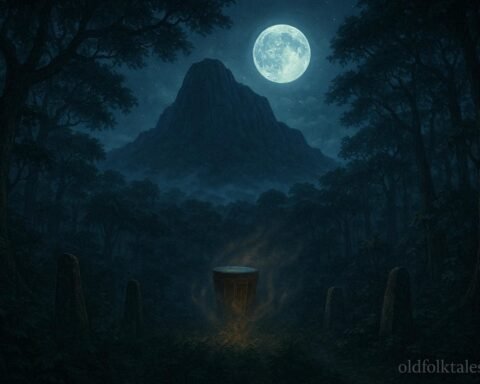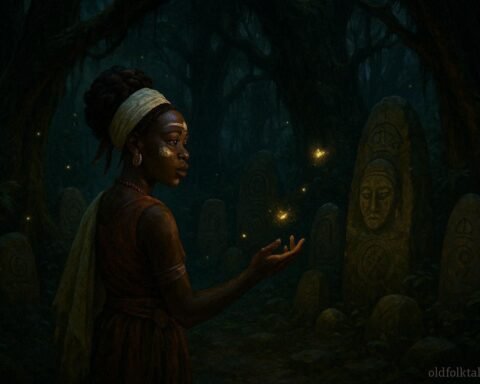
Off the coast of Cape Town, surrounded by the dark waters of the Atlantic Ocean, lies Robben Island.
For centuries, the island carried a heavy reputation.
It had once been used as a place of exile, isolation, and imprisonment. Political prisoners, resistance leaders, and ordinary men accused of defying authority were sent there across different periods of South African history.
The island stood alone against the sea.
Cold winds swept across its rocky ground.
Waves crashed endlessly against the shore.
And after sunset, silence often settled across the prison blocks like a heavy shadow.
Among both prisoners and guards, however, there existed a strange legend that survived through whispers passed quietly from one generation to another.
It was the story of the Night Whistles of Robben Island.
According to the legend, mysterious whistles could sometimes be heard echoing across the island late at night before important political events, uprisings, deaths, or moments of national change unfolded.
No one knew where the whistles came from.
If you liked this story, see our Central African folktales collection
Some believed they were produced by the wind moving through the prison corridors and limestone quarries.
Others believed the sounds belonged to the spirits of prisoners who had suffered on the island long before modern prisons were built there.
But many who lived on Robben Island for long periods believed the whistles carried warnings.
The story most often repeated among former prisoners centered around a young prison guard named Pieter Van Wyk.
Pieter arrived on Robben Island during a tense period of growing political unrest across South Africa.
At the time, protests were spreading in cities and townships, while the government tightened security around political prisoners held on the island.
Unlike many older guards, Pieter was quiet and uncertain about the harsh treatment prisoners often received.
He followed orders because it was his job, but he avoided unnecessary cruelty whenever possible.
On his first week working night duty, another guard casually mentioned the legend while they walked near the prison yard after sunset.
“If you hear the whistles,” the older guard warned, “pay attention to the mainland soon after.”
Pieter laughed softly.
“You believe ghost stories?”
The older guard shrugged.
“Believe whatever you want. The island always knows before the rest of us.”
Pieter dismissed the comment entirely.
To him, the whistles were probably nothing more than strange sounds created by ocean winds and old prison buildings.
Several nights later, Pieter was assigned to patrol near the limestone quarry where many prisoners spent long hours working during the day.
The night was unusually cold.
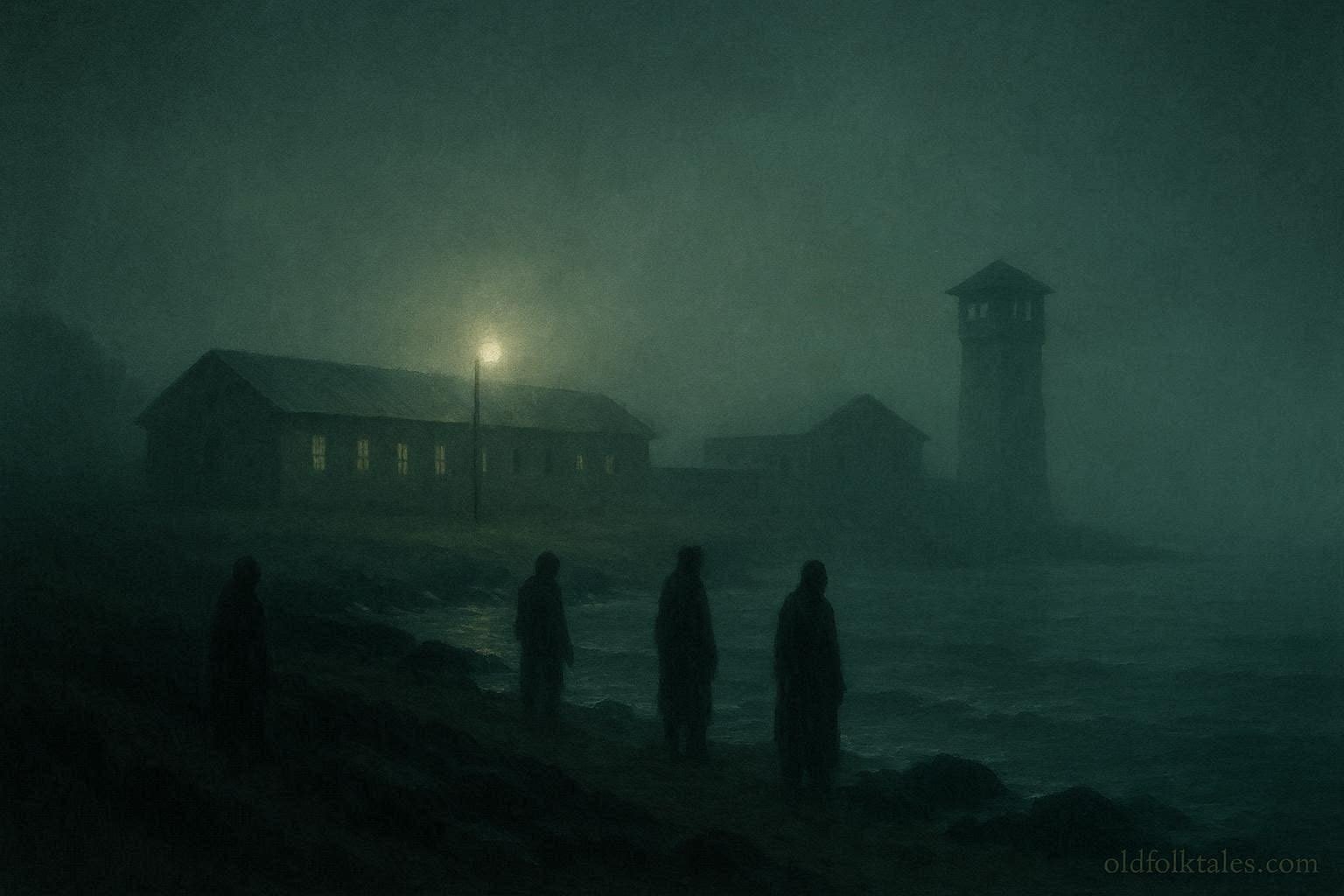
Heavy fog drifted slowly across the island, limiting visibility.
Most prisoners were already locked inside their cells, and the prison grounds remained silent except for distant waves crashing against the shore.
As Pieter walked alone beside the quarry path, he suddenly heard a sharp whistle echo across the darkness.
He stopped immediately.
The sound did not resemble ordinary wind.
It sounded intentional.
Human.
A long, low whistle followed by two shorter notes.
Pieter turned quickly, expecting to find another guard nearby.
But the pathway behind him was empty.
The whistle came again.
This time from somewhere near the shoreline below the cliffs.
Pieter felt uneasy but continued searching.
As he approached the edge of the path, he noticed something strange.
The fog moving across the ground seemed almost unnatural, twisting slowly around the rocks below.
Then another whistle echoed through the mist.
Long.
Slow.
Mournful.
Pieter suddenly noticed movement near the shoreline.
At first, he thought it was a group of prisoners standing near the water.
But no prisoners could possibly be outside their cells at that hour.
The figures remained distant and unclear within the fog.
Tall shadows standing silently beside the sea.
Watching.
Then, as quickly as they appeared, the figures vanished completely.
The whistles stopped.
Pieter returned to the prison shaken but said nothing to anyone.
The next morning, news arrived from the mainland.
Violent protests had erupted overnight in several townships near Cape Town after police raids and arrests triggered public outrage.
The prison staff discussed the unrest throughout the day.
But Pieter could not stop thinking about the whistles.
Over the following months, he heard them several more times.
Always at night.
Always before major events unfolded.
Sometimes before prisoner demonstrations inside the prison.
Sometimes before violent unrest on the mainland.
And once before news arrived announcing the death of a respected political activist whose influence had spread across the country.
Word about the whistles quietly circulated among prisoners too.
One elderly prisoner named Themba claimed the sounds had existed on the island long before modern prisons were built there.
According to him, exiled prisoners from earlier centuries also reported hearing strange whistles carried by the wind before moments of suffering or political change.
“The island remembers,” Themba once told Pieter quietly while working near the quarry.
“What happened here never disappears completely.”
Pieter began paying closer attention to the stories shared by older guards and prisoners alike.
He noticed patterns.
Whenever the whistles echoed across the island, tension usually followed soon afterward.
Even guards who pretended not to believe the stories often became nervous when the sounds appeared at night.
One stormy evening, years after his arrival, Pieter heard the whistles louder than ever before.
The sound echoed repeatedly across the prison yard while heavy winds battered the island.
Several guards searched the grounds believing prisoners had escaped or hidden nearby.
But nothing unusual was found.
The next morning, shocking political news reached the island.
Major negotiations had begun on the mainland that would eventually change the future of South Africa itself.
For the first time, serious discussions about ending decades of political division and imprisonment were beginning.
Many prisoners celebrated quietly.
Others remained cautious.
But Themba only nodded calmly when Pieter mentioned the whistles from the night before.
“The island knew,” he said softly.
Years later, after Robben Island became a symbol of remembrance and resilience rather than imprisonment, former guards and prisoners still spoke about the mysterious whistles.
Some believed the sounds were psychological, shaped by fear, isolation, and the emotional weight carried by the island itself.
Others remained convinced something deeper existed there.
A warning carried by memory.
A reminder from the past.
Even today, some visitors and workers on Robben Island claim that during cold foggy nights, strange whistles can still be heard moving across the shoreline after midnight.
Long.
Slow.
Echoing through the darkness.
And according to local belief, whenever the whistles return, change is never far behind.
Don’t miss out: Read more Southern African folktales
Moral Lesson
History leaves lasting echoes, and societies must pay attention to warning signs before conflict and suffering grow worse.
Knowledge Check
- Where is the story set?
It is set on Robben Island near Cape Town, South Africa. - What are the Night Whistles?
They are mysterious whistles heard before political unrest and major events. - Who first heard the whistles in the story?
A young prison guard named Pieter Van Wyk heard them during night patrols. - What happened after the whistles appeared?
Political protests, unrest, and important national events often followed. - What did prisoner Themba believe about the island?
He believed the island remembered the suffering and history connected to it. - What lesson does the story teach?
People should recognize warning signs before conflict and suffering become worse.
Source
South African folklore. Adapted from island oral traditions preserved in Cape historical folklore archives and South African memory studies.