Far within the interior of South Africa lies the Karoo, a vast semi-desert landscape stretching across dry plains, rocky hills, and lonely roads that seem to disappear endlessly into the horizon. During the day, the land appears quiet and beautiful beneath the open sky. But at night, the Karoo becomes a place of deep silence where even experienced travelers often feel uneasy.
For generations, isolated farming communities across the region shared stories about strange figures seen riding through the plains after sunset. According to local oral tradition, these riders appeared shortly before periods of suffering, drought, fires, or death affected nearby settlements. They became known as the Ghost Riders of the Karoo.
Many people dismissed the stories as fear shaped by loneliness and harsh desert life. Others believed the riders were spirits connected to the land itself. Elderly farmers often warned younger travelers never to ignore unusual silence across the plains because the Karoo always revealed signs before disaster arrived.
One of the most famous stories connected to the riders centered around a livestock trader named Hendrik Botha.
Want more? Read more West African folktales now
Hendrik spent most of his life traveling between remote settlements buying and selling sheep, cattle, and supplies. He knew the Karoo roads better than most men and prided himself on fearing nothing. While many travelers avoided crossing the plains at night, Hendrik often continued his journeys long after sunset to save time.
One winter evening, Hendrik completed business in a small farming settlement later than expected. The weather had changed suddenly during the afternoon. Cold winds moved across the dry plains while dark clouds gathered low above distant hills.
As Hendrik prepared his horse for departure, an elderly woman who managed the settlement inn stepped outside to speak with him.
“You should stay until morning,” she warned quietly.
Hendrik smiled politely while adjusting supplies on his saddle.
“I’ve crossed these roads for years,” he replied. “The Karoo doesn’t frighten me.”
The woman hesitated before speaking again.
“People have seen the riders this week.”
For a brief moment, Hendrik laughed softly.
“You still believe those old stories?”
But the woman’s expression remained serious.
“The land always warns people before suffering comes,” she said quietly.
Ignoring the warning, Hendrik continued his journey westward across the plains as darkness slowly covered the Karoo.
At first, the road remained peaceful beneath the pale moonlight. His horse moved steadily while cold air drifted across the open land. The sky above appeared endless and empty.
But as the night deepened, the silence around him became strange.
No insects could be heard.
No distant animal calls.
Only the sound of his horse moving through dust and dry grass.
Several hours passed without seeing another traveler. Then Hendrik noticed movement far ahead along the road.
At first, he assumed it was another group of riders approaching from a nearby settlement.
But something immediately felt wrong.
The figures moved silently.
No voices echoed across the plains.
No hoofbeats reached his ears.
Only silence.
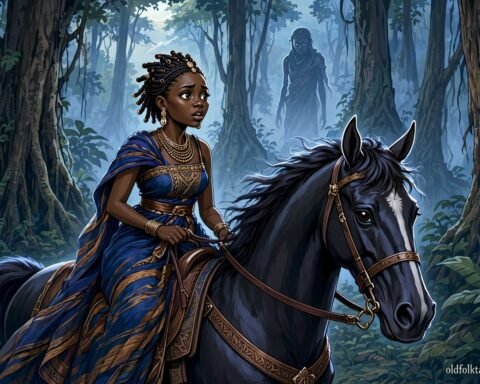
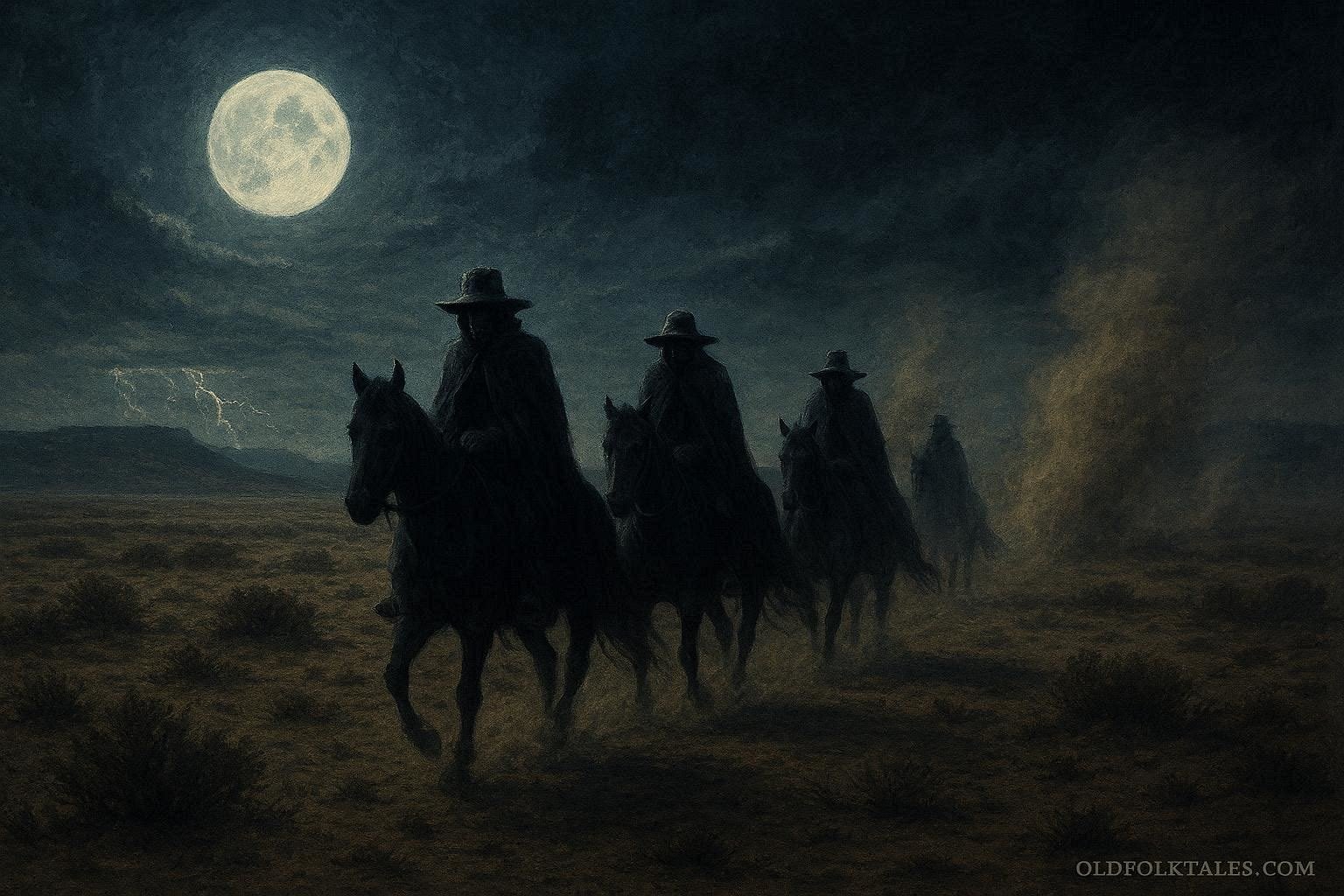
As the distance between them closed, Hendrik counted five riders traveling slowly beneath the moonlight. They wore long dark coats that shifted strangely in the wind. Wide hats covered their faces completely, making it impossible to recognize any features.
Suddenly, Hendrik’s horse stopped moving.
The animal trembled violently beneath him and refused to continue forward.
Fear slowly crept into Hendrik’s mind for the first time that night.
The riders finally stopped several meters ahead of him.
None of them spoke.
None moved.
Then the rider standing at the center slowly raised one arm and pointed toward the northern horizon.
Hendrik followed the direction carefully.
At first, he saw nothing unusual beyond darkness stretching endlessly across the plains.
Then lightning flashed in the distance.
Dry lightning.
The kind farmers feared most because it often arrived without rain during drought seasons.
Another flash followed.
Then another.
Cold wind swept suddenly across the road, carrying dust through the night air.
Hendrik briefly looked down to calm his frightened horse.
When he looked back toward the riders again, they were gone.
Completely vanished.
The empty road stretched before him beneath the moonlight.
No tracks remained in the dust.
No sound disturbed the plains.
Only silence.
Deep silence.
Shaken by what he had witnessed, Hendrik continued traveling until sunrise before finally reaching another farming settlement several miles away.
There he discovered terrible news.
During the night, lightning storms had ignited massive grass fires across northern sections of the Karoo. Strong winds caused the fires to spread rapidly through dry farmland already weakened by months of drought.
Several farms had been destroyed.
Livestock died across large areas.
Families lost homes, grazing land, and crops within hours.
As people gathered discussing the disaster, Hendrik quietly described the riders he had encountered on the road.
The older farmers listening became visibly uncomfortable.
One elderly man lowered his head slowly before speaking.
“The riders always come before suffering,” he whispered.
Over time, Hendrik heard many similar stories throughout the Karoo.
Some travelers claimed the riders appeared before deadly dust storms swept across the plains.
Others said they were seen before sudden deaths, disappearances, or long drought seasons that devastated farming communities.
Descriptions remained nearly identical every time.
Silent riders dressed in dark clothing.
Appearing beneath moonlight.
Watching from lonely roads.
And disappearing without explanation.
Though Hendrik never saw them again himself, he stopped mocking the old stories completely.
Years later, whenever strange silence settled across the plains or unusual weather formed suddenly above the hills, he remembered the riders standing motionless beneath the moonlight pointing silently toward the horizon.
Even today, some travelers crossing isolated parts of the Karoo still report seeing dark riders in the distance during cold nights.
Most people dismiss the stories as imagination shaped by fear and loneliness.
But older communities across the Karoo continue repeating the same warning passed down through generations.
When the Ghost Riders appear, the land itself is preparing for change.
Don’t miss out: Read more Southern African folktales
Moral Lesson
Ignoring warnings and dismissing traditional wisdom can leave people unprepared for hardship and danger.
Knowledge Check
- Where is the story set?
It is set in the Karoo region of South Africa. - Who encountered the Ghost Riders?
A livestock trader named Hendrik Botha encountered them while traveling at night. - What did the riders look like?
They wore dark coats and wide hats that hid their faces completely. - What happened after the riders appeared?
Grass fires and severe drought affected nearby farming communities. - Why were the Ghost Riders feared?
They were believed to appear before disaster and suffering struck the region. - What lesson does the story teach?
People should pay attention to warnings and respect traditional wisdom.
Source
South African folklore. Adapted from Karoo oral legends documented in regional folklore collections and Karoo folklore archives.