In the region that is now part of Zambia’s Copperbelt, near present-day Chingola, there once stood a thriving Lamba settlement known for its strong sense of community. Families worked together in farming, trade, and daily life, and village elders were respected for their wisdom. Among the many stories passed down through generations was the legend of the Silver Anklet, a family heirloom whose fate became closely tied to questions of justice.
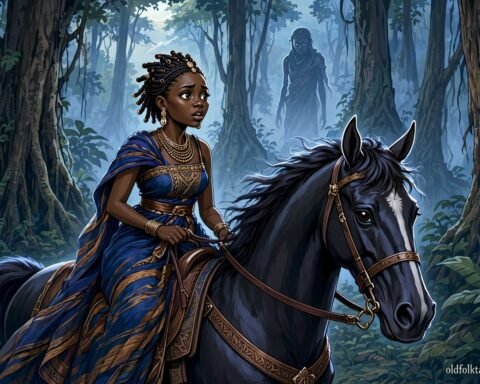
Many years ago, a respected woman named Mulenga lived in the community. She was known for her fairness and often helped settle disagreements between families. Whenever conflicts arose, people trusted her judgment because she listened carefully to every side before making decisions.
As a symbol of her responsibility, Mulenga wore a beautiful silver anklet that had been passed down through her family for generations. The anklet was not valuable because of its metal alone. It represented honesty, wisdom, and the duty to treat others fairly. Over time, it became one of the most respected heirlooms in the region.
When Mulenga grew old, she gathered her children and grandchildren and spoke about the anklet’s importance.
Don’t stop yet! See our complete East African folktales collection
“This anklet does not belong to one person,” she told them. “It belongs to the values our family must protect. If fairness is forgotten, the anklet will also be lost.”
Her words puzzled many of her relatives, but they remembered them.
Not long after Mulenga passed away, the anklet disappeared.
Her family searched everywhere.
They checked storage huts, family compounds, and places where valuable possessions were kept.
Yet the anklet could not be found.
As the years passed, people assumed it had been stolen, misplaced, or lost forever.
Eventually, it became part of local legend.
Generations later, a dispute arose between two neighboring families. Both claimed ownership of a fertile piece of farmland located between their properties. The disagreement grew increasingly bitter, dividing friends and relatives throughout the community.
Village elders organized meetings to resolve the matter, but neither side was willing to compromise. Accusations spread, and trust began to disappear.
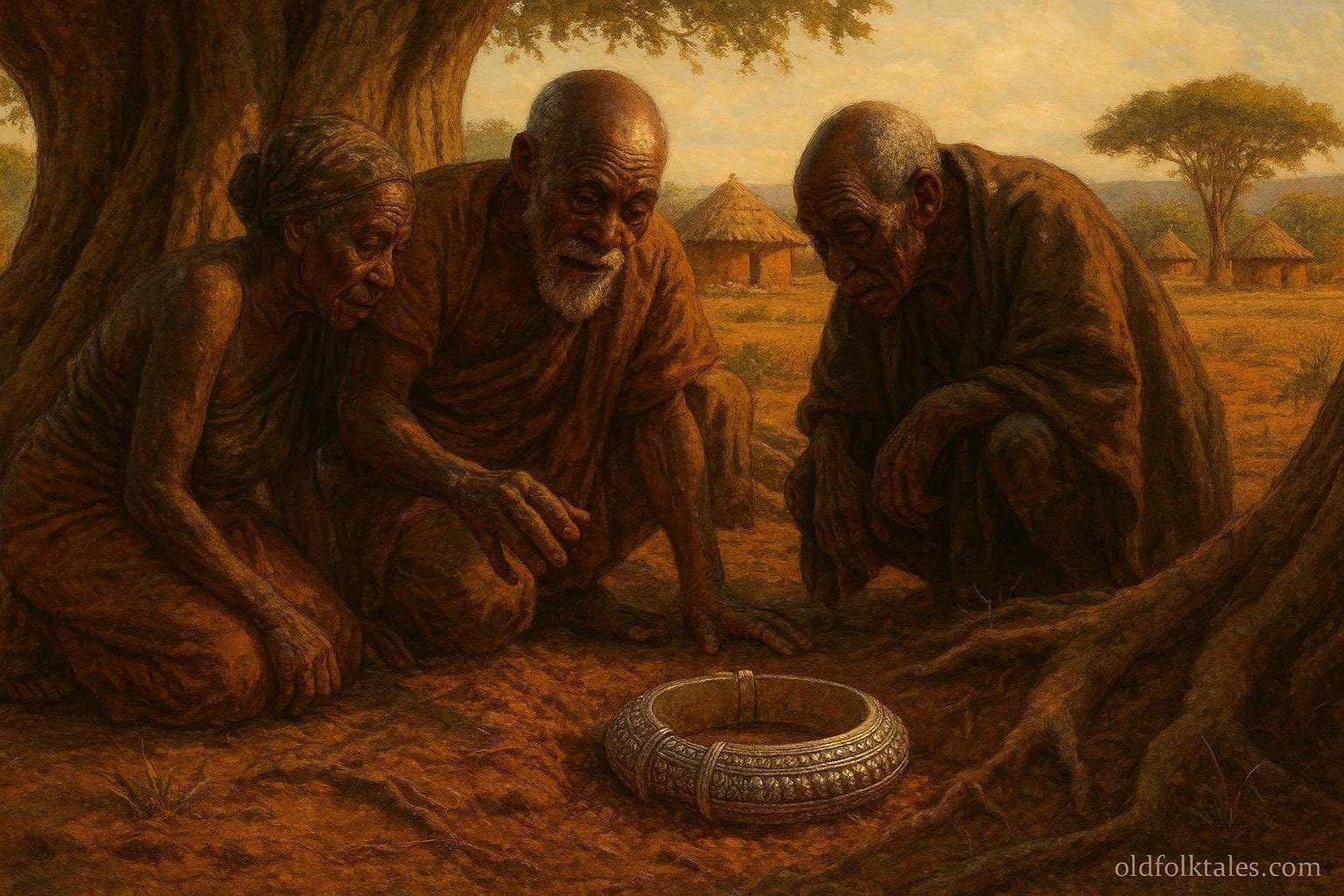
One morning, as people gathered beneath a large shade tree to discuss the issue once again, a young girl noticed something shining near the roots.
Curious, she bent down to investigate.
To everyone’s surprise, she uncovered a silver anklet.
The elders examined it carefully.
Its design matched descriptions passed down from the family of Mulenga.
The lost heirloom had returned.
The discovery astonished the community.
Many people believed its appearance could not be a coincidence.
The dispute over the farmland involved questions of fairness and responsibility—the very values the anklet had once represented.
Inspired by the discovery, the elders decided to approach the disagreement differently. Instead of focusing on winning or losing, they encouraged both families to examine the history of the land and consider what solution would best serve the entire community.
After several days of discussion, evidence revealed that the land had traditionally been shared during certain seasons. Realizing this, both families agreed to restore the arrangement followed by their ancestors.
The conflict ended peacefully.
Not long afterward, the anklet disappeared again.
No one knew where it had gone.
Some believed a family member had hidden it.
Others suspected that it had returned to whatever mysterious place had preserved it for generations.
Years later, another challenge emerged.
A trader accused a local craftsman of breaking an important agreement. The disagreement threatened to damage relationships between several villages. Once again, emotions ran high, and people struggled to determine the truth.
As discussions continued, a shepherd boy discovered a familiar object near a pathway leading into the village.
It was the silver anklet.
News spread quickly.
The elders saw the reappearance as a reminder that justice required patience, honesty, and careful listening.
Determined to avoid unfair judgments, they conducted a thorough investigation. Witnesses were heard, evidence was examined, and both sides were treated respectfully.
Eventually, the truth emerged.
A misunderstanding rather than deliberate wrongdoing had caused the conflict.
Because the matter was handled fairly, peace was restored.
The anklet vanished once more.
Over the decades, similar stories continued to be told. Whenever major disputes threatened community harmony, the Silver Anklet of Chingola somehow found its way back into public view. Its appearance never solved problems directly, but it encouraged people to remember the values associated with it.
Children grew up hearing stories about Mulenga and her heirloom. They learned that justice was not simply about punishment or victory. It was about responsibility, fairness, and the willingness to seek truth even when doing so was difficult.
As generations passed, the Silver Anklet became more than a family treasure.
It became a symbol for the entire community.
Whether the anklet truly possessed supernatural qualities or whether its appearances were remarkable coincidences remained a mystery. Yet the lesson endured through the years.
Communities thrive when people value fairness above personal gain.
Disagreements can be resolved when individuals listen to one another with honesty and respect.
And a strong legacy is built not through wealth or power, but through the principles people choose to uphold.
To this day, some elders say the Silver Anklet still exists somewhere in the Copperbelt, waiting quietly for the next moment when justice needs a reminder.
Explore more Southern African folktales here
Moral Lesson
Fairness, honesty, and responsibility are essential for maintaining peace and unity within a community.
Knowledge Check
1. Who originally owned the Silver Anklet?
The anklet belonged to Mulenga, a respected woman known for her fairness and wisdom.
2. What did the anklet symbolize?
It symbolized justice, honesty, responsibility, and fairness.
3. What happened to the anklet after Mulenga’s death?
It mysteriously disappeared and became part of local legend.
4. When did the anklet reappear?
It resurfaced whenever disputes over justice threatened the community.
5. Did the anklet solve conflicts directly?
No, it reminded people to act fairly and seek the truth.
6. What is the main lesson of the story?
Justice requires honesty, responsibility, and respect for others.
Source
Adapted from Lamba oral traditions and family heirloom legends preserved in Copperbelt folklore collections.