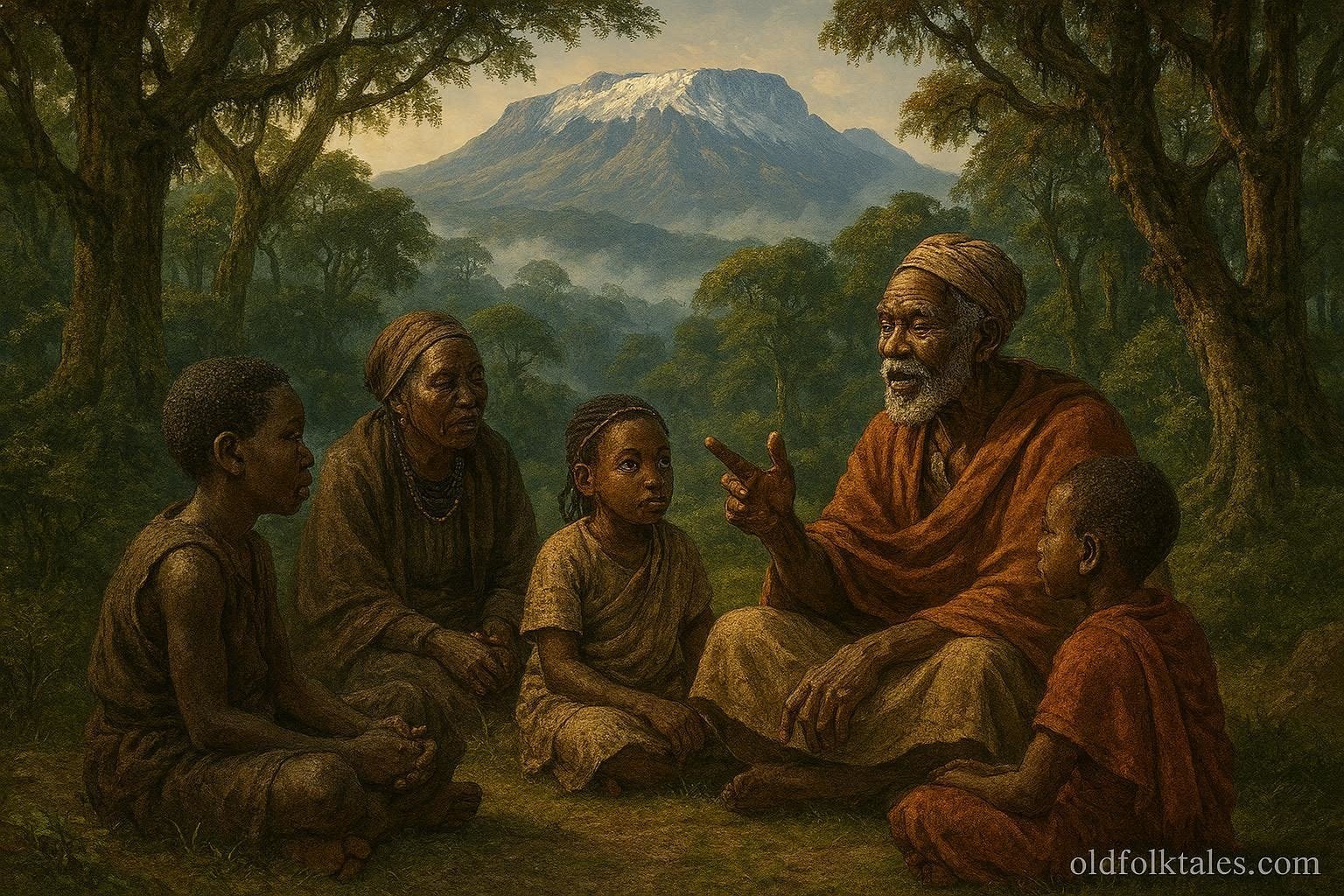
Rising above the surrounding plains of eastern Uganda and western Kenya, Mount Elgon has long been one of the most remarkable landmarks in the region. Its forests, caves, rivers, cliffs, and fertile slopes have supported human communities for centuries. To the Bagisu and Sabiny peoples who live around the mountain, Mount Elgon is more than a geographical feature. It is a place deeply connected to identity, memory, and tradition.
Generations of elders have passed down stories explaining the special relationship between people and the mountain. These traditions describe Mount Elgon as a living landscape, one deserving respect and careful stewardship. Through oral history, songs, ceremonies, and storytelling, communities preserved beliefs that linked the well being of people to the well being of the mountain itself.
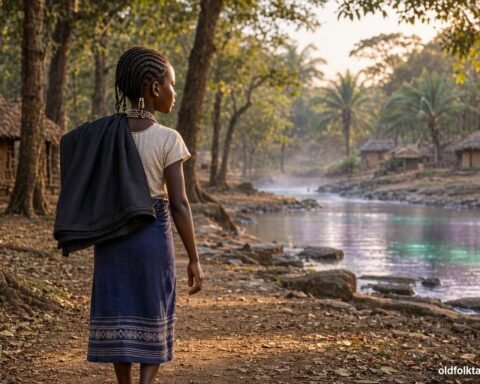
Many years ago, according to tradition, there lived a young Bagisu man named Wekesa. He was known for his curiosity and adventurous spirit. Unlike many of his friends, who were content to remain close to the village, Wekesa loved exploring the forests and valleys that stretched across the mountain’s slopes.
His grandfather often warned him to show respect whenever he traveled through certain areas.
If you liked this story, see our Central African folktales collection
The elder explained that some places on the mountain were considered sacred because generations of ancestors had gathered there during important ceremonies. Other locations were associated with stories of spiritual encounters and historical events remembered through oral tradition.
Wekesa listened respectfully, but he sometimes wondered why these places were treated differently from ordinary parts of the landscape.
One season, after heavy rains had refreshed the forests and streams, Wekesa decided to explore higher up the mountain than he had ever gone before. Carrying food and water, he followed winding paths through dense vegetation.
As he climbed, he noticed how dramatically the environment changed.
The air became cooler.
Bird calls echoed through the forest.
Ancient trees towered overhead.
Streams flowed down rocky slopes, carrying fresh water to communities below.
The deeper he traveled into the mountain, the more he appreciated its beauty.
After several hours, Wekesa reached a clearing where enormous trees surrounded a large stone formation. The place felt different from anywhere he had visited before. Everything seemed unusually calm.
Remembering his grandfather’s words, he sat quietly and observed his surroundings.
As he rested, he began reflecting on stories he had heard throughout childhood. Elders often described the mountain as a source of life. Its forests protected water sources. Its fertile soils supported farming. Its resources sustained countless generations.
For the first time, Wekesa understood these stories in a deeper way.
The mountain was not simply a place people used.
It was a place that cared for them.
Without the forests, streams would disappear.
Without healthy land, harvests would suffer.
Without respect for nature, future generations would inherit fewer opportunities.
When Wekesa returned home, he shared his experience with his grandfather.
The old man smiled and explained that this realization was at the heart of many mountain traditions.
The stories about ancestral presence and sacred places were not merely about the past. They helped people remember their responsibilities in the present.
Ancestors were honored because they passed down knowledge.
Sacred places were respected because they connected communities to important lessons.
The mountain itself was valued because it sustained life.
Over time, Wekesa became increasingly interested in learning more about local traditions.
He attended gatherings where elders shared oral histories.
He listened to stories about community leaders who made difficult decisions while considering the needs of future generations.
He learned about ceremonies performed to express gratitude for harvests and rainfall.
He heard accounts of individuals who ignored traditional teachings and suffered consequences after damaging important parts of the environment.
One story described a period when people cut down too many trees without considering the effects.
At first, the additional land appeared beneficial.
Yet over time, streams became less reliable, soil erosion increased, and agricultural productivity declined.
The experience taught the community that prosperity required balance between human needs and environmental care.
Another tradition told of elders who established agreements regarding the use of certain forests and water sources.
These arrangements helped prevent conflict and ensured resources remained available for everyone.
The stories varied in detail, but they shared common themes.
Respect.
Responsibility.
Stewardship.
As years passed, Wekesa became one of the community’s most respected teachers.
Whenever younger generations asked why Mount Elgon occupied such an important place in local traditions, he explained that the mountain represented a relationship.
People depended on the mountain.
The mountain depended on people acting responsibly.
Neither could thrive without the other.
One year, a severe drought affected nearby regions.
Water became scarce in some areas, and many communities worried about the future.
The villages around Mount Elgon also faced challenges, but decades of careful environmental management helped reduce the impact.
Protected forests continued supporting streams.
Community cooperation ensured fair distribution of resources.
Traditional knowledge guided decisions during a difficult period.
After the drought ended, elders used the experience to reinforce existing lessons.
They reminded younger generations that stewardship is most important before a crisis occurs.
Protecting resources after damage has already happened is often much more difficult than preventing harm in the first place.
The stories associated with Mount Elgon continued evolving as new experiences were added to the community’s collective memory.
While details changed over time, the central message remained consistent.
The landscape is not separate from human life.
People are part of it.
Communities flourish when they respect the environment that sustains them.
As decades turned into generations, the oral traditions of Mount Elgon became an important part of cultural identity for both the Bagisu and Sabiny peoples.
The mountain appeared in songs, ceremonies, historical narratives, and educational teachings.
Children learned from an early age that caring for the land was not simply an environmental responsibility. It was also a cultural responsibility.
The stories helped preserve knowledge about forests, rivers, farming practices, and community values.
They connected people to ancestors who faced similar challenges and developed solutions that remained relevant centuries later.
Today, Mount Elgon continues to inspire admiration and respect.
Visitors marvel at its beauty, biodiversity, and scale.
Researchers study its ecosystems and history.
Local communities continue preserving traditions that emphasize stewardship and responsibility.
The spirit traditions of Mount Elgon endure because they offer timeless wisdom.
They remind people that landscapes hold memories.
They teach that heritage includes both cultural knowledge and environmental care.
Most importantly, they encourage every generation to act as guardians of the resources they have inherited.
Through these traditions, the mountain remains more than a landmark.
It remains a teacher.
And its lessons continue guiding those who listen.
Continue your journey: Read more East African folktales
Moral Lesson
Respecting and protecting the environment ensures that future generations can benefit from the same resources and opportunities enjoyed today.
Knowledge Check
1. Why is Mount Elgon important in local traditions?
Because it is associated with ancestral memory, cultural identity, and community responsibility.
2. What did Wekesa discover during his journey?
He realized that the mountain sustained the lives of the people who depended on it.
3. What lesson did the elders teach about sacred places?
They help preserve knowledge, history, and respect for important traditions.
4. What happened when forests were not properly protected?
Streams became less reliable, soil erosion increased, and farming suffered.
5. How did traditional knowledge help during the drought?
It encouraged environmental stewardship and community cooperation.
6. What is the main lesson of the story?
People must care for the environment that supports their communities.
Source
Adapted from Bagisu and Sabiny oral traditions, Mount Elgon cultural narratives, and materials preserved in Mount Elgon oral heritage archives.