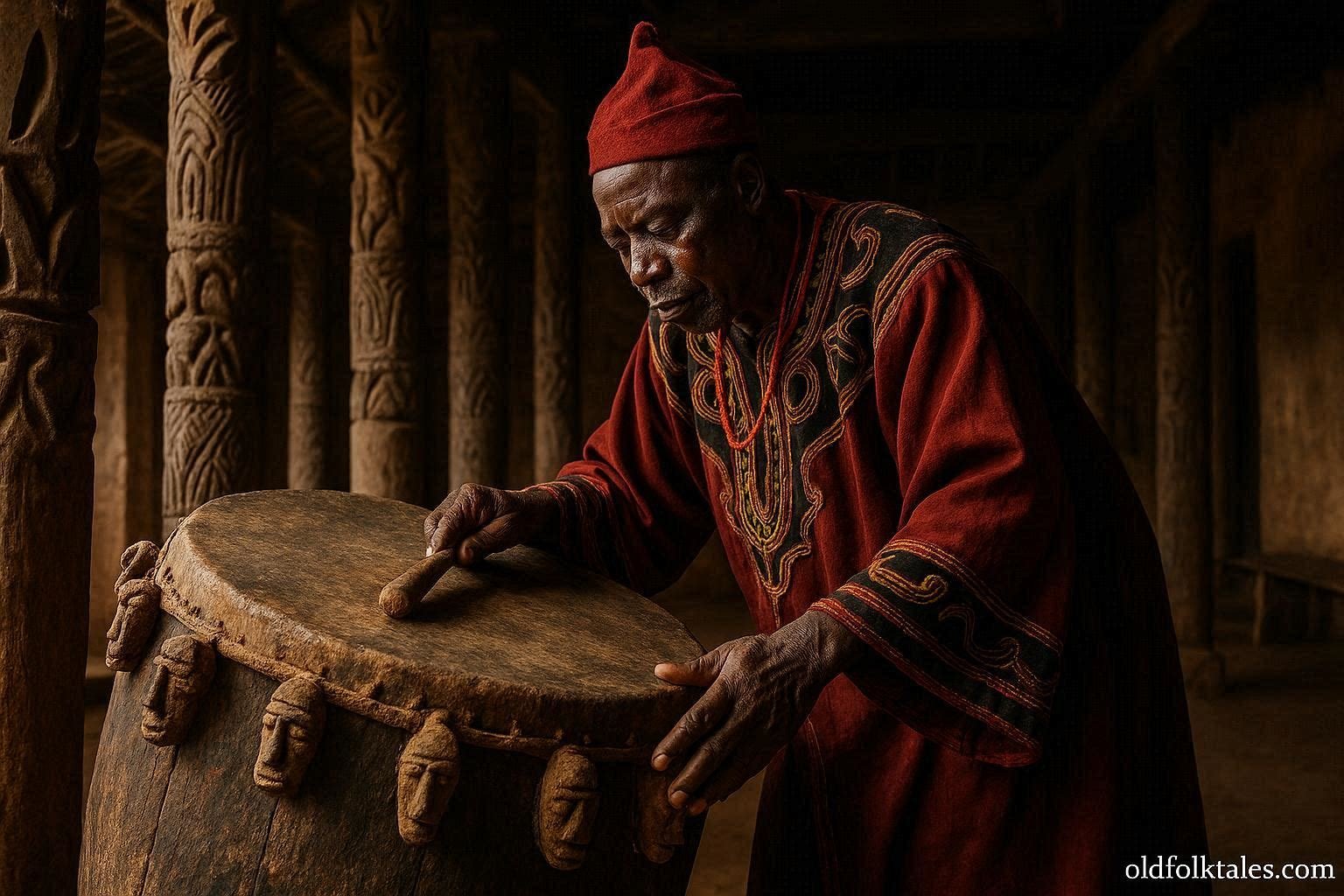
In the lush highlands of northwestern Cameroon, the Bafut Kingdom flourished as one of the oldest and most respected traditional kingdoms of the Grassfields. Surrounded by rolling hills, fertile valleys, and thriving farming communities, the kingdom preserved its customs through ceremonies, music, storytelling, and the wisdom of its elders. At the center of royal life stood the magnificent palace, where generations of rulers safeguarded traditions that united the people through times of celebration and challenge.
Among the palace’s most treasured possessions was the Royal Drum.
It was more than a musical instrument.
Its deep voice announced the coronation of a new ruler, welcomed honored visitors, proclaimed important festivals, and summoned the community during moments that affected the entire kingdom. Whenever its powerful rhythm echoed across the hills, the people understood that something of great importance was taking place.
The elders often reminded the young that while many could hear the drum, only a few understood the responsibility of caring for it.
For many years, that responsibility belonged to an elderly palace custodian named Tembi.
Want more? Read more West African folktales now
Tembi had devoted most of his life to protecting the royal drum. He knew every ceremony in which it was played, every traditional rhythm passed down through generations, and every custom that surrounded its use. His careful stewardship earned the trust of the ruler, palace elders, and the entire kingdom.
As age gradually slowed his steps, Tembi realized that another generation would soon need to continue his work.
Among the palace attendants was a respectful young apprentice named Neba.
Neba admired the royal drum from childhood.
Whenever ceremonies filled the palace courtyard, he watched the experienced custodians prepare the sacred instrument with quiet care.
He believed the greatest honor would be learning to play it.
One morning, Tembi surprised him.
“You wish to beat the drum,” the old custodian said.
“Yes,” Neba replied eagerly.
Tembi smiled gently.
“First, you must learn to protect it.”
Instead of teaching rhythms, Tembi began with responsibility.
Each morning Neba carefully cleaned the royal drum using traditional methods approved by palace elders.
He inspected its wooden body for signs of wear.
He protected it from moisture during the rainy season and from excessive heat during the dry months.
Only after these duties were completed did Tembi explain the meaning of the instrument itself.
“The drum is the voice of the kingdom,” he said.
“When it speaks, the people listen.”
Neba soon realized that caring for the drum demanded far more patience than he had imagined.
Weeks later, preparations began for one of the kingdom’s great annual festivals.
Families traveled from surrounding villages.
Musicians rehearsed traditional performances.
Artisans decorated the palace with beautifully woven cloth and carved wooden ornaments.
The entire kingdom looked forward to the celebration.
As the festival approached, Tembi invited Neba into the palace treasury, where many royal regalia were carefully preserved.
He showed him ceremonial staffs, ancient stools, royal garments, and finally the sacred drum resting in its honored place.
“Every object here tells part of our history,” Tembi explained.
“But the drum gives that history a voice.”
On the morning of the festival, the palace courtyard filled with elders, community leaders, musicians, dancers, and visitors.
Silence settled over the gathering as Tembi gently struck the opening rhythm upon the royal drum.
Its deep sound rolled across the hills.
Within moments, people throughout the surrounding villages recognized the familiar call.
The festival had begun.
Neba watched with admiration.
He noticed how every rhythm matched a specific part of the ceremony.
Nothing was performed carelessly.
Every beat reflected traditions preserved over countless generations.
Later that year, an important delegation arrived from a neighboring kingdom to strengthen peaceful relations between the two communities.
Once again, the royal drum announced their arrival.
Its steady rhythm welcomed the visitors with dignity and respect.
The guests remarked that before they even entered the palace, they understood they were being received according to the honored customs of Bafut.
Neba realized that the drum spoke a language understood beyond words.
One rainy season, strong winds damaged part of the palace roof where the royal drum was traditionally stored.
Before anyone else noticed the danger, Neba carefully moved the instrument to a safe place and informed Tembi.
The repair prevented moisture from damaging the precious drum.
The elderly custodian nodded with quiet satisfaction.
“You no longer protect the drum because I ask you to,” he said.
“You protect it because you understand its importance.”
Years passed.
Neba gradually learned the traditional rhythms associated with coronations, festivals, royal councils, and other important occasions.
Each rhythm carried its own meaning.
Each was preserved exactly as earlier custodians had received it.
Tembi often reminded him that even small changes could alter traditions carefully protected through generations.
Eventually the elderly custodian retired from active service.
During a gathering of palace elders, he formally entrusted the care of the royal drum to Neba.
Rather than presenting him with wealth or titles, the elders offered something greater.
They entrusted him with the confidence of the kingdom.
Standing before the assembled community, Neba accepted the responsibility with humility.
He promised to preserve the royal drum exactly as those before him had done.
Years later, younger apprentices entered the palace eager to learn.
Like Neba before them, many believed the greatest privilege was striking the drum before large crowds.
He smiled kindly whenever he heard those words.
Then he began their lessons exactly as Tembi had begun his own.
First came responsibility.
Then patience.
Then respect.
Only afterward came music.
Generations continued protecting the royal drum of Bafut.
Its rhythms accompanied coronations, festivals, royal ceremonies, and important moments in the kingdom’s history.
While rulers changed and new generations grew, the drum remained a powerful symbol of continuity and unity.
Today, the Bafut Palace continues to preserve many royal traditions that reflect the kingdom’s rich cultural heritage. Among these traditions, ceremonial drums remain important symbols of leadership, history, and the enduring identity of the Bafut people.
The story of The Keeper of the Royal Drum of Bafut reminds us that the greatest treasures are preserved not through ownership but through faithful stewardship and respect for the generations that came before us.
If you liked this story, see our Central African folktales collection
Moral Lesson
True leadership begins with faithfully preserving the traditions and responsibilities entrusted to us.
Knowledge Check
1. What was the purpose of the Royal Drum in the Bafut Kingdom?
It announced coronations, festivals, royal ceremonies, and other important events.
2. Why did Tembi teach Neba to care for the drum before learning its rhythms?
Because responsibility and respect came before privilege.
3. What did Neba learn about the drum during the annual festival?
That every rhythm had a special meaning and reflected generations of tradition.
4. How did Neba protect the royal drum during the rainy season?
He moved it to safety after noticing damage to the palace roof.
5. Why did the neighboring kingdom admire the royal drum?
Its rhythms welcomed visitors with dignity and represented the customs of Bafut.
6. What is the main lesson of the story?
Cultural heritage survives through faithful stewardship and respect for tradition.
Source
Adapted from Bafut royal traditions, palace oral history, and materials preserved in the Bafut Palace archives and Cameroon Grassfields ethnographic studies.